Loading...
Done
Of all the species affected by river regulation in Australia, the ibis is one of the few that has changed its behaviour and moved to coastal cities. (Photo by Rick Stevens/The Guardian)

Tip turkey, dumpster chook, rubbish raptor – the Australian white ibis goes by many unflattering names. But it is a true urban success story, scavenging to survive in cities across Australia as wetlands have been lost. Wildlife photographer Rick Stevens captured them in Sydney. Here: Of all the species affected by river regulation in Australia, the ibis is one of the few that has changed its behaviour and moved to coastal cities. (Photo by Rick Stevens/The Guardian)
Details
11 Apr 2018 00:03:00
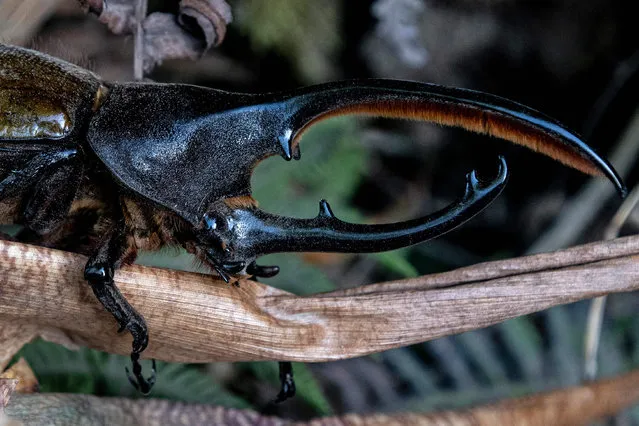
A Hercules beetle, one of the largest species of its kind, in seen at the Monteverde Cloud Forest Biological Reserve, in Puntarenas, Costa Rica, on May 23, 2023. In the Monteverde cloud forest, dense fog among the lush vegetation is increasingly rare and temperatures are increasing each year due to climate change. (Photo by Ezequiel Becerra/AFP Photo)

A Hercules beetle, one of the largest species of its kind, in seen at the Monteverde Cloud Forest Biological Reserve, in Puntarenas, Costa Rica, on May 23, 2023. In the Monteverde cloud forest, dense fog among the lush vegetation is increasingly rare and temperatures are increasing each year due to climate change. (Photo by Ezequiel Becerra/AFP Photo)
Details
21 Sep 2023 03:34:00
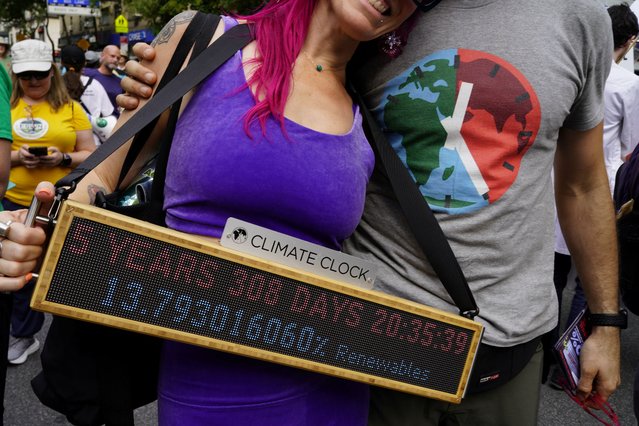
A woman carries a 'Climate Clock' as activists mark the start of Climate Week in New York during a demonstration calling for the U.S. government to take action on climate change and reject the use of fossil fuels in New York City, New York, U.S., September 17, 2023. (Photo by Eduardo Munoz/Reuters)

A woman carries a 'Climate Clock' as activists mark the start of Climate Week in New York during a demonstration calling for the U.S. government to take action on climate change and reject the use of fossil fuels in New York City, New York, U.S., September 17, 2023. (Photo by Eduardo Munoz/Reuters)
Details
14 Dec 2024 04:01:00
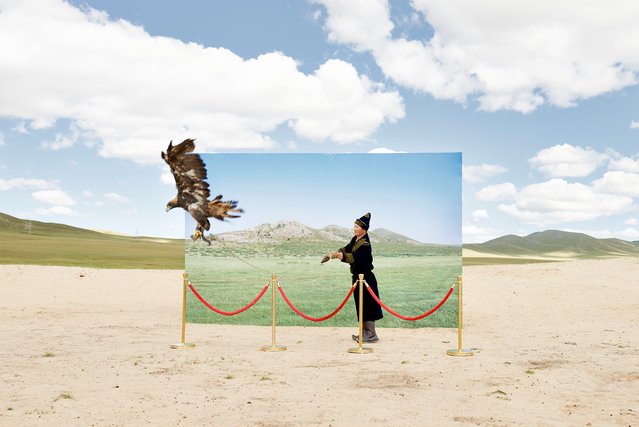
Up to 35% of Mongolians still live a nomadic life, depending on their land to survive. But environmental changes, particularly desertification, means this way of life is under threat. Korean photographer Daesung Lee’s Futuristic Archaeology images show billboard-size backdrops of lush steppe contrasting with actual scenery as former nomads enact scenes of hunting, herding and Mongolian wrestling. (Photo by Daesung Lee)

Up to 35% of Mongolians still live a nomadic life, depending on their land to survive. But environmental changes, particularly desertification, means this way of life is under threat. Korean photographer Daesung Lee’s Futuristic Archaeology images show billboard-size backdrops of lush steppe contrasting with actual scenery as former nomads enact scenes of hunting, herding and Mongolian wrestling. (Photo by Daesung Lee)
Details
24 Nov 2016 08:01:00
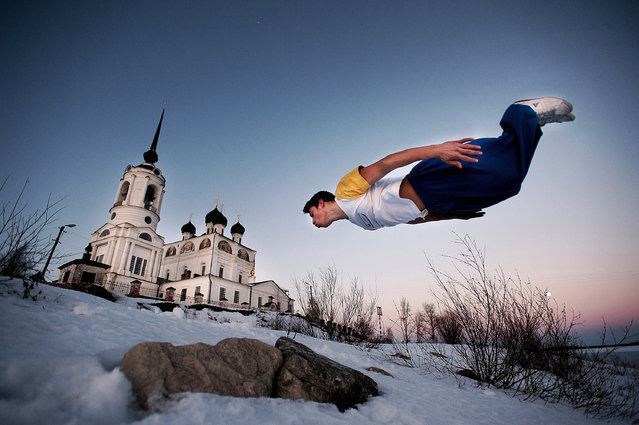
Anton Unitsyn, Russia. Shortlist, Professional , Daily Life. Parkour jumpers on their daily training. On the background – one of the main Solvychegodsk sights – Blagoveshchensky Cathedral. This church is among 3 churches, that survived soviet times. At the begining of 20th century there were 13 churches in Solvichegodsk. After breakdown of the communism, Solvichegodsk as many small towns in russia is stuck in it's past. Despite everything, people in Solvichegodsk still belive in their positive future, and wait for wind of change. (Photo by Anton Unitsyn/Sony World Photography Awards)

Anton Unitsyn, Russia. Shortlist, Professional , Daily Life. Parkour jumpers on their daily training. On the background – one of the main Solvychegodsk sights – Blagoveshchensky Cathedral. This church is among 3 churches, that survived soviet times. At the begining of 20th century there were 13 churches in Solvichegodsk. After breakdown of the communism, Solvichegodsk as many small towns in russia is stuck in it's past. Despite everything, people in Solvichegodsk still belive in their positive future, and wait for wind of change. (Photo by Anton Unitsyn/Sony World Photography Awards)
Details
25 Feb 2016 12:16:00
Family of passengers onboard AirAsia flight QZ8501 react at a waiting area in Juanda International Airport, Surabaya December 28, 2014. Indonesia's air force was searching for the AirAsia plane carrying 162 people that went missing on Sunday after the pilots asked to change course to avoid bad weather during a flight from the Indonesian city of Surabaya to Singapore. The Airbus 320-200 lost contact with Jakarta air traffic control at 6:17 a.m. (23:17 GMT), officials said. (Photo by Reuters/Beawiharta)

Family of passengers onboard AirAsia flight QZ8501 react at a waiting area in Juanda International Airport, Surabaya December 28, 2014. Indonesia's air force was searching for the AirAsia plane carrying 162 people that went missing on Sunday after the pilots asked to change course to avoid bad weather during a flight from the Indonesian city of Surabaya to Singapore. The Airbus 320-200 lost contact with Jakarta air traffic control at 6:17 a.m. (23:17 GMT), officials said. (Photo by Reuters/Beawiharta)
Details
29 Dec 2014 13:47:00
Crowds supporting the Same s*x Marriage Survey listen to politicians and advocates at Taylor Square in the heart of Sydney's gay precinct on November 15, 2017 in Sydney, Australia. (Photo by James Alcock/Getty Images)

Crowds supporting the Same Sеx Marriage Survey listen to politicians and advocates at Taylor Square in the heart of Sydney's gay precinct on November 15, 2017 in Sydney, Australia. Australians have voted for marriage laws to be changed to allow same-sеx marriage, with the Yes vote claiming 61.6% to to 38.4% for No vote. Despite the Yes victory, the outcome of Australian Marriage Law Postal Survey is not binding, and the process to change current laws will move to the Australian Parliament in Canberra. (Photo by James Alcock/Getty Images)
Details
16 Nov 2017 08:12:00
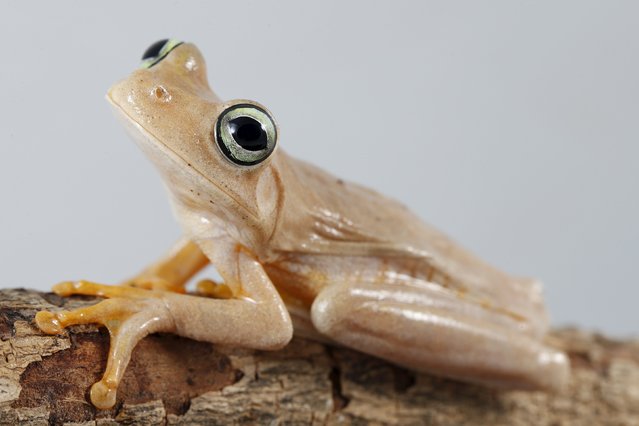
A Hypsiboas crepitans frog is pictured at a terrarium in Caracas November 30, 2015. Venezuelan frogs and toads are in critical danger due to climate change as rising temperatures complicate reproduction and spread a deadly fungus, say scientists, who liken the species to canaries in a coalmine warning of imminent danger. (Photo by Carlos Garcia Rawlins/Reuters)

A Hypsiboas crepitans frog is pictured at a terrarium in Caracas November 30, 2015. Venezuelan frogs and toads are in critical danger due to climate change as rising temperatures complicate reproduction and spread a deadly fungus, say scientists, who liken the species to canaries in a coalmine warning of imminent danger. The survival of a group of nearly 20 frog and toad species, which top Venezuela's list of endangered species, may rest on a small group of academics in a Caracas laboratory attempting to recreate the amphibians' natural reproductive conditions. (Photo by Carlos Garcia Rawlins/Reuters)
Details
17 Dec 2015 08:04:00