Loading...
Done
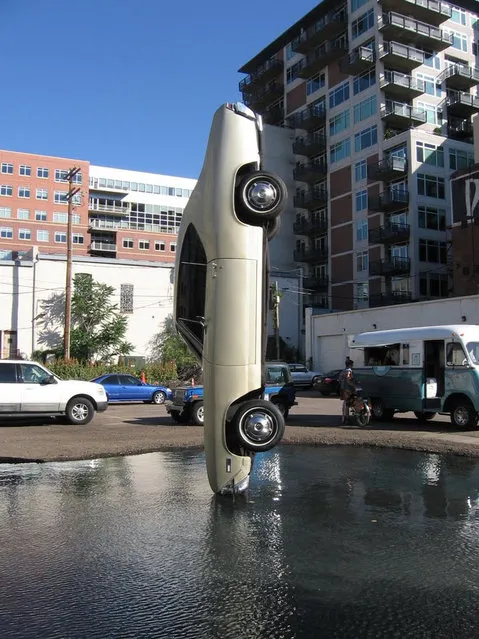
History of Suspended Time By Gonzalo Lebrija

Guadalajara-based artist Gonzalo Lebrija created a public art installation in the parking lot (1430 Delgany Street, Denver, CO 80202) across from the Museum of Contemporary Art Denver (MCA Denver) in the summer of 2010. The installation, entitled History of Suspended Time: Monument for the Impossible, was developed as a dual collaboration with MCA Denver's museum-wide exhibition, Energy Effects: Art & Artifacts from the Landscape of Glorious Excess, as well as Denver's inaugural 2010 Biennial of the Americas, an international event that celebrated the culture, ideas and people of the Western Hemisphere.
Details
31 Aug 2014 13:37:00
Participants during the Whitby Krampus Run street parade in Whitby, Yorkshire on Saturday, December 3, 2022, which celebrates the Krampus, a horned creature which accompanies Saint Nicholas on his rounds. (Photo by Danny Lawson/PA Images/Profimedia)

Participants during the Whitby Krampus Run street parade in Whitby, Yorkshire on Saturday, December 3, 2022, which celebrates the Krampus, a horned creature which accompanies Saint Nicholas on his rounds. (Photo by Danny Lawson/PA Images/Profimedia)
Details
01 Mar 2024 09:32:00
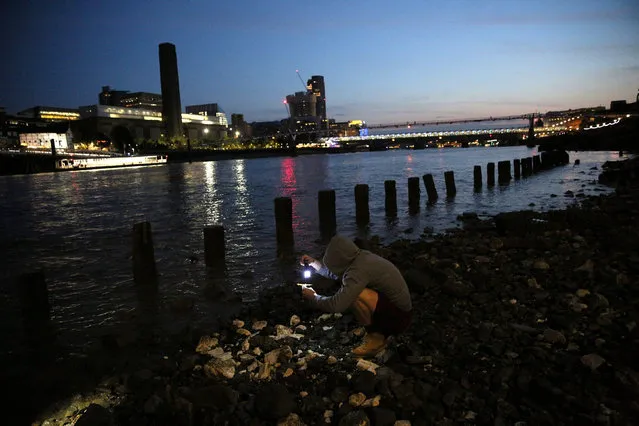
A mudlark uses a torch to look for items on the bank of the River Thames in London, Britain June 06, 2016. Mudlarking is believed to trace its origins to the 18th and 19th century, when scavengers searched the Thames' shores for items to sell. These days, history and archaeology fans are the ones hoping to find old relics such as coins, ceramics, artifacts or everyday items from across centuries. They wait for the low tide and then scour specific areas of exposed shores. "If you're in a field you could be out all day long, with the river you're restricted to about two or three hours," mudlark Nick Stevens said. While many just use the naked eye for their searches, others rely on metal detectors for which a permit from the Port of London Authority is needed. Digging also requires consent. (Photo by Neil Hall/Reuters)

A mudlark uses a torch to look for items on the bank of the River Thames in London, Britain June 06, 2016. Mudlarking is believed to trace its origins to the 18th and 19th century, when scavengers searched the Thames' shores for items to sell. These days, history and archaeology fans are the ones hoping to find old relics such as coins, ceramics, artifacts or everyday items from across centuries. their finds with the Portable Antiquities Scheme. Any item over 300 years old must be recorded. (Photo by Neil Hall/Reuters)
Details
27 Aug 2016 10:43:00
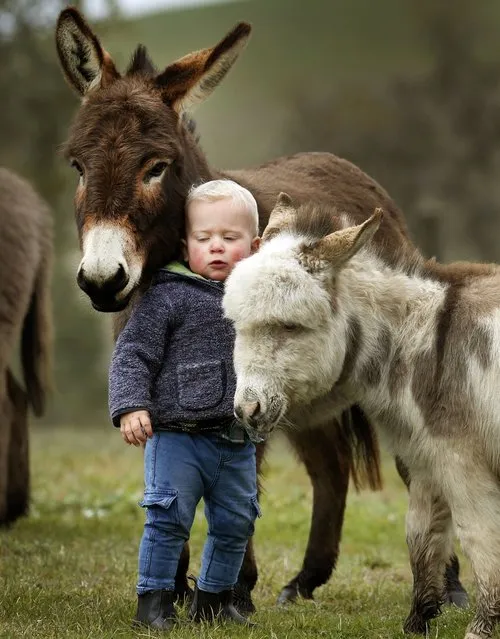
Miniature Donkeys Are The Best Friend Anyone Ever Had

Amelia Rise Donkeys, a small facility in Australia, care for a number of these beautiful animals on a daily basis. Check out these stunning images of 15-month-old Jack Johnston playing with the adorable creatures.
Details
17 May 2014 12:35:00
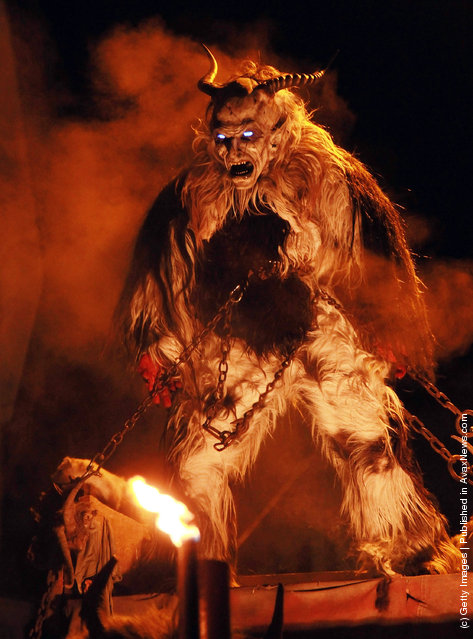
Devils Parade In Krampus Procession

Members of the Koatlacker devil's association (Koatlacker Tuifl) dressed as demonic creatures take part in a Krampus procession on December 4, 2011 in Prad near Merano, Italy. (Photo by Johannes Simon/Getty Images)
Details
05 Dec 2011 13:17:00
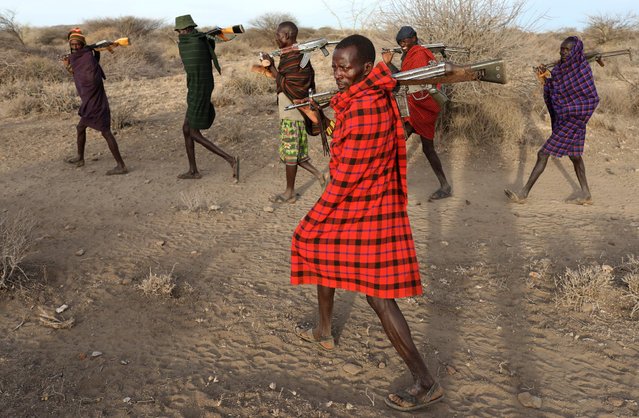
Turkana tribesmen walk with guns in order to protect their cattle from rival Pokot and Sambur tribesmen near Baragoy, Kenya February 14, 2017. Cattle rustling and competition for grazing have long troubled northern Kenya, but severe drought and political rivalries ahead of the elections have exacerbated the situation between ethnic tribes. (Photo by Goran Tomasevic/Reuters)

Turkana tribesmen walk with guns in order to protect their cattle from rival Pokot and Sambur tribesmen near Baragoy, Kenya February 14, 2017. Cattle rustling and competition for grazing have long troubled northern Kenya, but severe drought and political rivalries ahead of the elections have exacerbated the situation between ethnic tribes. (Photo by Goran Tomasevic/Reuters)
Details
16 Feb 2017 00:01:00
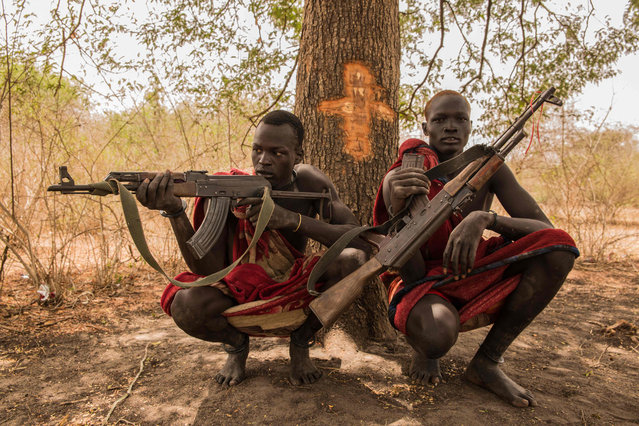
Sudanese cattle keepers from Dinka tribe Makal Maker (R) and Achiek Butich pose with the guns for their protection at their cattle camp in Mingkaman, Lakes State, South Sudan, on March 2, 2018. (Photo by  Stefanie Glinski/AFP Photo)

Sudanese cattle keepers from Dinka tribe Makal Maker (R) and Achiek Butich pose with the guns for their protection at their cattle camp in Mingkaman, Lakes State, South Sudan, on March 2, 2018. (Photo by Stefanie Glinski/AFP Photo)
Details
16 Mar 2018 00:05:00
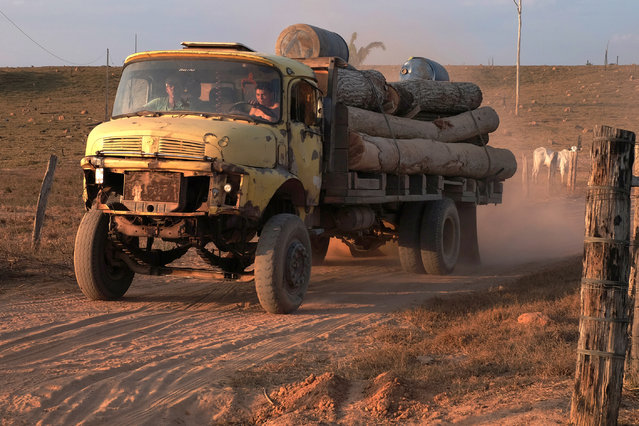
A truck laden with logs travels in Araribóia Indigenous Reserve, Maranhão, Brazil on August 7, 2015. Loggers have been stealing hardwood trees from indigenous lands in Brazil. The Guardians of the Forest are an armed militia formed by the Guajajara tribe to protect their reserve. (Photo by Bonnie Jo Mount/The Washington Post)

A truck laden with logs travels in Araribóia Indigenous Reserve, Maranhão, Brazil on August 7, 2015. Loggers have been stealing hardwood trees from indigenous lands in Brazil. The Guardians of the Forest are an armed militia formed by the Guajajara tribe to protect their reserve. (Photo by Bonnie Jo Mount/The Washington Post)
Details
09 Oct 2015 08:00:00