Loading...
Done
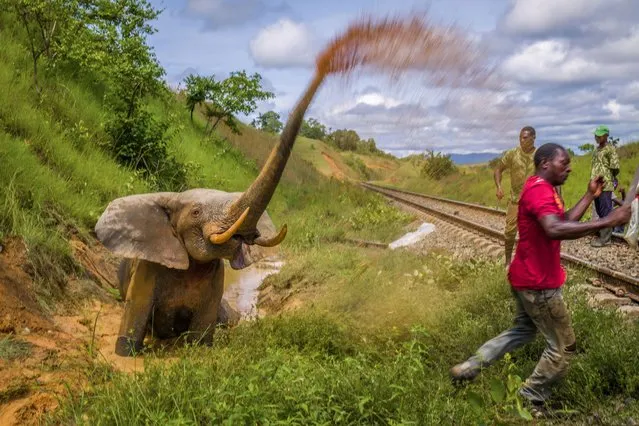
Grand prize winner: environmental photographer of the year 2023; also 1st place in the humanity v nature category; and winner of the 2023 public award. Lopé national park, Gabon, 2021. An angry elephant tries to defend itself after it was hit by a train that crosses paths the animals use within Lopé national park. Park officials decided the elephant was too severely injured to be saved. After it was killed, the park director distributed the meat to local people. As the forest loses its carrying capacity to sustain its megafauna, this kind of human-wildlife conflict is increasing. (Photo by Jasper Doest/Environmental Photography Award)

Grand prize winner: environmental photographer of the year 2023; also 1st place in the humanity v nature category; and winner of the 2023 public award. Lopé national park, Gabon, 2021. An angry elephant tries to defend itself after it was hit by a train that crosses paths the animals use within Lopé national park. Park officials decided the elephant was too severely injured to be saved. After it was killed, the park director distributed the meat to local people. As the forest loses its carrying capacity to sustain its megafauna, this kind of human-wildlife conflict is increasing. (Photo by Jasper Doest/Environmental Photography Award)
Details
09 Jul 2023 03:06:00
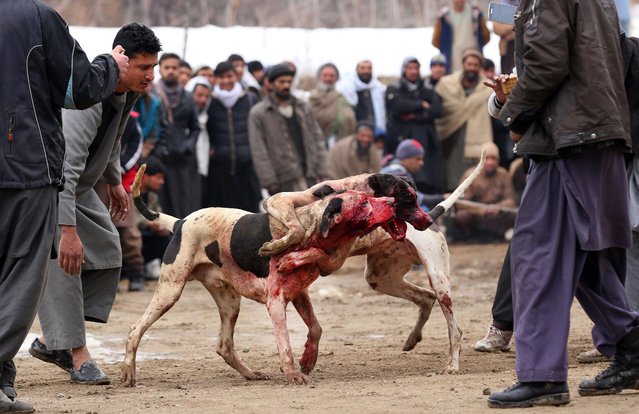
Afghan dogs fight during the weekly dog fight in Kabul, Afghanistan, 17 February 2017. Under the Taliban dog fighting was forbidden, but since their fall it has become a major source of entertainment for hundreds of Afghans, where bets can amount to thousands of dollars and the dogs, which must be over one year old, are well-cared for by their owners and fed milk, butter and meat. (Photo by Hedayatullah Amid/EPA)

Afghan dogs fight during the weekly dog fight in Kabul, Afghanistan, 17 February 2017. Under the Taliban dog fighting was forbidden, but since their fall it has become a major source of entertainment for hundreds of Afghans, where bets can amount to thousands of dollars and the dogs, which must be over one year old, are well-cared for by their owners and fed milk, butter and meat. (Photo by Hedayatullah Amid/EPA)
Details
20 Feb 2017 00:04:00
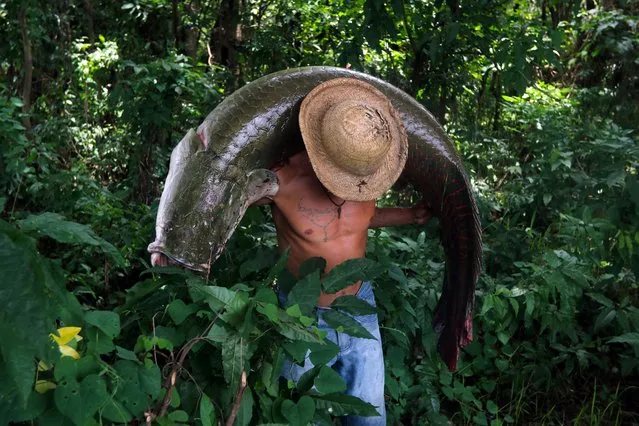
A fisherman carries a large Pirarucu (Arapaima gigas) at the Piagacu-Purus Sustainable Development Reserve in Amazonas state, Brazil, on October 24, 2019. The pirarucu -a giant fish of the Amazon, that had been on the verge of extinction- can measure up to three meters and weigh more than 200 kilos. The soft and tasty white meat fish is nowadays served in renowned restaurants in Rio de Janeiro. (Photo by Ricardo Oliveira/AFP Photo)

A fisherman carries a large Pirarucu (Arapaima gigas) at the Piagacu-Purus Sustainable Development Reserve in Amazonas state, Brazil, on October 24, 2019. The pirarucu -a giant fish of the Amazon, that had been on the verge of extinction- can measure up to three meters and weigh more than 200 kilos. The soft and tasty white meat fish is nowadays served in renowned restaurants in Rio de Janeiro. (Photo by Ricardo Oliveira/AFP Photo)
Details
31 Oct 2019 00:07:00
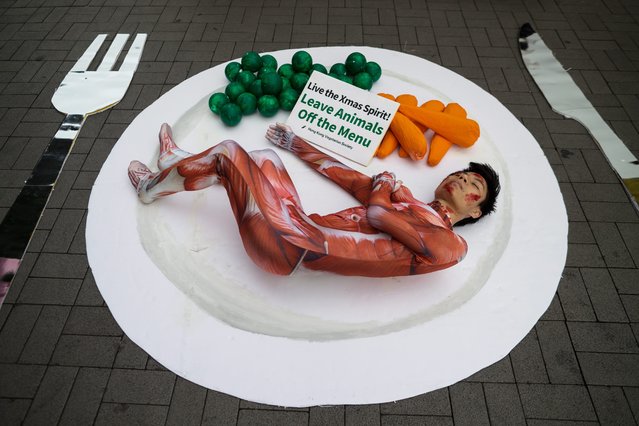
A Hong Kong Vegetarian Society activists lies on a giant plate alongside oversized peas, carrots and cutlery during a protest rally in the tourist district of Tsim Sha Tsui, Hong Kong, China, 23 December 2015. The activists urged passers-by to extend the holiday spirit to animals and to give thoughts to the cruelty inflicted on animals in meat productions. (Photo by Jerome Favre/EPA)

A Hong Kong Vegetarian Society activists lies on a giant plate alongside oversized peas, carrots and cutlery during a protest rally in the tourist district of Tsim Sha Tsui, Hong Kong, China, 23 December 2015. The activists urged passers-by to extend the holiday spirit to animals and to give thoughts to the cruelty inflicted on animals in meat productions. (Photo by Jerome Favre/EPA)
Details
24 Dec 2015 10:21:00
In this handout image provided by Ogilvy, a burger made from cultured beef, which has been developed by Professor Mark Post of Maastricht University in the Netherlands (pictured) is shown to the media during a press conference on August 5, 2013 in London, England. Cultured Beef could help solve the coming food crisis and combat climate change with commercial production of Cultured Beef beginning within ten to twenty years. (Photo by David Parry via Getty Images)

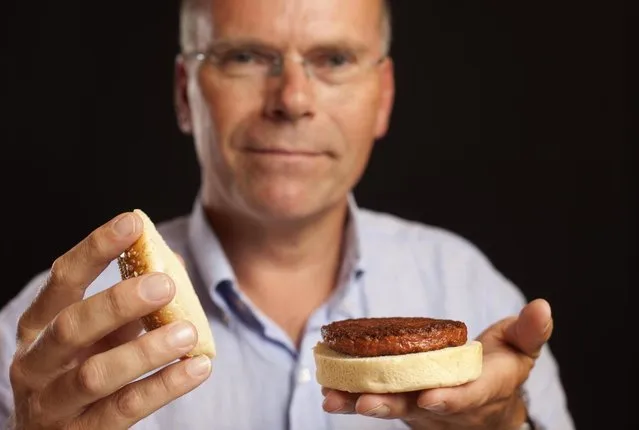
In this handout image provided by Ogilvy, a burger made from cultured beef, which has been developed by Professor Mark Post of Maastricht University in the Netherlands (pictured) is shown to the media during a press conference on August 5, 2013 in London, England. The in-vitro burger, cultured from cattle stem cells, the first example of what its creator says could provide an answer to global food shortages and help combat climate change, was fried in a pan and tasted by two volunteers. The burger is the result of years of research by Dutch scientist Mark Post, a vascular biologist at the University of Maastricht, who is working to show how meat grown in petri dishes might one day be a true alternative to meat from livestock.The meat in the burger has been made by knitting together around 20,000 strands of protein that has been cultured from cattle stem cells in Post's lab. (Photo by David Parry)
Details
06 Aug 2013 08:48:00
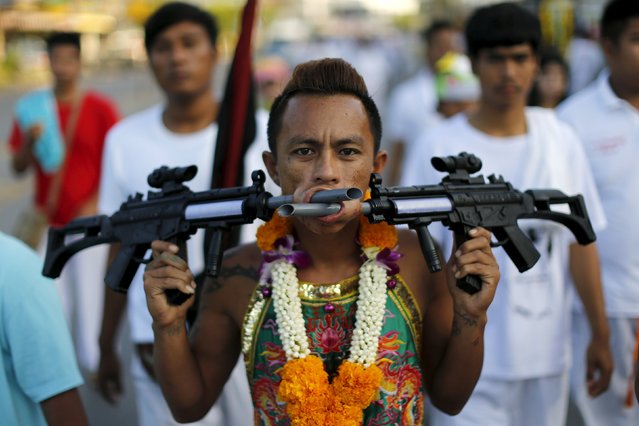
A devotee of the Chinese Ban Tha Rue shrine walks with guns pierced through his cheeks during a procession celebrating the annual vegetarian festival in Phuket, Thailand, October 17, 2015.

A devotee of the Chinese Ban Tha Rue shrine walks with guns pierced through his cheeks during a procession celebrating the annual vegetarian festival in Phuket, Thailand, October 17, 2015. The festival, featuring face-piercing, spirit mediums and strict vegetarianism celebrates the local Chinese community's belief that abstinence from meat and various stimulants during the ninth lunar month of the Chinese calendar will help them obtain good health and peace of mind. (Photo by Jorge Silva/Reuters)
Details
20 Oct 2015 08:01:00
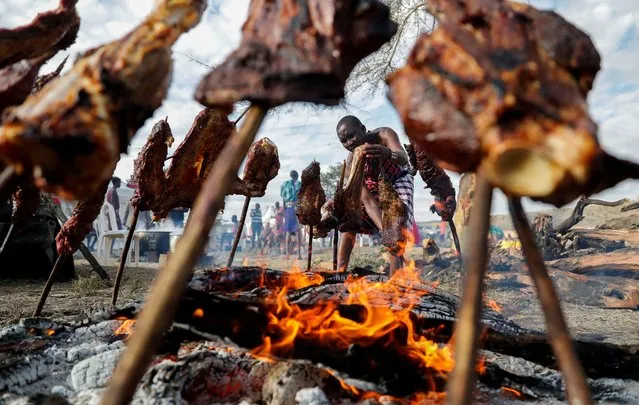
David Pariken 46, of the indigenous Maasai community, roasts meat at the inaugural Maa Cultural Week dubbed The Maa-Festival aimed to promote peace, tourism, and cultural exchange as the wildebeests (Connochaetes taurinus) make their annual cross border migration at the Sekenani village, in the Maasai Mara National Reserve, in Narok County, Kenya on August 22, 2023. (Photo by Thomas Mukoya/Reuters)

David Pariken 46, of the indigenous Maasai community, roasts meat at the inaugural Maa Cultural Week dubbed The Maa-Festival aimed to promote peace, tourism, and cultural exchange as the wildebeests (Connochaetes taurinus) make their annual cross border migration at the Sekenani village, in the Maasai Mara National Reserve, in Narok County, Kenya on August 22, 2023. (Photo by Thomas Mukoya/Reuters)
Details
07 Sep 2023 02:53:00
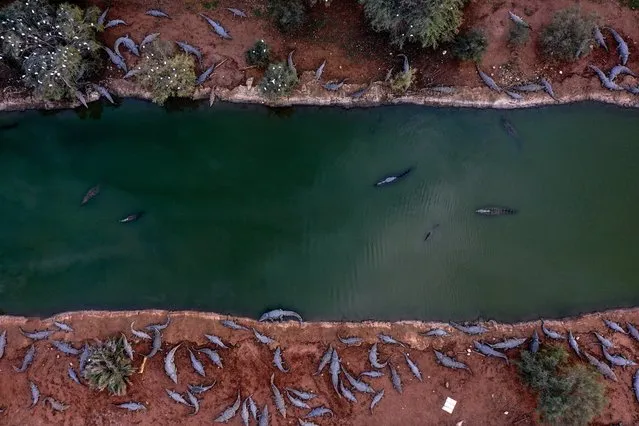
Dozens of crocodiles are seen in an inactive farm in the Jordan Valley near the Israeli Petzael settlement in the West Bank on January 18, 2021. Hundreds of crocodiles are stranded in a farm after an Israeli businessmen lost his business as Israel passed a law in 2012 defining the crocodile as a protected animal, and banning raising the animals for sale as meat or merchandise. (Photo by Menahem Kahana/AFP Photo)

Dozens of crocodiles are seen in an inactive farm in the Jordan Valley near the Israeli Petzael settlement in the West Bank on January 18, 2021. Hundreds of crocodiles are stranded in a farm after an Israeli businessmen lost his business as Israel passed a law in 2012 defining the crocodile as a protected animal, and banning raising the animals for sale as meat or merchandise. (Photo by Menahem Kahana/AFP Photo)
Details
10 Mar 2021 10:01:00