Loading...
Done


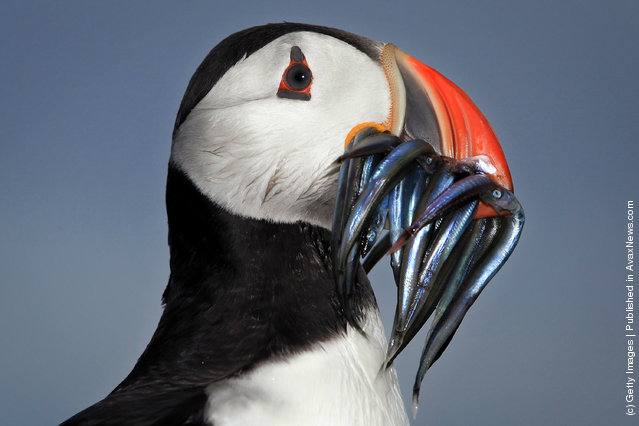
A Puffin returns to it's nest with a beak full of sand eels on June 25, 2011 on Inner Farne, England. The Farne Islands, which are run by the National Trust, are situated two to three miles off the Northumberland coastline. The archipeligo of 16-28 separate islands (depending on the tide) make the summer home to approximately 100,000 pairs of breeding seabirds including around 36,000 Puffins, 32,000 Guillemots and 2,000 pairs of Arctic Terns. The species of birds which nest in internationally important numbers include Shag, Sandwich Tern and Arctic Tern. The coastline around The Farnes are also the breeding ground to one of Europe's largest Grey Seal colonies with around 4,000 adults giving birth to 1500 pups every year. (Photo by Dan Kitwood/Getty Images)
Details
27 Jun 2011 12:58:00
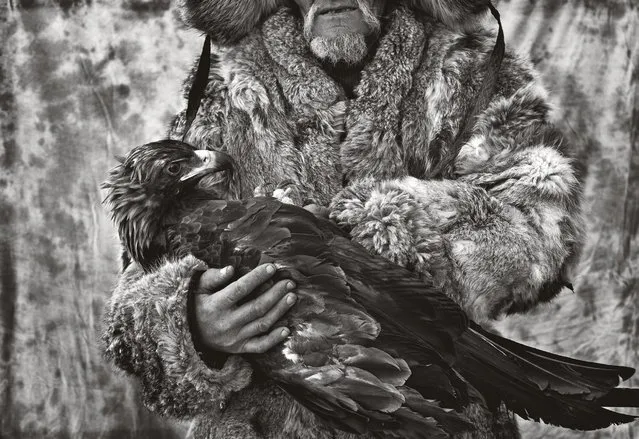
A Kazakh hunter has taken an eaglet from the nest, given it pride of place in their home and trained it. All hunters describe the eagle as part of their family. (Photo by Palani Mohan)

Kazakh nomads have been grazing their livestock in Mongolia for hundreds of years. Fascinated by the bond between hunter and eagle, photographer Palani Mohan has spent the last few years documenting the burkitshi. Mohan's photos of the landscape, isolation of the hunt, and most of all the trusting relationship between man and bird, convey the importance that the eagle plays in their lives. (Photo by Palani Mohan)
Details
11 Jan 2016 08:03:00
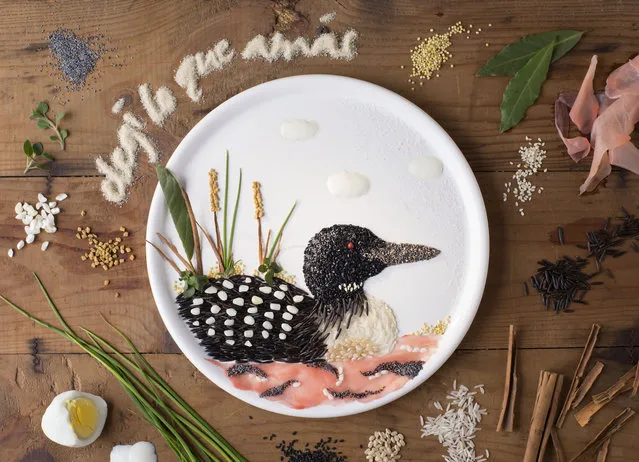
Meet the woman who has made playing with food her job and creates incredible pieces of edible art. From city landmarks to colorful animals, Anna Keville Joyce lets her imagination run wild as she creates a series of intricate art works made entirely from food. Using anything from vegetables to sausages, Annas pieces are so detailed that at first glance it is difficult to tell what they are made from. (Photo by Anna Keville Joyce/Caters News)

Meet the woman who has made playing with food her job and creates incredible pieces of edible art. From city landmarks to colorful animals, Anna Keville Joyce lets her imagination run wild as she creates a series of intricate art works made entirely from food. Using anything from vegetables to sausages, Annas pieces are so detailed that at first glance it is difficult to tell what they are made from. Here: a nesting bird. (Photo by Anna Keville Joyce/Caters News)
Details
20 Oct 2015 08:06:00
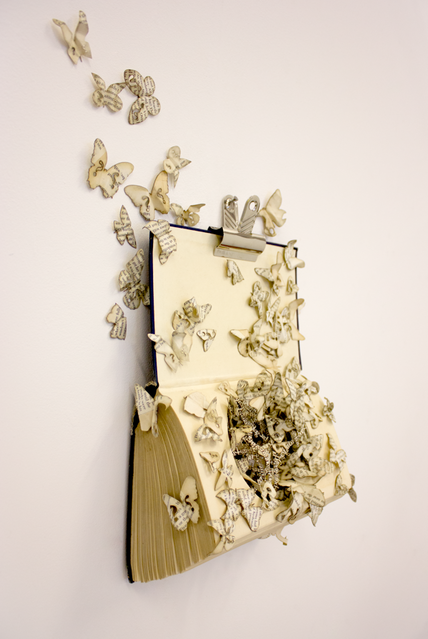
Plagued by Doubt By Thomas Wightman

Thoughts. They fly through the broad expenses of our mind, floating gracefully in midair, going into the clouds, and then reemerging once again. Some are quick and furtive, others are grand and majestic. We reflect upon them as they enter our minds, and once they leave, they are usually gone for good. However, some thoughts are different. These thoughts resemble a flock of angry birds or a swarm of hungry moths that invade your mind, slowly eating away at your sanity, strength, and desire to live. Such thoughts often plague that minds of people with Obsessive Compulsive disorder. They completely occupy their time; constantly there; ever-present. With his book sculpture, Thomas Wightman was able to accurately convey the way these thoughts consume the mind, slowly building a nest within it, resisting all attempts to drive them away.

Thomas Wightman


See Also: Derailing My Train of Thought
Details
19 Mar 2015 09:11:00
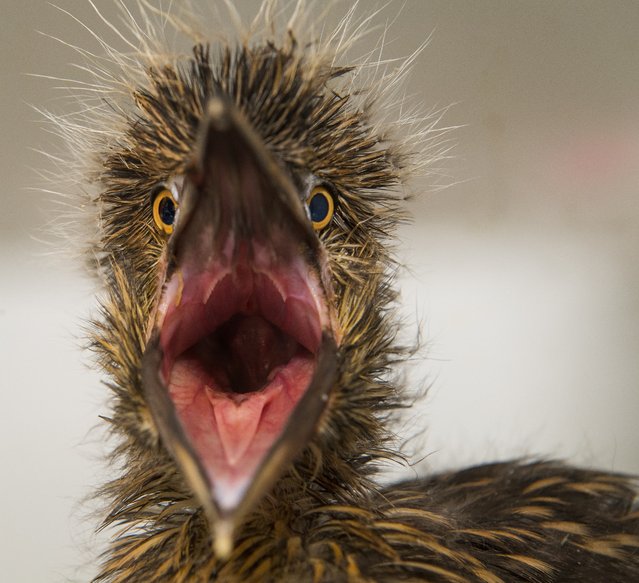
A baby Black-crowned Night Heron squawks in its incubator while being cared for at City Wildlife rescue and rehabilitation center in Washington, DC on May 31, 2017. The heron is one of several that have been brought to CW by the staff at The National Zoo over the past few years. The heron is a native bird and has made an established rookery inside the zoo grounds over a hundred years ago.  Every year at this time, some of the chicks get pushed or fall out of the nest and require human care.  Because the birds are native and not part of the Smithsonian collection, they partnered with CW to rehabilitate the herons for re-release back to the flock inside Zoo. They're reintroduced back to their flock so that they can migrate together in the Fall. The Black-crowned heron usually migrates from the DC area down to southeast North Carolina, some going as far as Jacksonville, FL in winter. The Black-crowned heron is the species of greatest conservation need in the District of Columbia because their numbers are in such rapid decline due to habitat loss. (Photo Linda Davidson/The Washington Post)

A baby Black-crowned Night Heron squawks in its incubator while being cared for at City Wildlife rescue and rehabilitation center in Washington, DC on May 31, 2017. The heron is one of several that have been brought to CW by the staff at The National Zoo over the past few years. (Photo Linda Davidson/The Washington Post)
Details
04 Jun 2017 08:04:00
The National Geographic Photo Ark is a travelling exhibition of photographer Joel Sartore’s quest to create a photo archive of biodiversity around the world. So far, Sartore has captured studio portraits of more than 6,000 species – a number that he hopes to double. On 1 July, the ark will open at Melbourne zoo – the first time it has been exhibited in the southern hemisphere. More than 50 portraits will be on display, including many of Australian endangered animals being protected by programs at the zoo itself. These captions have been edited from text supplied by Melbourne zoo. Here: Barking owl. So-named because its call sounds like a barking dog, these birds are native to Australia, Indonesia and Papua New Guinea. In Victoria they are listed as an endangered species, and in 2003 there were estimated to be fewer than 50 breeding pairs. The main threat to the species in Victoria is loss of habitat, especially large trees with hollows in which they can nest and on which many of their prey depend. Apart from a bark, they may utter a chilling scream when they feel threatened. (Photo by Joel Sartore/National Geographic Photo Ark/The Guardian)

The National Geographic Photo Ark is a travelling exhibition of photographer Joel Sartore’s quest to create a photo archive of biodiversity around the world. So far, Sartore has captured studio portraits of more than 6,000 species – a number that he hopes to double. On 1 July, the ark will open at Melbourne zoo – the first time it has been exhibited in the southern hemisphere. More than 50 portraits will be on display, including many of Australian endangered animals being protected by programs at the zoo itself. These captions have been edited from text supplied by Melbourne zoo. Here: Barking owl. (Photo by Joel Sartore/National Geographic Photo Ark/The Guardian)
Details
01 Jul 2017 07:45:00
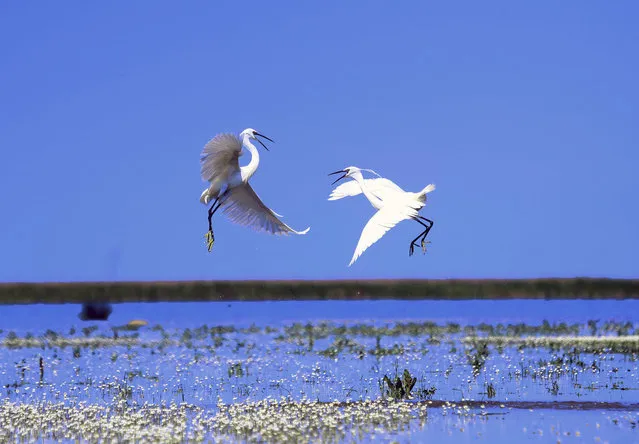
Birds are seen at Kizilirmak Bird Paradise in Turkey's Samsun on April 22, 2021. Kizilirmak Delta Bird Sanctuary, which is on the UNESCO World Heritage Tentative List and hosts 359 to 487 species of birds in Turkey, became more active with the arrival of spring. (Photo by Mehmet Kumcagiz/Anadolu Agency via Getty Images)

Birds are seen at Kizilirmak Bird Paradise in Turkey's Samsun on April 22, 2021. Kizilirmak Delta Bird Sanctuary, which is on the UNESCO World Heritage Tentative List and hosts 359 to 487 species of birds in Turkey, became more active with the arrival of spring. (Photo by Mehmet Kumcagiz/Anadolu Agency via Getty Images)
Details
04 May 2021 09:57:00
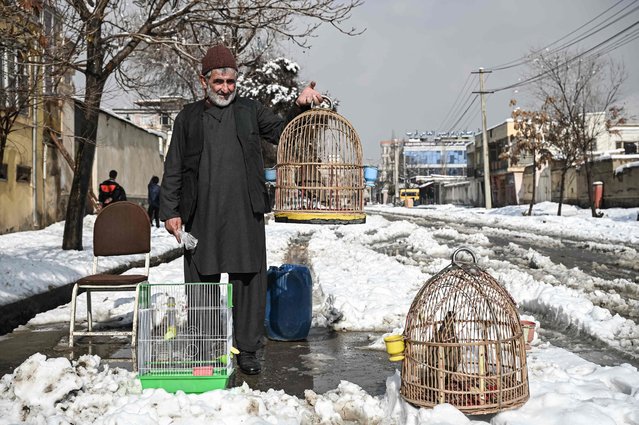
A bird vendor holds a cage with a bird on a sideroad after a heavy snowfall in Kabul on January 5, 2022. (Photo by Mohd Rasfan/AFP Photo)

A bird vendor holds a cage with a bird on a sideroad after a heavy snowfall in Kabul on January 5, 2022. (Photo by Mohd Rasfan/AFP Photo)
Details
20 Jan 2022 07:20:00