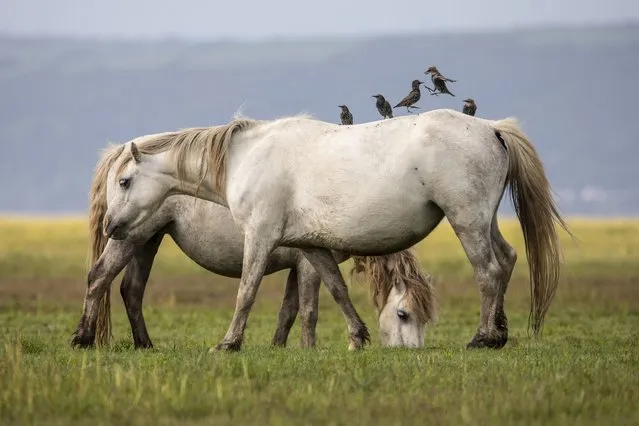
Semi-feral, conservation ponies, graze on the salt marsh's of Gower, Swansea, Wales, United Kingdom on September 7, 2022. (Photo by Joann Randles/Cover Images)
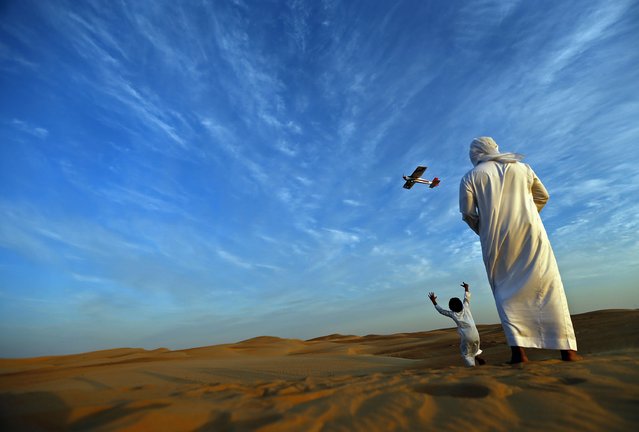
An Emirati child plays with an airplane model near the venue of the Mazayin Dhafra Camel Festival, on December 20, 2012 near the city of Madinat Zayed, 150 kms west of Abu Dhabi. The festival, which attracts participants from around the Gulf region, includes a camel beauty contest, a display of UAE handcrafts and other activities aimed at promoting the country's folklore. (Photo by Karim Sahib/AFP Photo)
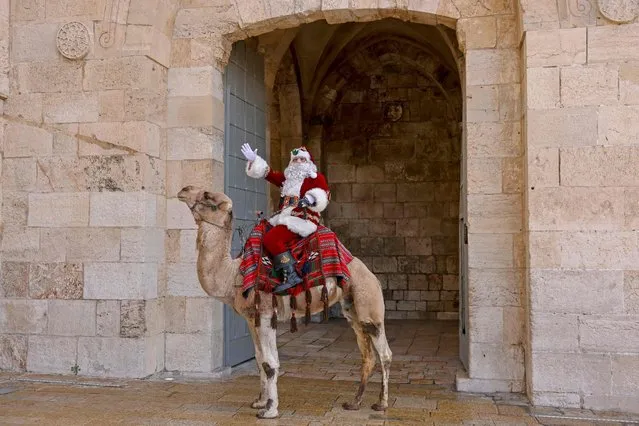
A Palestinian man dressed as Santa Claus gestures as he rides a camel in Jerusalem's Old City during Christmas celebrations, on December 23, 2021. (Photo by Ahmad Gharabli/AFP Photo)
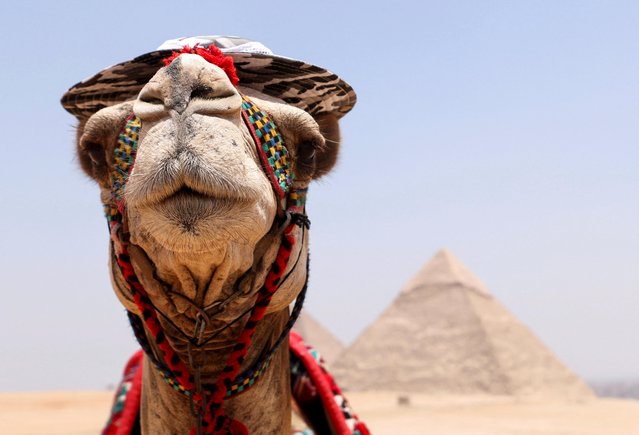
A camel wearing a hat amid a heatwave, looks on, in front of the Great Pyramids of Giza, on the outskirts of Cairo, Egypt on July 19, 2023. (Photo by Mohamed Abd El Ghany/Reuters)
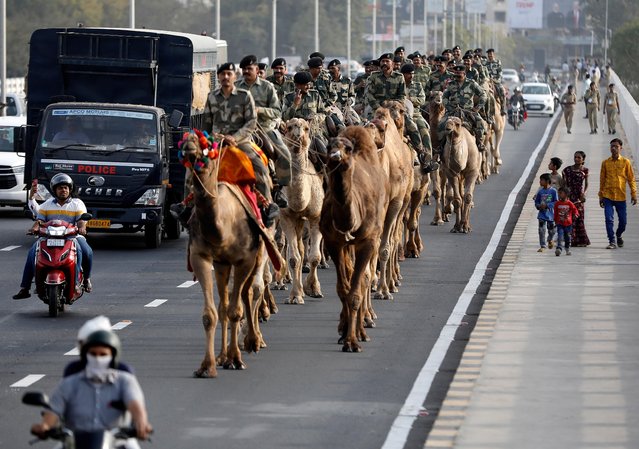
Border Security Force (BSF) soldiers ride their camels as they take part in a rehearsal for a road show ahead of the visit of U.S. President Donald Trump, in Ahmedabad, India, February 21, 2020. (Photo by Amit Dave/Reuters)
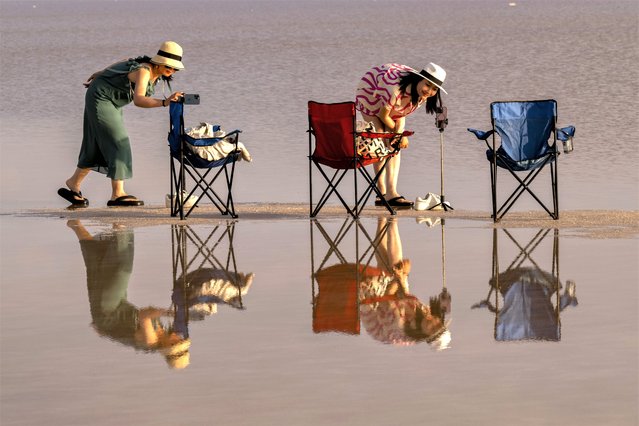
Women take photos on Lake Salt, which is on the UNESCO World Heritage Tentative List, during the sunset in Ankara, Turkiye on July 3, 2023. Lake Salt, which is one of the important wetlands of Turkiye and is of great importance for the protection of biological diversity in our country, also attracts the attention of visitors. (Photo by Aytac Unal/Anadolu Agency via Getty Images)
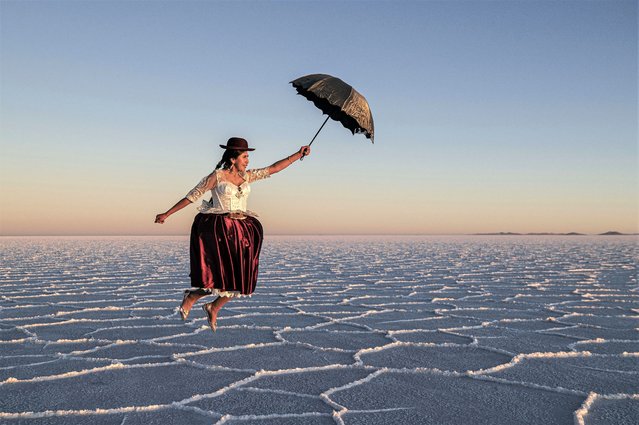
A young cholita from “Warmi Empollerada” project is portrayed emulating to fly with an umbrella during the sunset at the Salar de Uyuni (Uyuni Salt Flats), southwestern Bolivia, on June 25, 2023. The Salar de Uyuni is the world's largest salt flat and a top tourist destination in Bolivia and South America. (Photo by Marcelo Perez Del Carpio/Anadolu Agency via Getty Images)
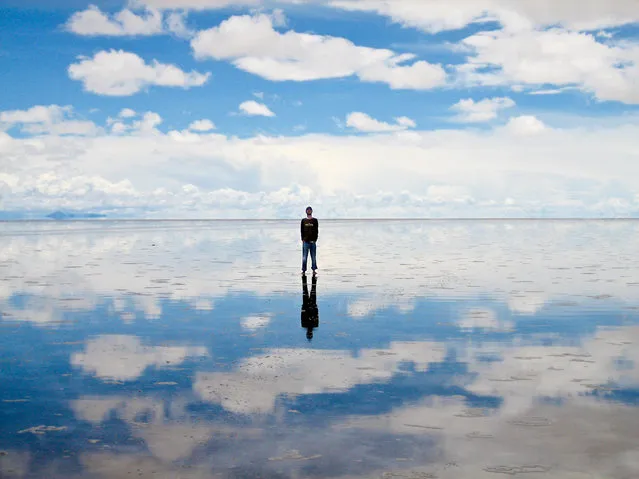
Salar de Uyuni (or Salar de Tunupa) is the world's largest salt flat at 10,582 square kilometers (4,086 sq mi). It is located in the Potosí and Oruro departments in southwest Bolivia, near the crest of the Andes, and is elevated 3,656 meters (11,995 ft) above mean sea level. The Salar was formed as a result of transformations between several prehistoric lakes. It is covered by a few meters of salt crust, which has an extraordinary flatness with the average altitude variations within one meter over the entire area of the Salar.