Loading...
Done


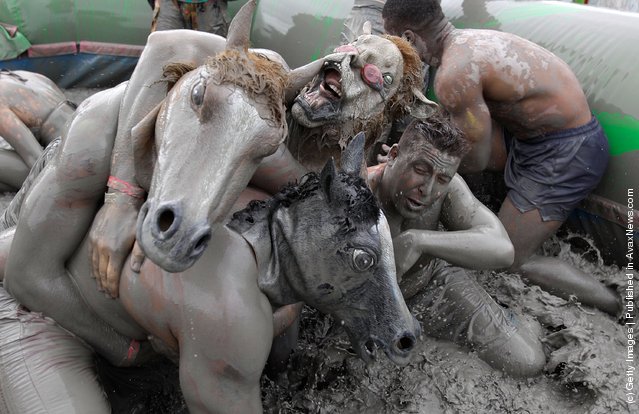
Participants enjoy mud during the 14th Annual Boryeong Mud Festival at Daecheon Beach on July 16, 2011 in Boryeong, South Korea. The mud, which is believed to have beneficial effects on the skin due to its mineral content, is sourced from mud flats near Boryeong and transported to the beach by truck. (Photo by Chung Sung-Jun/Getty Images)
Details
17 Jul 2011 11:20:00
Mud-covered tourists pretend to be trapped inside a mud prison at the Daecheon Beach Mud Plaza in the city of Boryeong on South Korea's west coast, July 17, as they take part in the Boryeong Mud Festival, which opened that day and runs through July 26. Boryeong mud is rich in natural mineral component and is considered to prevent skin aging. (Photo by EPA/Yonhap)

Mud-covered tourists pretend to be trapped inside a mud prison at the Daecheon Beach Mud Plaza in the city of Boryeong on South Korea's west coast, July 17, as they take part in the Boryeong Mud Festival, which opened that day and runs through July 26. Boryeong mud is rich in natural mineral component and is considered to prevent skin aging. (Photo by EPA/Yonhap)
Details
18 Jul 2015 13:33:00
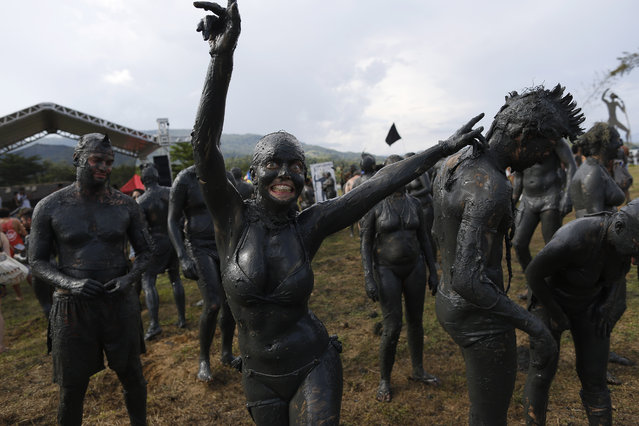
A woman, covered in mud, dances during the traditional “Bloco da Lama” or “Mud Block” carnival party, in Paraty, Brazil, Saturday, February 14, 2015. Revelers in the seaside colonial town threw themselves into deposits of black, mineral-rich slime, emerging covered head-to-toe in the sludge. Bikinis and trunks disappeared beneath the mud, which highlights both gym-pumped pectorals and beer-fed guts. (Photo by Leo Correa/AP Photo)

A woman, covered in mud, dances during the traditional “Bloco da Lama” or “Mud Block” carnival party, in Paraty, Brazil, Saturday, February 14, 2015. Revelers in the seaside colonial town threw themselves into deposits of black, mineral-rich slime, emerging covered head-to-toe in the sludge. Bikinis and trunks disappeared beneath the mud, which highlights both gym-pumped pectorals and beer-fed guts. (Photo by Leo Correa/AP Photo)
Details
16 Feb 2015 13:00:00
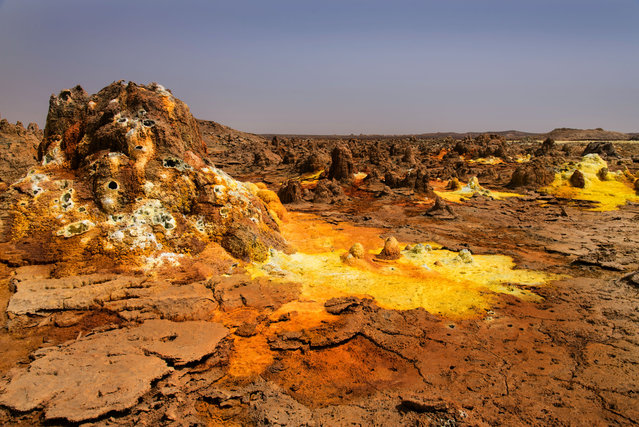
Thanks to plenty of salt minerals and heavy elements in the soil, the Dallol volcano in Ethiopia produces brilliantly colored pools of water at the top of its caldera. And, as if to add greater effect to the already stunning sights, the volcano stands apart from the salt plains around it like an island. This hotspot was created through phreatomagmatic eruptions caused by magma interacting with water, and was further altered due to the presence of salt water. (Photo by Francisco Pandolfo/Caters News)

Thanks to plenty of salt minerals and heavy elements in the soil, the Dallol volcano in Ethiopia produces brilliantly colored pools of water at the top of its caldera. And, as if to add greater effect to the already stunning sights, the volcano stands apart from the salt plains around it like an island. This hotspot was created through phreatomagmatic eruptions caused by magma interacting with water, and was further altered due to the presence of salt water. (Photo by Francisco Pandolfo/Caters News)
Details
10 Feb 2016 11:36:00
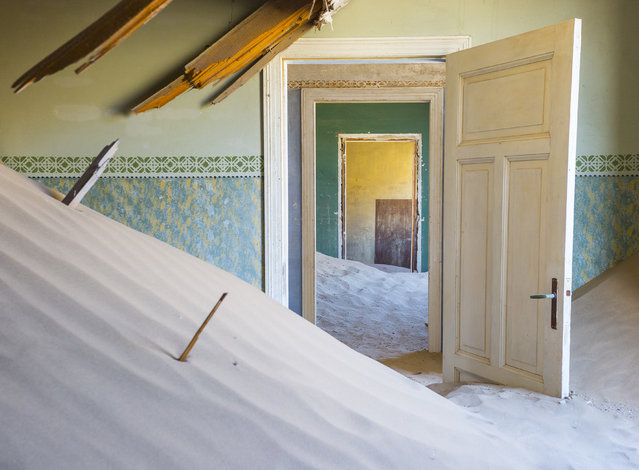
Kolmanskop Abandoned Ghost Town

In 1908 the black worker Zacharias Lewala found a diamond while working in this area and showed it to his supervisor, the German railroad inspector August Stauch. After realizing that this area is rich of diamonds, lots of German miners settled in this area and soon after the German government declared a large area as a "Sperrgebiet", starting to exploit the diamond field.
Details
02 Apr 2013 10:12:00
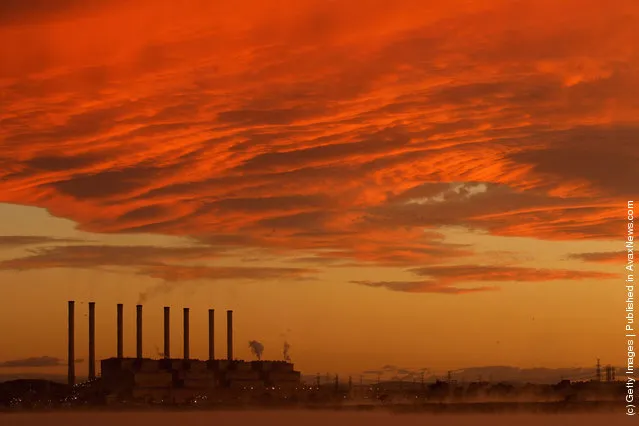
A view of the Hazelwood Power Station across the cooling pondage at sunrise in Melbourne, Australia

A view of the Hazelwood Power Station across the cooling pondage at sunrise on March 21, 2012 in Melbourne, Australia. The brown coal fueled power station, located in Latrobe Valley is the oldest in Victoria and provides the state nearly 25% of its energy. In 2005 Hazelwood was labeled Australia's least carbon efficient power station by WWF Australia and continues to be a target of issue of environmentalist groups. (Photo by Hamish Blair/Getty Images)
Details
21 Mar 2012 08:34:00
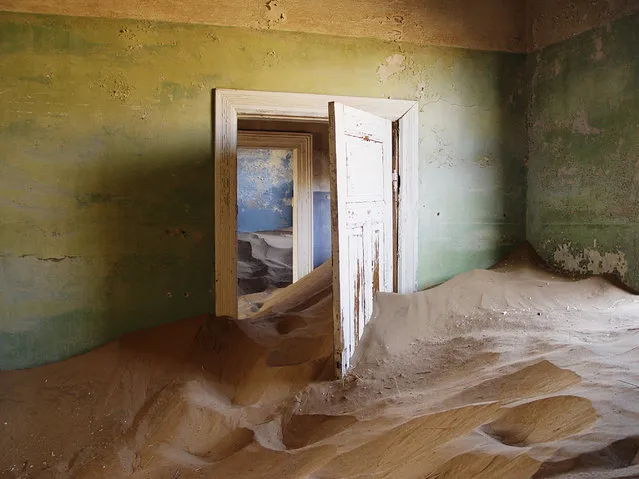
Kolmankop, an abandoned mining town in Namibia. (Photo by David Ogden/Caters News)

These sand-swept images show the ghostly remains of what was once a mineral-rich mining community. In its heyday, the town of Kolmanskop, Namibia, was home to about 700 families. Now all that remains are empty homes filled with sand, while cast-off items such as bathtubs are scattered about the surrounding area. Over time, the sand of the stunning dunes that encircle the town of Kolmanskop has been blown towards the abandoned residences, coating everything from streets to the interiors of houses and workshops. Here: Kolmankop, an abandoned mining town in Namibia. (Photo by David Ogden/Caters News)
Details
13 Mar 2016 09:31:00
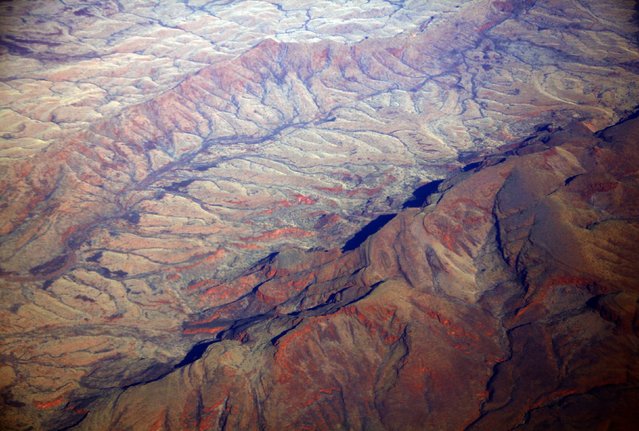
A general view of dried-up river beds and hills in the Pilbara region of Western Australia December 2, 2013. (Photo by David Gray/Reuters)

A general view of dried-up rivers in the Pilbara region of Western Australia December 2, 2013. Western Australia's Pilbara region, which is the size of Spain, has the world's largest known deposits of iron ore and supplies nearly 45 percent of global trade in the mineral. (Photo by David Gray/Reuters)
Details
17 Mar 2014 08:52:00