Loading...
Done
An indigenous woman participates in a parade called "International Indigenous Beauty" during the first World Games for Indigenous Peoples in Palmas, Brazil, October 24, 2015. (Photo by Ueslei Marcelino/Reuters)

An indigenous woman participates in a parade called "International Indigenous Beauty" during the first World Games for Indigenous Peoples in Palmas, Brazil, October 24, 2015. Billed as the indigenous Olympics, the games are expected to attract nearly 2,000 athletes from dozens of Brazilian ethnicities, as well as from such far-flung nations as Ethiopia and New Zealand. (Photo by Ueslei Marcelino/Reuters)
Details
28 Oct 2015 08:04:00
A Turkana tribeswoman reacts after an accidental fire of a shelter in Turkana settlement in Ilemi Triangle, Kenya, July 15, 2019. (Photo by Goran Tomasevic/Reuters)

A Turkana tribeswoman reacts after an accidental fire of a shelter in Turkana settlement in Ilemi Triangle, Kenya, July 15, 2019. The Ilemi Triangle, a disputed sliver of land along the border with Ethiopia and South Sudan, is the northernmost tip of Turkana, Kenya's poorest county. A series of deadly clashes between the Turkana community and other ethnic groups that they said had crossed from South Sudan have put people on edge, to the point of posting lookouts. (Photo by Goran Tomasevic/Reuters)
Details
25 Sep 2019 00:05:00
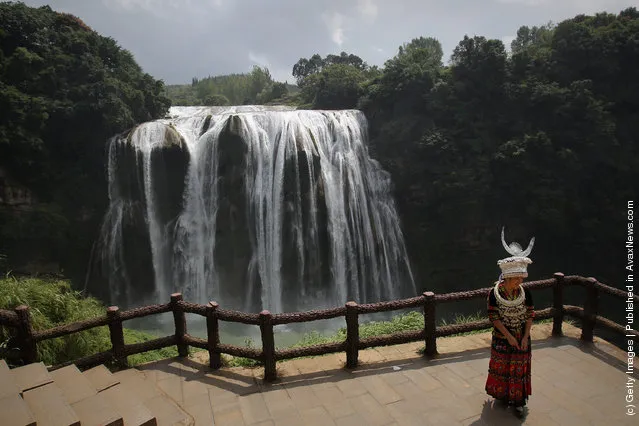
Huangguoshu Waterfall

“Huangguoshu Waterfall, also known as Yellow Fruit Tree Waterfall, is one of the largest waterfalls in China and East Asia located on the Baihe River in Anshun, Guizhou Province. It is 77.8 m (255 ft) high and 101 m (331 ft) wide. The main waterfall is 67 m (220 ft) high and 83.3 m (273 ft) wide”. – Wikipedia

Photo: The Miao ethnic minority women rest in front of Huangguoshu Cataract, Asia's largest waterfall, on September 13, 2011 in Anshun city of Guizhou Province, China. (Photo by Feng Li/Getty Images)
Details
14 Sep 2011 12:11:00
Beauty_By_Fulani

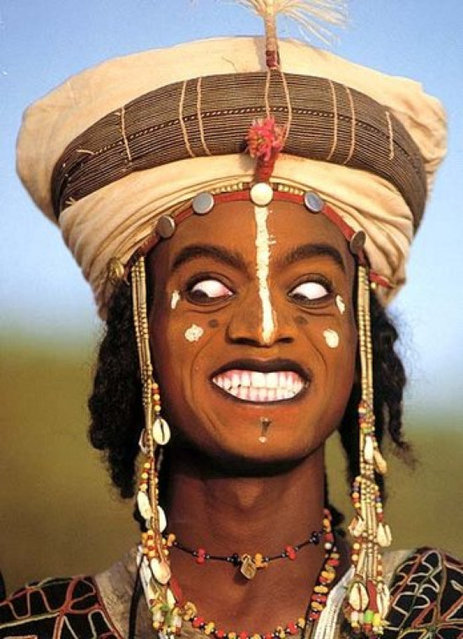
Fula people or Fulani or Fulbe are an ethnic group spread over many countries, predominantly in West Africa, but found also in Central Africa and Sudanese North Africa. African countries where they are present include Mauritania, Ghana, Senegal, Guinea, The Gambia, Mali, Nigeria, Sierra Leone, Benin, Burkina Faso, Guinea Bissau, Cameroon, Côte d'Ivoire, Niger, Chad, Togo, the Central African Republic, Liberia, and as far as Sudan and Egypt in the East. Fula people form a minority in every country they inhabit, but in Guinea they represent a plurality of the population (40%).
Details
25 Sep 2012 10:17:00
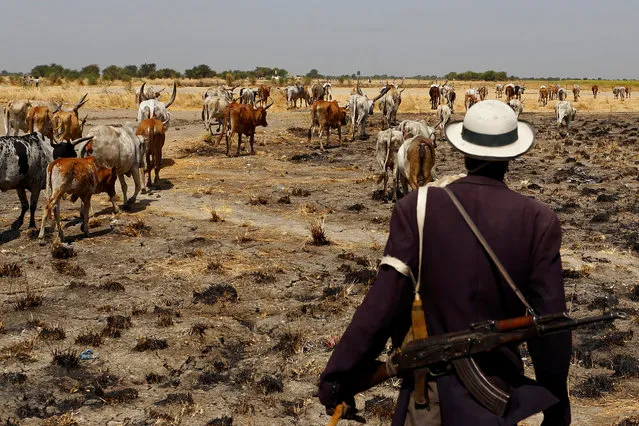
An armed man herds his cattle close to the village of Nimini in northern South Sudan, February 8, 2017. (Photo by Siegfried Modola/Reuters)

An armed man herds his cattle close to the village of Nimini in northern South Sudan, February 8, 2017. In the chaos of South Sudan's civil war, it took three years for Nyagonga Machul to find her lost children. Machul had traveled from her village to the capital when President Salva Kiir, an ethnic Dinka, fired his deputy Riek Machar, a Nuer, in 2013. (Photo by Siegfried Modola/Reuters)
Details
19 Feb 2017 00:04:00
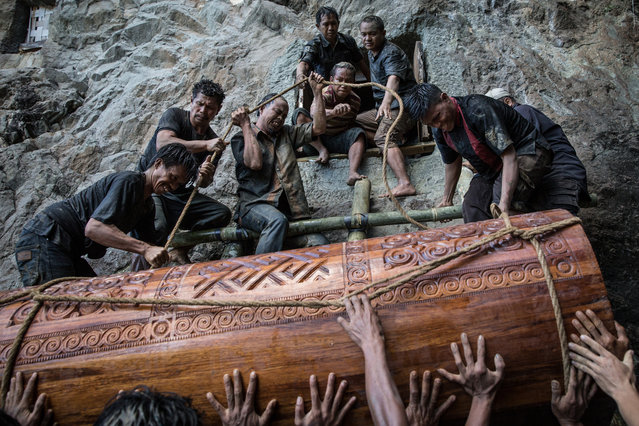
It is said that Torajans are people who “live to die”. For this Indonesian ethnic group, funerals are such extravagant events that they sometimes attract tourists. Families can postpone burials years (and the deceased are considered sick and hosted at home until the funeral) until the family can raise enough money and gather as many relatives as possible. And then it’s a jubilant multiday social event with a parade, dances and animal sacrifices. Agung Parameswara photographed these funerary practices when he traveled to South Sulawesi province, where the Torajans live. But often, their funeral isn’t the last time the dead are seen. In August, crypts are opened, coffins are slid back out and bodies delicately unsheathed. This tender ritual is known as Ma’Nene, which is customarily performed every few years. (Photo by Agung Parameswara/The Washington Post)

It is said that Torajans are people who “live to die”. For this Indonesian ethnic group, funerals are such extravagant events that they sometimes attract tourists. Families can postpone burials years (and the deceased are considered sick and hosted at home until the funeral) until the family can raise enough money and gather as many relatives as possible. And then it’s a jubilant multiday social event with a parade, dances and animal sacrifices. Agung Parameswara photographed these funerary practices when he traveled to South Sulawesi province, where the Torajans live. (Photo by Agung Parameswara/The Washington Post)
Details
06 Oct 2016 09:15:00
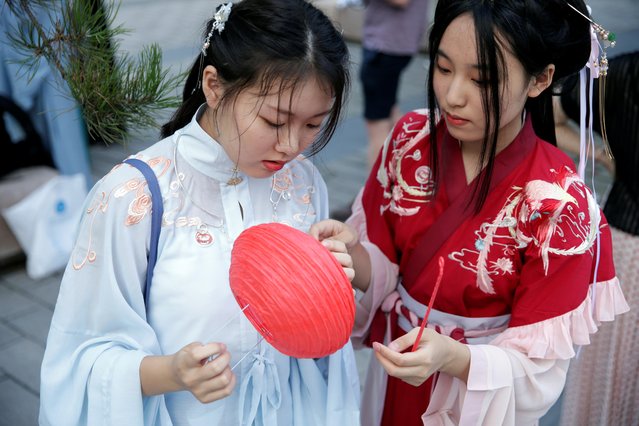
Girls dressed in “Hanfu”, or Han clothing, prepare for an event to mark the traditional Qixi festival, the Chinese equivalent of Valentine's Day, at a park in Beijing, China, August 7, 2019. Chinese for “Han clothing”, “Hanfu” is based on the idea of donning costumes worn in bygone eras by China's dominant Han ethnicity. Some of the most popular styles are from the Ming, Song and Tang dynasties. Hanfu enthusiasts doubled to two million in 2018 from a year earlier, according to a survey by Hanfu Zixun, a popular community account on the Wechat social media platform. (Photo by Jason Lee/Reuters)

Girls dressed in “Hanfu”, or Han clothing, prepare for an event to mark the traditional Qixi festival, the Chinese equivalent of Valentine's Day, at a park in Beijing, China, August 7, 2019. Chinese for “Han clothing”, “Hanfu” is based on the idea of donning costumes worn in bygone eras by China's dominant Han ethnicity. Some of the most popular styles are from the Ming, Song and Tang dynasties. Hanfu enthusiasts doubled to two million in 2018 from a year earlier, according to a survey by Hanfu Zixun, a popular community account on the Wechat social media platform. (Photo by Jason Lee/Reuters)
Details
23 Sep 2019 00:05:00
Balis Chinese community perform the dragon dance during Chinese New Year called Ngelawang ceremony on January 21, 2023 in Kuta, Bali, Indonesia. The Chinese diaspora of Southeast Asia is celebrating Lunar New Year, as COVID-19 restrictions have been removed, it is traditionally a time for people to meet their relatives and take part in celebrations with families. In Indonesia, ethnic Chinese families visited temples to celebrate the Year of the Rabbit on January 22. The Chinese community in Bali observes Chinese New Year in accordance with Balinese customs. In multiculturalism, the Balis-Chinese community believes that the performance of the dragon dance, the lion dance called Barong Sai, and offerings to the unseen world will safeguard the community from calamity and balance between the seen and unseen world. (Photo by Agung Parameswara/Getty Images)

Balis Chinese community perform the dragon dance during Chinese New Year called Ngelawang ceremony on January 21, 2023 in Kuta, Bali, Indonesia. The Chinese diaspora of Southeast Asia is celebrating Lunar New Year, as COVID-19 restrictions have been removed, it is traditionally a time for people to meet their relatives and take part in celebrations with families. In Indonesia, ethnic Chinese families visited temples to celebrate the Year of the Rabbit on January 22. (Photo by Agung Parameswara/Getty Images)
Details
29 Jan 2023 00:38:00