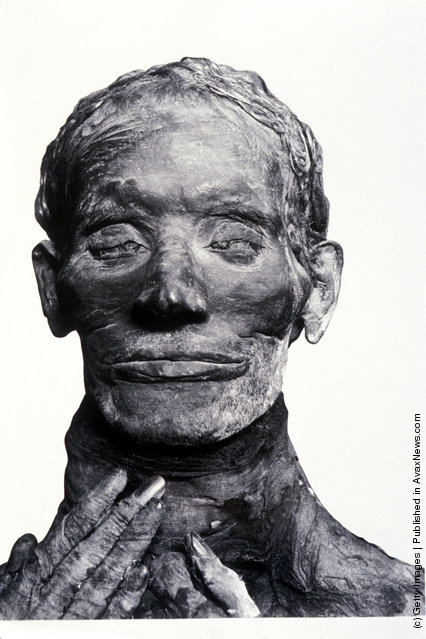
The mummy of Yuya thought by some to be Josua who, after Moses, led the Hebrews into the Promised land and logically would be the father-in-law of Amenophis III, at Cairo Museum, Egypt. (Photo by Patrick Landmann/Cairo Museum/Getty Images)
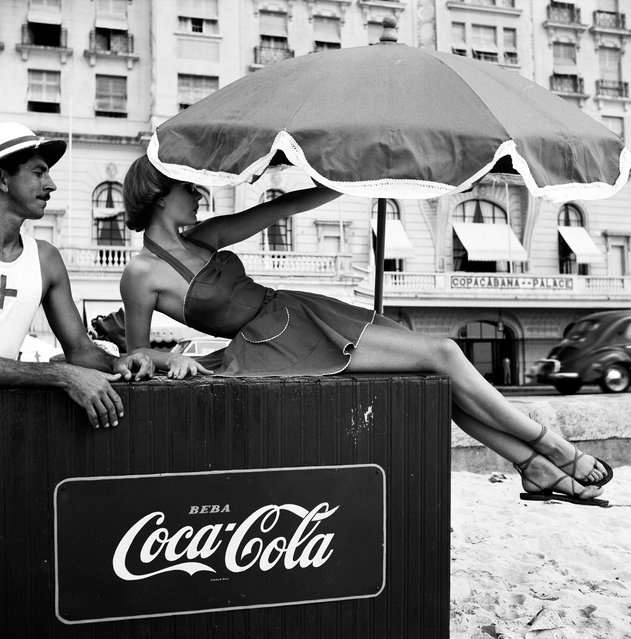
“Grit and Glamour”, a retrospective of the late British photographer Elsbeth Juda, who fled Nazi occupation and came to England in 1933, is at the Jewish Museum, in London, until July 1, 2018. Here: Shelagh Wilson, Copacabana beach, Rio de Janeiro, 1951. (Photo by Elsbeth Juda Archive/Victoria and Albert Museum)
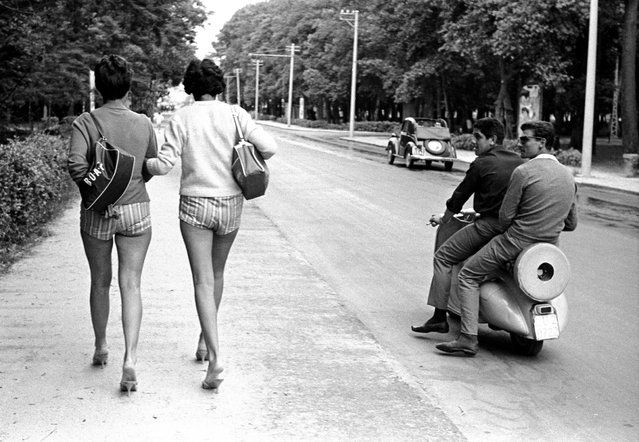
The “Paolo Di Paolo: Lost World” exhibition presents more than 250 largely unseen images from the photographer’s archive. Di Paolo chronicled life in his country as an economic boom followed the destruction of the second world war. Although those were the years of la dolce vita he was an anti-paparazzo – he shunned the salacious and respected his subjects. The exhibition is at MAXXI, the National Museum of 21st Century Arts in Rome until 30 June. Here: Viareggio in 1959. (Photo by Paolo Di Paolo/National Museum of 21st Century Arts)
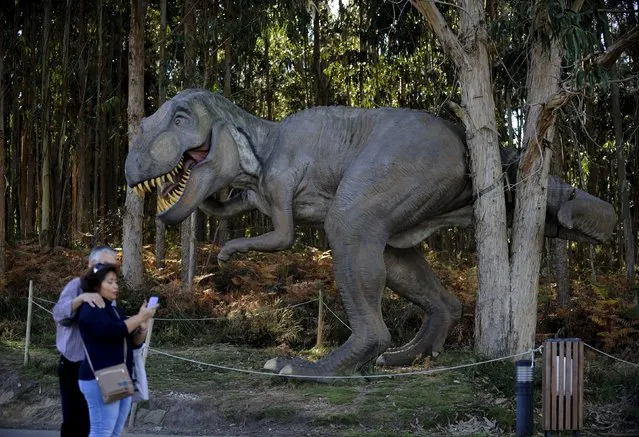
A couple takes a photo outside the MUJA (Jurassic Museum of Asturias) in Colunga, northern Spain, November 6, 2015. The scientific team of the Jurassic Museum of Asturias (MUJA) presents their latest studies on the fossil of a Ichthyosaur, which acccording to them is the most complete found in the Iberian Peninsula and one of the few in the world. (Photo by Eloy Alonso/Reuters)
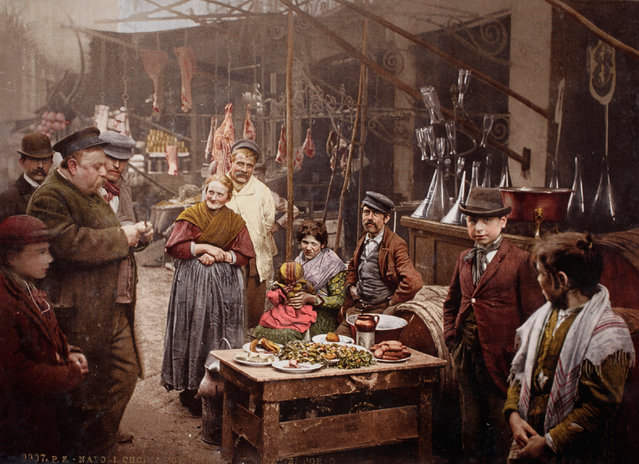
Photochromes are vibrant and nuanced prints hand-coloured from black-and-white negatives. Created using a process pioneered in the 1880s, these images offer a fascinating insight into the world when colour photography was still in its infancy. A Tour of the World in Photochromes is at the Swiss Camera Museum, Vevey, until 21 August. Here: Street food in the Strada del Porto in Naples, Italy, 1899. (Photo by Swiss Camera Museum/The Guardian)