Loading...
Done
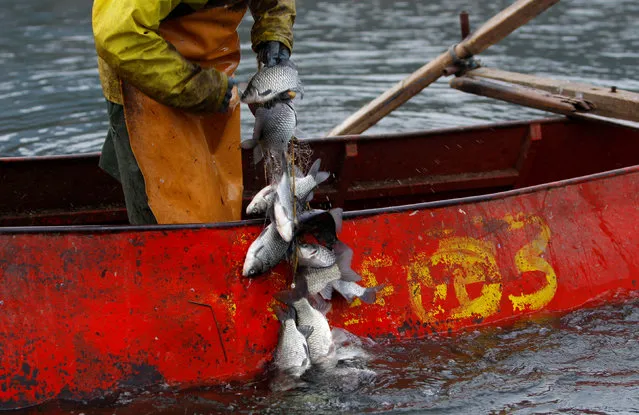
Fishermen collect their catch from a net at Dojran Lake, Macedonia, January 4, 2017. (Photo by Ognen Teofilovski/Reuters)

Fishermen collect their catch from a net at Dojran Lake, Macedonia, January 4, 2017. Fish from the lake is a traditional food for locals for orthodox Christmas eve, which falls on January 6. The lake faced sustainability issues during the 1990s due to drought and excessive use of its water but has since recovered after measures were taken to replenish and sustain water levels, according to local media. Dojran Lake is one of the three natural lakes in Macedonia, and also the warmest. It is said it is also the richest lake in fish in Europe. (Photo by Ognen Teofilovski/Reuters)
Details
05 Jan 2017 13:41:00
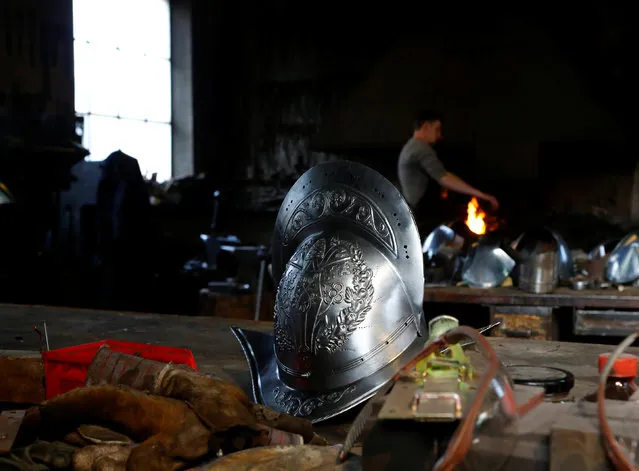
Blacksmith Johann Schmidberger works on a suit of armour for the Vatican's Swiss Guards at his workshop in Molln, Austria, March 29, 2017. (Photo by Leonhard Foeger/Reuters)

Blacksmith Johann Schmidberger works on a suit of armour for the Vatican's Swiss Guards at his workshop in Molln, Austria, March 29, 2017. Austrian blacksmiths who produce ceremonial suits of armour for the Vatican's Swiss Guards are close to the end of their current deal to do so, and say supplying the suits will not now be an issue for many years to come. One of the drawbacks of the Swiss Guards' medieval uniforms is that the craftsmanship needed to make them is disappearing. (Photo by Leonhard Foeger/Reuters)
Details
06 Apr 2017 09:08:00
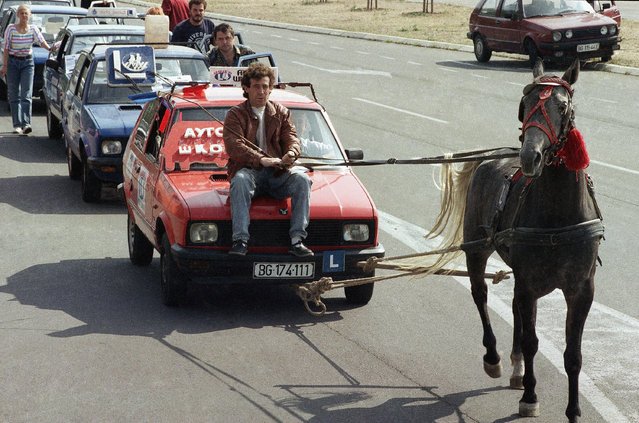
A horse pulls a driving school car as other drivers push their vehicles behind during a demonstration by driving instructors in Belgrade, September 25, 1992. Due to gasoline shortage in the Yugoslav capital, driving instructors are staying away from work. (Photo by AP Photo)

A horse pulls a driving school car as other drivers push their vehicles behind during a demonstration by driving instructors in Belgrade, September 25, 1992. Due to gasoline shortage in the Yugoslav capital, driving instructors are staying away from work. (Photo by AP Photo)
Details
26 Sep 2015 08:04:00
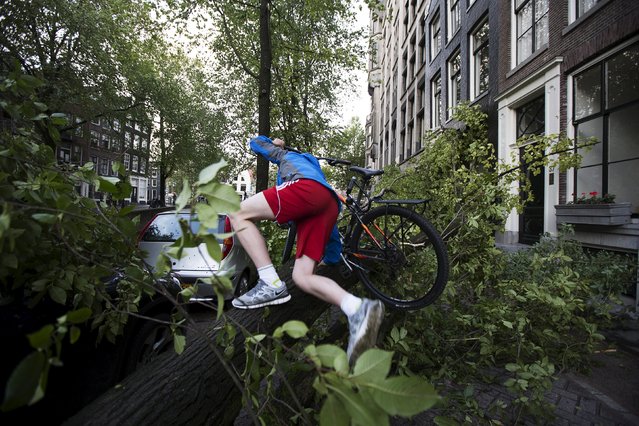
A cyclist climbs over a tree fallen atop a car after a heavy storm in Amsterdam, the Netherlands, July 25, 2015. One person was killed as the most severe July storm ever recorded in the Netherlands swept across the country on Saturday, delaying flights and disrupting road and rail traffic. (Photo by Cris Toala Olivares/Reuters)

A cyclist climbs over a tree fallen atop a car after a heavy storm in Amsterdam, the Netherlands, July 25, 2015. One person was killed as the most severe July storm ever recorded in the Netherlands swept across the country on Saturday, delaying flights and disrupting road and rail traffic. Dozens of flights were delayed at Amsterdam's Schiphol Airport and authorities warned travellers not to take to the road as gale-force winds and rain lashed the country, prompting the meteorological service to issue a “Code Red” warning. (Photo by Cris Toala Olivares/Reuters)
Details
26 Jul 2015 11:05:00
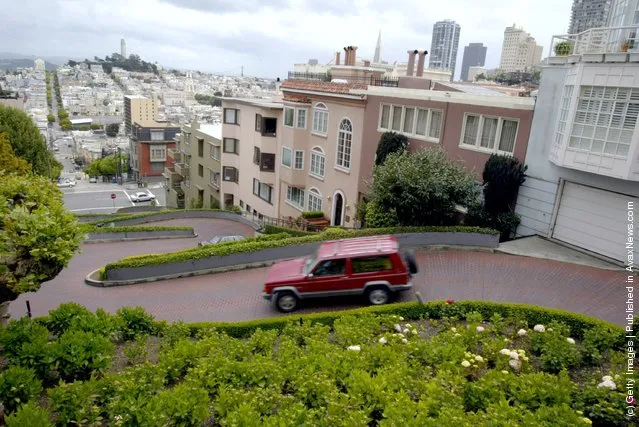
Lombard Street: The Crookedest Street In The World

“Lombard Street is an east-west street in San Francisco, California. Lombard Street is best known for the one-way section on Russian Hill between Hyde and Leavenworth Streets, in which the roadway has eight sharp turns (or switchbacks) that have earned the street the distinction of being the crookedest street in the world”. – Wikipedia

Photo: A single car drives down a typically crowded Lombard Street, San Francisco's crooked street, April 29, 2003 in San Francisco. (Photo by Justin Sullivan/Getty Images)
Details
07 Oct 2011 09:58:00
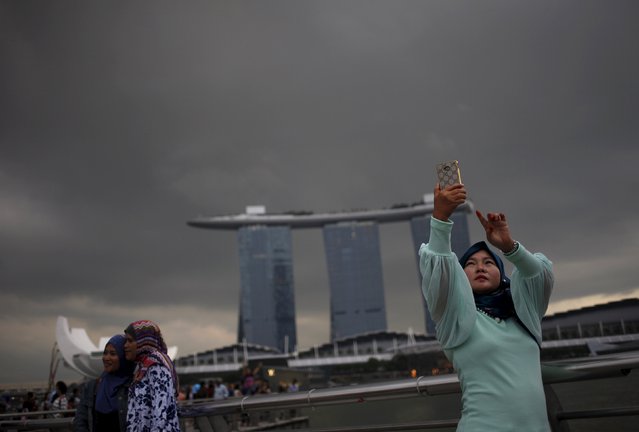
Indonesian tourists take photos at the Marina Bay in Singapore May 14, 2015. (Photo by Edgar Su/Reuters)

Indonesian tourists take photos at the Marina Bay in Singapore May 14, 2015. When Singapore celebrated its 50th birthday as an independent country in August,the city state bore little resemblance to the tiny island nation that was expelled from Malaysia in 1965. Its physical stature has swollen by 20 percent thanks to one of the world's most aggressive land reclamation drives. (Photo by Edgar Su/Reuters)
Details
21 Nov 2015 08:02:00
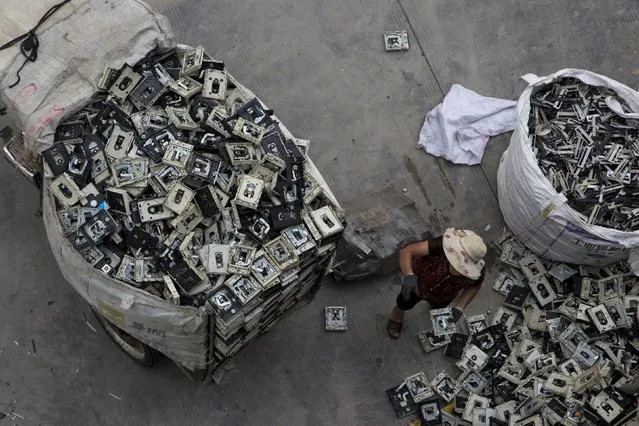
A worker distributes electronic waste at a government managed recycling centre at the township of Guiyu in China's southern Guangdong province June 10, 2015. (Photo by Tyrone Siu/Reuters)

A worker distributes electronic waste at a government managed recycling centre at the township of Guiyu in China's southern Guangdong province June 10, 2015. The town of Guiyu in the economic powerhouse of Guangdong province in China has long been known as one of the world’s largest electronic waste dump sites. At its peak, some 5,000 workshops in the village recycle 15,000 tonnes of waste daily including hard drives, mobile phones, computer screens and computers shipped in from across the world. (Photo by Tyrone Siu/Reuters)
Details
04 Jul 2015 10:28:00
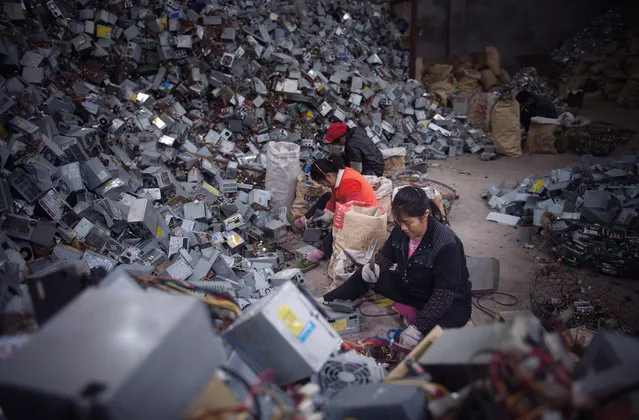
“The sustainable development goals cannot be met unless waste management is addressed as a priority”, says UK waste management charity Waste Aid. “E-waste is one of the fastest growing categories of the 7-10bn tonnes of waste produced globally every year”, adds director Mike Webster. “In our view, decent waste management is a basic right and we want governments around the world take this issue much more seriously – in 2012 only 0.2% of international aid went on improving solid waste management – it’s just not enough”. (Photo by Kai Loeffelbein/laif Agentur)

Sustainable development goal target 12.5 is to reduce waste. But with a planet increasingly dependent on technology, is that even possible? As of today, over 30m tonnes of electronic waste has been thrown out so far this year, according to the World Counts. Most e-waste is sent to landfills in Asia and Africa where it is recycled by hand, exposing the people who do it to environmental hazards. Kai Loeffelbein’s photographs of e-waste recycling in Guiyu, southern China show what happens to discarded computers. (Photo by Kai Loeffelbein/laif Agentur)
Details
19 Oct 2016 12:14:00