Loading...
Done
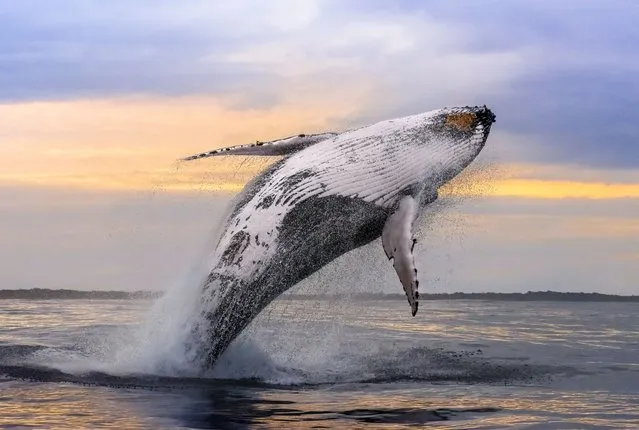
A 40-tonne humpback launching out of the water in an incredible breach in New South Wales, Australia on October 2022 in front of a sunset. The humpback whale can grow up to 56 feet long and typically covers 9,900 miles a year as it travels through the oceans of the world. Humpback whales are a species of Baleen whale, meaning they don't have teeth. Instead, they have baleen which helps them to filter feed. Their main source of food is krill or tiny bait fish. (Photo by Jodie Lowe/Media Drum Images)

A 40-tonne humpback launching out of the water in an incredible breach in New South Wales, Australia on October 2022 in front of a sunset. The humpback whale can grow up to 56 feet long and typically covers 9,900 miles a year as it travels through the oceans of the world. Humpback whales are a species of Baleen whale, meaning they don't have teeth. Instead, they have baleen which helps them to filter feed. Their main source of food is krill or tiny bait fish. (Photo by Jodie Lowe/Media Drum Images)
Details
30 Oct 2022 04:28:00
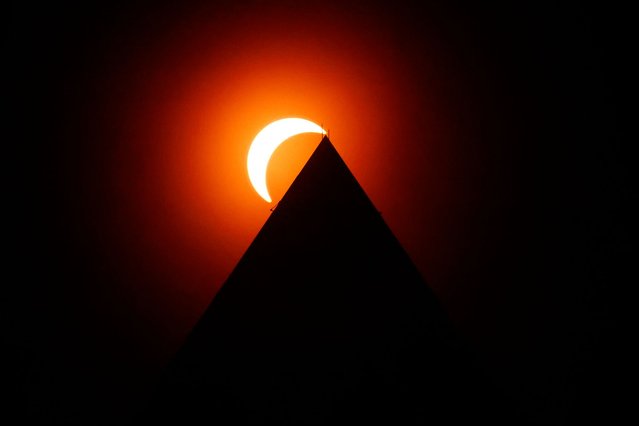
The solar eclipse is seen above the Washington Monument on April 08, 2024 in Washington, DC. People have traveled to areas across North America that are in the “path of totality” in order to experience the eclipse today. The next total solar eclipse that can be seen from a large part of North America won't happen until 2044. (Photo by Chip Somodevilla/Getty Images)

The solar eclipse is seen above the Washington Monument on April 08, 2024 in Washington, DC. People have traveled to areas across North America that are in the “path of totality” in order to experience the eclipse today. The next total solar eclipse that can be seen from a large part of North America won't happen until 2044. (Photo by Chip Somodevilla/Getty Images)
Details
20 May 2024 02:29:00
Brazil Soccer Calendar By Tim Tadder

A 2014 Soccer Calendar, inspired by the World Cup, and commissioned by a beer company (we can't provide client info) featuring women doing the 12 most famous moves in soccer.
Tim Tadder traveled around Brazil shooting the backgrounds and collaborated with the talented Mike Campau to blend the scenes together to create a truely unique set of images.
Details
24 Jun 2014 09:38:00
A Summer Activity time Can't Touch By William Holt

With temperatures soaring and summer well underway, countless Americans will be spending their Independence Day weekend at the beach. Here we revisit some classic images from the turn-of-the-century to the 1930's of vacations by the sea, from Coney Island to Santa Monica.
Details
21 Aug 2013 12:32:00
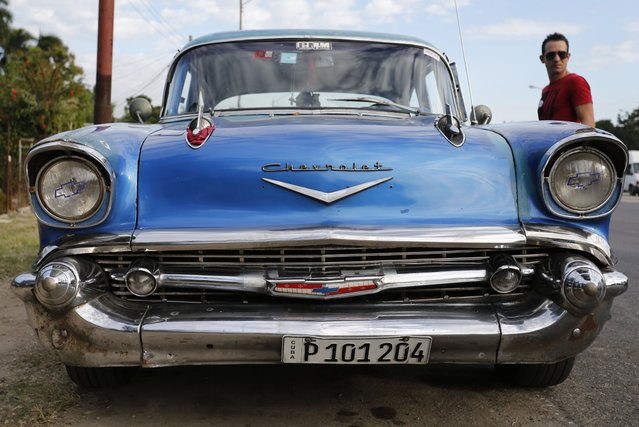
In this December 19, 2014 photo, a man stands beside his 1957 Chevrolet Bel-Air car in Havana, Cuba.  U.S. car sales have been banned in Cuba since 1959. Cubans have been have been forced to patch together Fords, Chevrolets and Chryslers that date back to before Fidel Castro's revolution which can make it appear like the country is stuck in a 1950s time warp. (Photo by Desmond Boylan/AP Photo)

In this December 19, 2014 photo, a man stands beside his 1957 Chevrolet Bel-Air car in Havana, Cuba. U.S. car sales have been banned in Cuba since 1959. Cubans have been have been forced to patch together Fords, Chevrolets and Chryslers that date back to before Fidel Castro's revolution which can make it appear like the country is stuck in a 1950s time warp. Since the Communist economic system isn't likely to change soon, many of those cars will have to stay on the road for years. (Photo by Desmond Boylan/AP Photo)
Details
26 Dec 2014 15:35:00
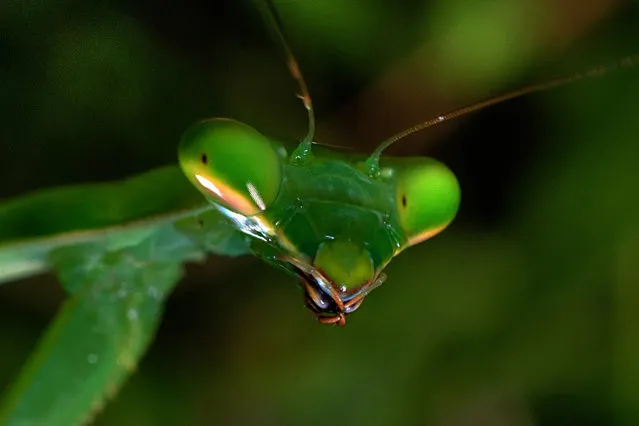
Close Encounter of the Insect Kind: Check out the awesome face on this praying mantis. I can't get over the mouth, it's like something from a science fiction movie. Of all photographic styles macro is definitely my favorite. I am constantly amazed, in every photo that I take, by the intricate level of detail that exists on even the smallest of creatures. It's a stark reminder that a very complex and infinitely beautiful world exists just beyond our human-sized level of perception. Photo taken in Donnybrook, Queensland, Australia. (Photo by Andrew Young/National Geographic Photo Contest

Close Encounter of the Insect Kind: “Check out the awesome face on this praying mantis. I can't get over the mouth, it's like something from a science fiction movie. Of all photographic styles macro is definitely my favorite. I am constantly amazed, in every photo that I take, by the intricate level of detail that exists on even the smallest of creatures. It's a stark reminder that a very complex and infinitely beautiful world exists just beyond our human-sized level of perception. Photo taken in Donnybrook, Queensland, Australia” – Andrew Young. (Photo by Andrew Young/National Geographic Photo Contest via The Atlantic)
Details
24 Sep 2012 09:18:00
A member of the contemporary circus company Cirk La Putyka perform on the mobile trampoline as he amuses local residents in Prague, Czech Republic, 09 April 2020. The aim of the Cirk La Putyka events in the streets of Czech capital is to get live art back to people during the lockdown. According to them, when people can't go to the artists, to the theater, the actors go to the people. The Czech government has imposed a lockdown in an attempt to slow down the spread of the pandemic COVID-19 disease caused by the SARS-CoV-2 coronavirus. (Photo by Martin Divisek/EPA/EFE)

A member of the contemporary circus company Cirk La Putyka perform on the mobile trampoline as he amuses local residents in Prague, Czech Republic, 09 April 2020. The aim of the Cirk La Putyka events in the streets of Czech capital is to get live art back to people during the lockdown. According to them, when people can't go to the artists, to the theater, the actors go to the people. The Czech government has imposed a lockdown in an attempt to slow down the spread of the pandemic COVID-19 disease caused by the SARS-CoV-2 coronavirus. (Photo by Martin Divisek/EPA/EFE)
Details
11 Apr 2020 00:07:00
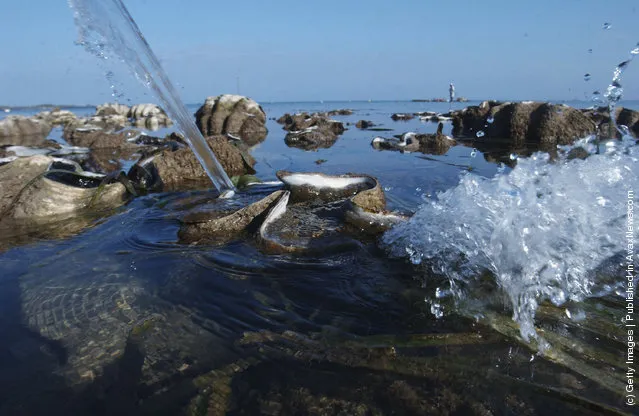
Tridacna Gigas, or Giant Clams

“The giant clam, Tridacna gigas (known as pā’ua in Cook Islands Māori), is the largest living bivalve mollusc. T. gigas is one of the most endangered clam species. It was mentioned as early as 1825 in scientific reports. One of a number of large clam species native to the shallow coral reefs of the South Pacific and Indian oceans, they can weigh more than 200 kilograms (440 lb) measure as much as 120 cm (47 in) across, and have an average lifespan in the wild of 100 years or more”. – Wikipedia

Photo: Tridacna Gigas, or Giant Clams spew water as a traditional fisherman passes by a small sanctuary on January 23, 2004 near Bolinao in the Northern Philippines. The clams, prime builders for coral reefs and providing shelter for spawning fish and other marine life, are exposed by low tides in the sanctuary. Overfishing and pollution throughout the country are not only threatening food security, but are also starting to choke one of the few working clam sanctuaries in the world. (Photo by David Greedy/Getty Images)
Details
01 Oct 2011 13:10:00