Loading...
Done
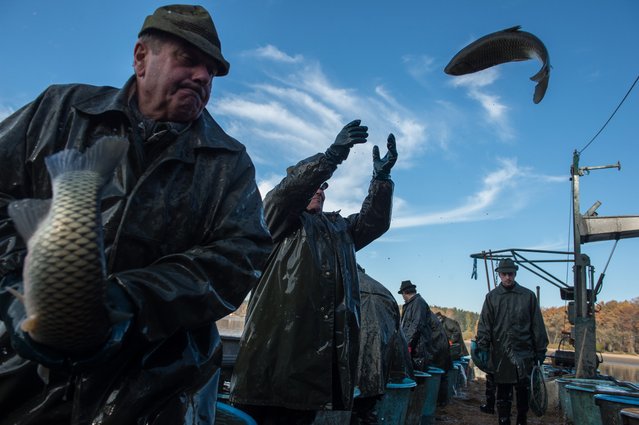
Czech fishermen sort fish during the traditional Carp haul at Lake of Dvoriste near Smrzov village, Czech Republic, 02 November 2015. Carp, the traditional Czech Christmas Eve dinner, is harvested primarly from the region of southern Bohemian lakes. (Photo by Filip Singer/EPA)

Czech fishermen sort fish during the traditional Carp haul at Lake of Dvoriste near Smrzov village, Czech Republic, 02 November 2015. Carp, the traditional Czech Christmas Eve dinner, is harvested primarly from the region of southern Bohemian lakes. (Photo by Filip Singer/EPA)
Details
05 Nov 2015 08:05:00
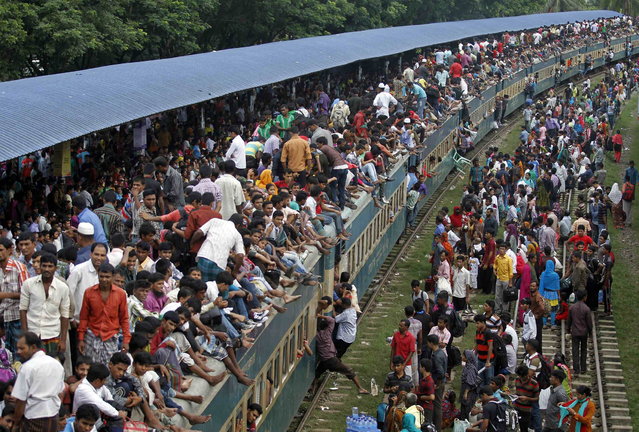
Passengers climb to board an overcrowded train at a railway station in Dhaka August 8, 2013. Millions of residents in Dhaka are travelling home from the capital city to celebrate the Muslim Eid al-Fitr holiday, which marks the end of the Muslim holy fasting month of Ramadan. (Photo by Andrew Biraj/Reuters)

Passengers climb to board an overcrowded train at a railway station in Dhaka August 8, 2013. Millions of residents in Dhaka are travelling home from the capital city to celebrate the Muslim Eid al-Fitr holiday, which marks the end of the Muslim holy fasting month of Ramadan. (Photo by Andrew Biraj/Reuters)
Details
09 Aug 2013 08:48:00
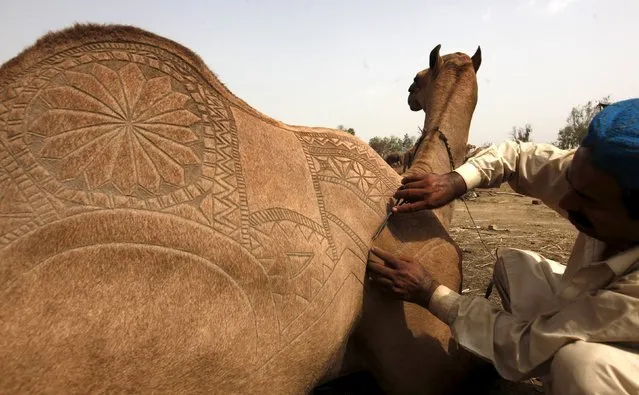
A sacrificial camel gets a haircut with patterns at the animal market on the outskirts of Karachi, Pakistan September 22, 2015. (Photo by Akhtar Soomro/Reuters)

A sacrificial camel gets a haircut with patterns at the animal market on the outskirts of Karachi, Pakistan September 22, 2015. Muslims across the world are preparing to celebrate the annual festival of Eid al-Adha or the Feast of the Sacrifice, which marks the end of the annual haj pilgrimage, by slaughtering goats, sheep, cows and camels in commemoration of the Prophet Abraham's readiness to sacrifice his son to show obedience to Allah. Eid al-Adha in India falls on September 25. (Photo by Akhtar Soomro/Reuters)
Details
24 Sep 2015 08:05:00
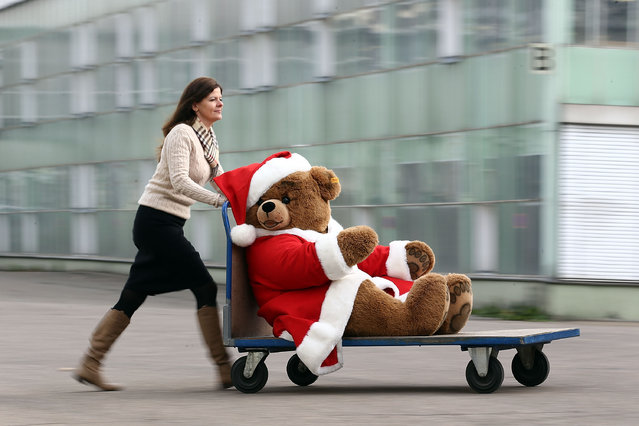
A christmas teddy bear is wheeled along on a trolley at the Steiff stuffed toy factory on November 23, 2012 in Giengen an der Brenz, Germany. Founded by seamstress Margarethe Steiff in 1880, Steiff has been making stuffed teddy bears since the early 20th century ever since her nephew Richard Steiff exhibited the first commercially produced teddy bear in Europe in 1903. Teddy bears are among the most popular children's toys and the company is hoping for a strong Christmas season. (Photo by Thomas Niedermueller)

A christmas teddy bear is wheeled along on a trolley at the Steiff stuffed toy factory on November 23, 2012 in Giengen an der Brenz, Germany. Founded by seamstress Margarethe Steiff in 1880, Steiff has been making stuffed teddy bears since the early 20th century ever since her nephew Richard Steiff exhibited the first commercially produced teddy bear in Europe in 1903. Teddy bears are among the most popular children's toys and the company is hoping for a strong Christmas season. (Photo by Thomas Niedermueller)
Details
27 Nov 2012 11:21:00
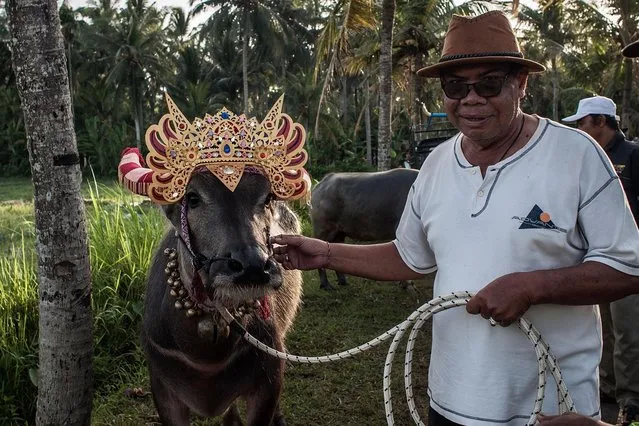
A man poses with his water buffalo during “Mekepung” traditional water buffalo race on July 28, 2013 in Jembrana, Bali, Indonesia. Meaning “to chase around”, Mekepung was originally designed as a fun game for peasants to spend their free time when the harvest time was ended, as they were waiting for the start of the planting season. (Photo by Putu Sayoga/Getty Images)

A man poses with his water buffalo during “Mekepung” traditional water buffalo race on July 28, 2013 in Jembrana, Bali, Indonesia. Meaning “to chase around”, Mekepung was originally designed as a fun game for peasants to spend their free time when the harvest time was ended, as they were waiting for the start of the planting season. (Photo by Putu Sayoga)
Details
04 Aug 2013 09:13:00
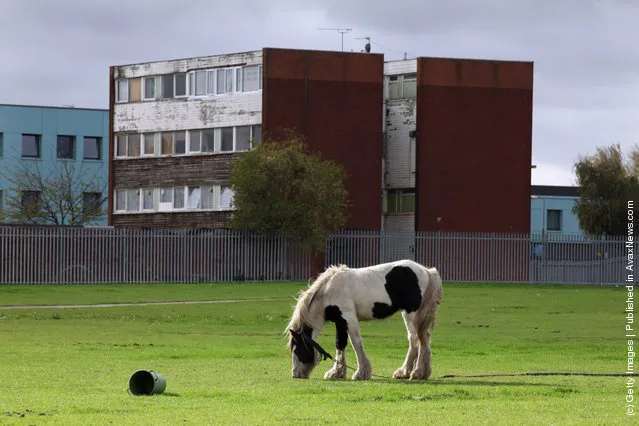
A pet horse

A pet horse tethered on land known as “The Cracker” in Tipton that may be seized by bailiffs on October 10, 2011 in Dudley, England. Horse lovers in Tipton are battling the local council over the tradition of keeping their horses tethered on public land near their homes. Locals say tradition that has been in existence for generations and believe it stems from the age of the canal when many local men used their horses to tow canal barges along the industrial Black Country canals. After a spate of horses running free Sandwell Council are now enforcing the law and impounding tethered horses. Locals are planning their next protest with a horse drive to the council headquarters to try and save their traditions. (Photo by Christopher Furlong/Getty Images)
Details
14 Oct 2011 09:10:00
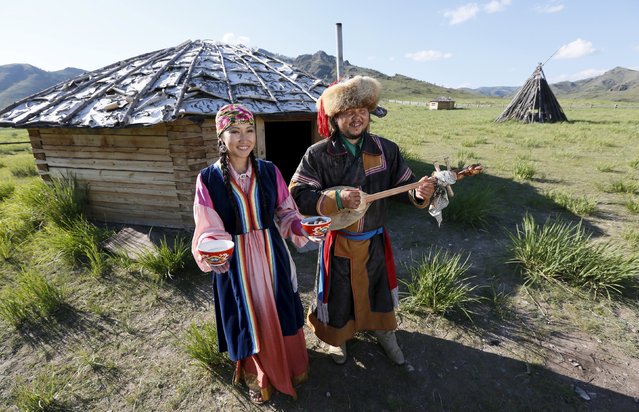
Members of national folklore and ethnographic groups and employees of a museum-preserve participate in the reconstruction of daily life and traditional holidays celebrated by indigenous population of the Republic of Khakassia during a demonstration for visitors outside a traditional wooden yurt near Kazanovka village, southwest of the city of Abakan, Russia, July 24, 2015. (Photo by Ilya Naymushin/Reuters)

Members of national folklore and ethnographic groups and employees of a museum-preserve participate in the reconstruction of daily life and traditional holidays celebrated by indigenous population of the Republic of Khakassia during a demonstration for visitors outside a traditional wooden yurt near Kazanovka village, southwest of the city of Abakan, Russia, July 24, 2015. (Photo by Ilya Naymushin/Reuters)
Details
27 Jul 2015 11:07:00
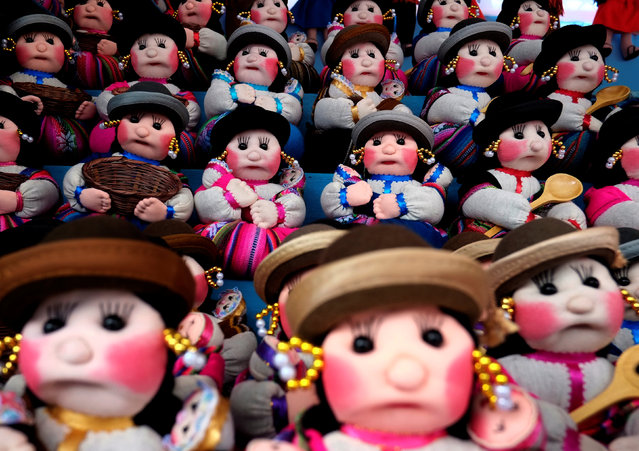
Aymara dolls are seen during the “Alasitas” fair, where people buy miniature versions of goods they hope to acquire in real life, in La Paz, Bolivia, January 24, 2017. Shoppers fill their baskets with miniature versions of things they desire – everything from cars, houses computers – to give to Ekeko the God of abundance, in the hope he will being therm good fortune. And it is all carried out with a priest’s blessing. Originally, the Festival of Alasitas was a celebration by farmers praying for plentiful crops.Today, the meaning amounts to the same only locals hope for more material goods. (Photo by David Mercado/Reuters)

Aymara dolls are seen during the “Alasitas” fair, where people buy miniature versions of goods they hope to acquire in real life, in La Paz, Bolivia, January 24, 2017. Shoppers fill their baskets with miniature versions of things they desire – everything from cars, houses computers – to give to Ekeko the God of abundance, in the hope he will being therm good fortune. (Photo by David Mercado/Reuters)
Details
26 Jan 2017 12:56:00