Cosplayers wearing face masks pose for a picture at the China Digital Entertainment Expo and Conference (ChinaJoy) in Shanghai, following the coronavirus disease (COVID-19) outbreak, China on July 31, 2020. (Photo by Aly Song/Reuters)
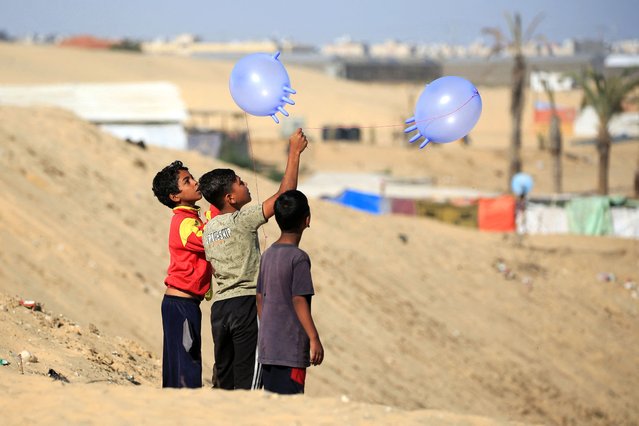
Displaced Palestinian children play with surgical rubber gloves in Rafah in the southern Gaza Strip, on May 31, 2024, amid the ongoing conflict between Israel and the Palestinian Hamas group. (Photo by Eyad Baba/AFP Photo)
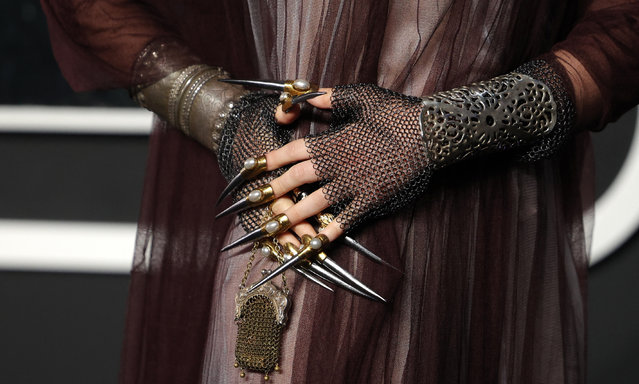
American singer-songwriter Chappell Roan attends the MTV Video Music Awards in Elmont, New York, U.S., September 11, 2024. (Photo by Andrew Kelly/Reuters)
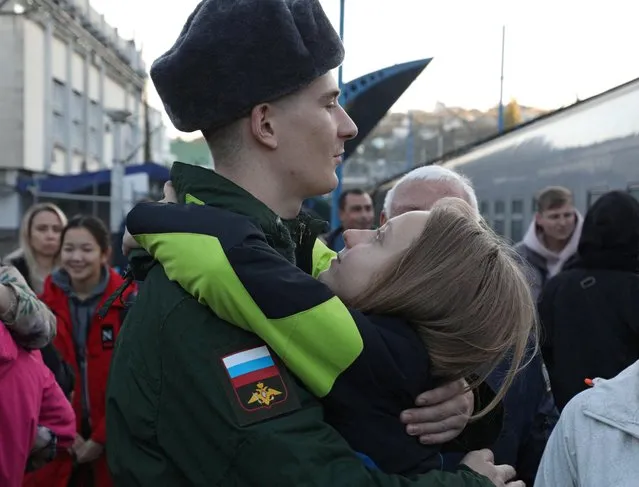
A conscript hugs a girl as he says goodbye to family members at a local railway station during departure for the garrisons, in Sevastopol, Crimea on November 9, 2022. (Photo by Alexey Pavlishak/Reuters)
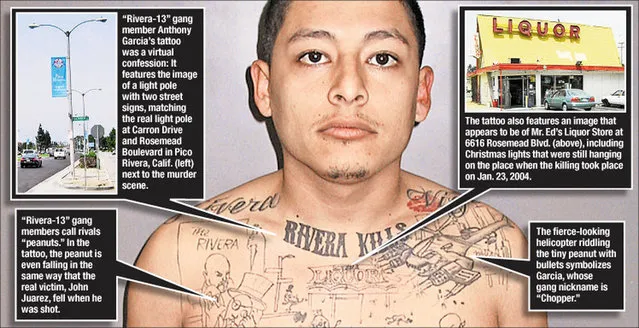
Tattoos are commonly used among criminals to show gang membership and record the wearer's personal history—such as his or her skills, specialties, accomplishments and convictions. They are also used as a means of personal expression. Certain designs have developed recognized coded meanings. The code systems can be quite complex and because of the nature of what they encode, the tattoo designs are not widely recognized.
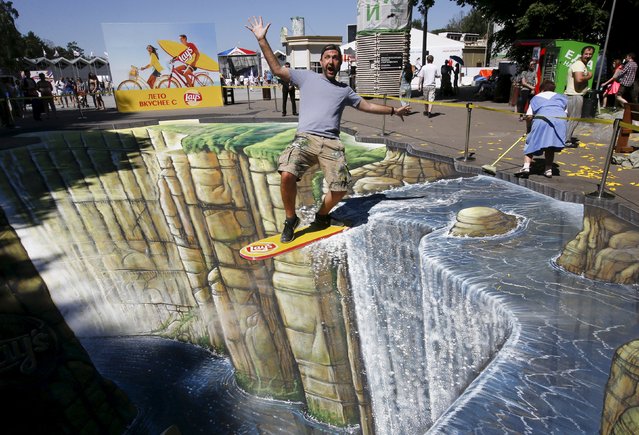
Artist Joe Hill poses on his 3D artwork, from the “Joe and Max” project as part of an advertising campaign, during its presentation at a park in Moscow, Russia, July 4, 2015. (Photo by Sergei Karpukhin/Reuters)
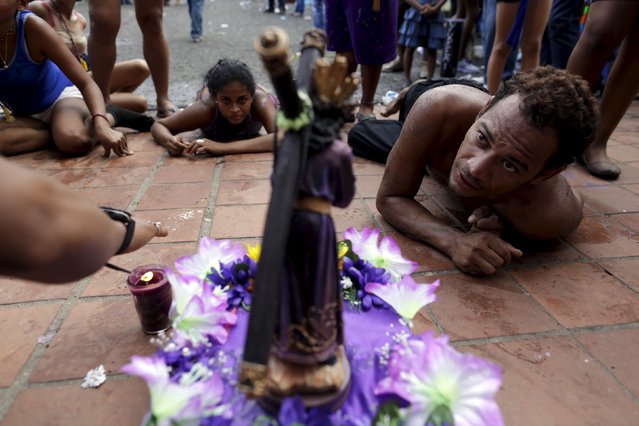
Worshippers of the Black Christ of Portobelo look at the statue during the annual celebratory pilgrimage in Portobelo, in the province of Colon October 21, 2015. Thousands of devotees gather at the Festival of the Black Christ every year to celebrate Christ's miracles. (Photo by Carlos Jasso/Reuters)