Loading...
Done
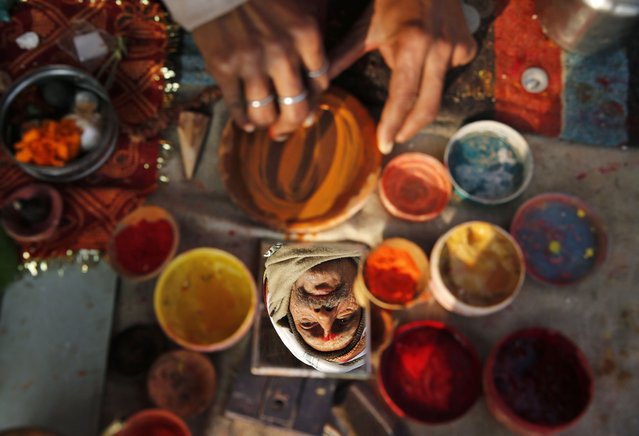
A Hindu holy man is reflected on a mirror as he prepares a bowl of vermillion powder for devotees near “Sangam”, the confluence of holy rivers of Ganges, Yamuna and the mythical Saraswati, during the annual traditional fair of Magh Mela in Allahabad, in the northern Indian state of Uttar Pradesh, India, Tuesday, January 6, 2015. (Photo by Rajesh Kumar Singh/AP Photo)

A Hindu holy man is reflected on a mirror as he prepares a bowl of vermillion powder for devotees near “Sangam”, the confluence of holy rivers of Ganges, Yamuna and the mythical Saraswati, during the annual traditional fair of Magh Mela in Allahabad, in the northern Indian state of Uttar Pradesh, India, Tuesday, January 6, 2015. Hundreds of thousands of devout Hindus are expected to take holy dips at the confluence during the astronomically auspicious period of over 45 days celebrated as Magh Mela. (Photo by Rajesh Kumar Singh/AP Photo)
Details
07 Jan 2015 13:41:00


“Kumbh Mela is a mass Hindu pilgrimage in which Hindus gather at the Ganges river. The normal Kumbh Mela is celebrated every 3 years, the Ardh (half) Kumbh Mela is celebrated every six years at Haridwar and Prayag, the Purna (complete) Kumbh takes place every twelve years, at four places (Prayag (Allahabad), Haridwar, Ujjain, and Nashik). The Maha (great) Kumbh Mela which comes after 12 “Purna Kumbh Melas”, or 144 years, is held at Allahabad.

The last Ardh Kumbh Mela was held over a period of 45 days beginning in January 2007, more than 70 million Hindu pilgrims took part in the Ardh Kumbh Mela at Prayag, and on January 15, the most auspicious day of the festival of Makar Sankranti, more than 5 million participated. The previous Maha Kumbh Mela, held in 2001, was attended by around 60 million people, making it at the time the largest gathering anywhere in the world in recorded history”. – Wikipedia

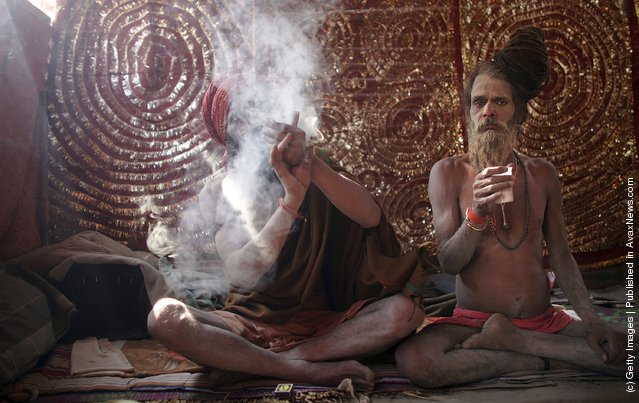
Photo: Sadhus (holy men) smoke at their camp near the ritual site at Sangam, the confluence of the Ganges, Yamuna and mythical Saraswati rivers during the Ardh Kumbh Mela festival (Half Pitcher festival) January 18, 2007 in Allahabad, India. Millions of Hindu pilgrims have flocked to the largest religious gathering in the world which lasts for 45 days in northern India. The festival commemorates the mythical conflict between gods and demons over a pitcher filled with the “nectar of immortality”. Devotees believe that taking a holy dip in the Ganges at this time washes away their sins and paves the path to salvation. (Photo by Mario Tama/Getty Images)

Details
30 Jun 2011 10:27:00
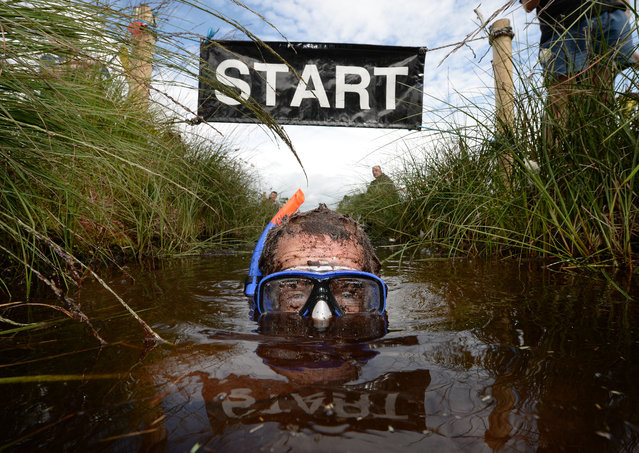
Stephen McDonagh takes part in the Irish Bog Snorkelling championship at Peatlands Park on July 27, 2014 in Dungannon, Northern Ireland. The annual event sees male and female competitors swim the 60m length of the bog watched by scores of spectators and takes place on International Bog Day. (Photo by Charles McQuillan/Getty Images)

Stephen McDonagh takes part in the Irish Bog Snorkelling championship at Peatlands Park on July 27, 2014 in Dungannon, Northern Ireland. The annual event sees male and female competitors swim the 60m length of the bog watched by scores of spectators and takes place on International Bog Day. (Photo by Charles McQuillan/Getty Images)
Details
28 Jul 2014 11:20:00
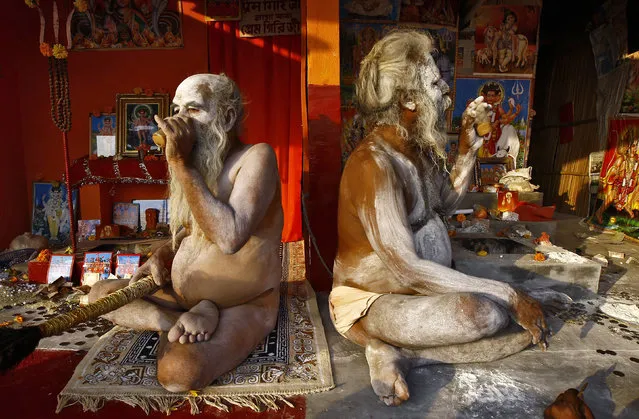
Naga Sadhus or Hindu holy men, smeared with ash, drink tea inside their makeshift camps near the confluence of river Ganges and the Bay of Bengal, ahead of Makar Sankranti festival at Sagar Island, south of Kolkata January 13, 2015. (Photo by Rupak De Chowdhuri/Reuters)

Naga Sadhus or Hindu holy men, smeared with ash, drink tea inside their makeshift camps near the confluence of river Ganges and the Bay of Bengal, ahead of Makar Sankranti festival at Sagar Island, south of Kolkata January 13, 2015. Hindu monks and pilgrims are making their annual trip to Sagar Island for the one-day festival of “Makar Sankranti” on Wednesday. (Photo by Rupak De Chowdhuri/Reuters)
Details
14 Jan 2015 12:22:00
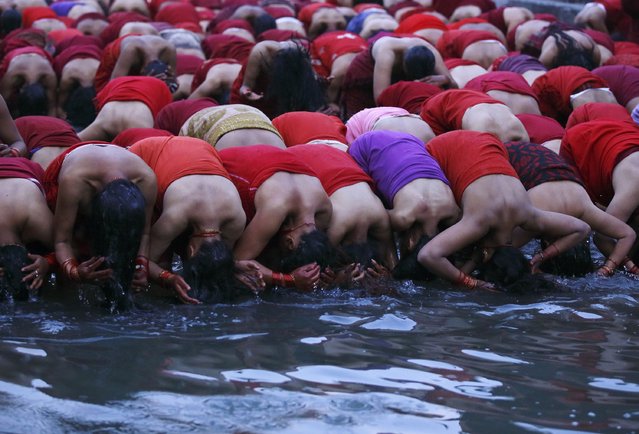
Devotees take a holy bath during the Swasthani Brata Katha festival in Kathmandu January 20, 2015. During the month-long festival, devotees recite one chapter of a Hindu tale daily from the 31-chapter sacred Swasthani Brata Katha book that is dedicated to God Madhavnarayan and Goddess Swasthani, alongside various other gods and goddesses and the miraculous feats performed by them. (Photo by Navesh Chitrakar/Reuters)

Devotees take a holy bath during the Swasthani Brata Katha festival in Kathmandu January 20, 2015. During the month-long festival, devotees recite one chapter of a Hindu tale daily from the 31-chapter sacred Swasthani Brata Katha book that is dedicated to God Madhavnarayan and Goddess Swasthani, alongside various other gods and goddesses and the miraculous feats performed by them. The devotees also go on pilgrimages to various temples, perform religious rituals, take a holy bath in the rivers and fast for a month, especially among women who believe fasting helps in their family's well-being or in getting them a good husband. (Photo by Navesh Chitrakar/Reuters)
Details
21 Jan 2015 13:50:00
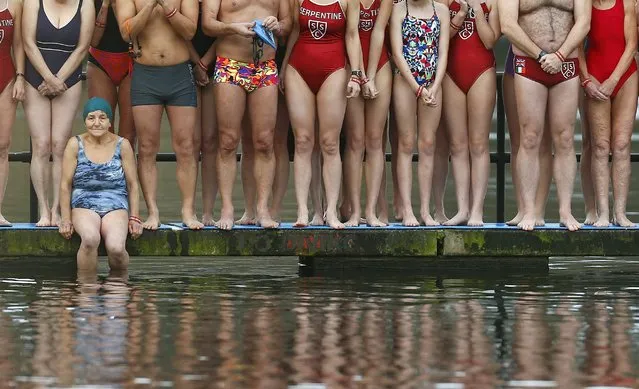
Swimmers prepare to take part in the annual Christmas Day Peter Pan Cup handicap race in the Serpentine River, in Hyde Park, London, December 25, 2015. (Photo by Andrew Winning/Reuters)

Swimmers prepare to take part in the annual Christmas Day Peter Pan Cup handicap race in the Serpentine River, in Hyde Park, London, December 25, 2015. (Photo by Andrew Winning/Reuters)
Details
27 Dec 2015 08:04:00
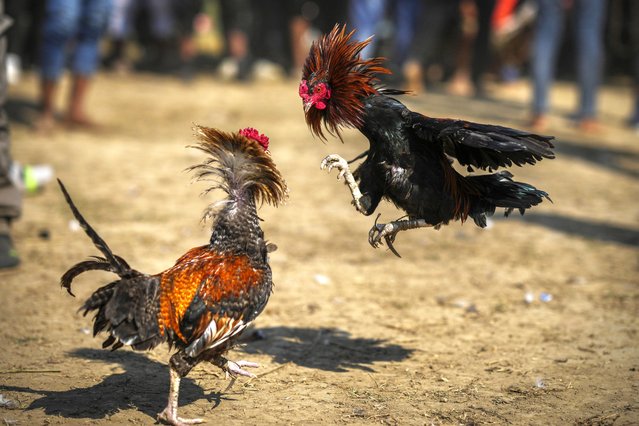
Roosters attack each other during a cockfight as part of Jonbeel festival near Jagiroad, in Morigaon district, India, Friday, January 17, 2025. (Photo by Anupam Nath/AP Photo)

Roosters attack each other during a cockfight as part of Jonbeel festival near Jagiroad, in Morigaon district, India, Friday, January 17, 2025. (Photo by Anupam Nath/AP Photo)
Details
29 Jan 2025 03:26:00
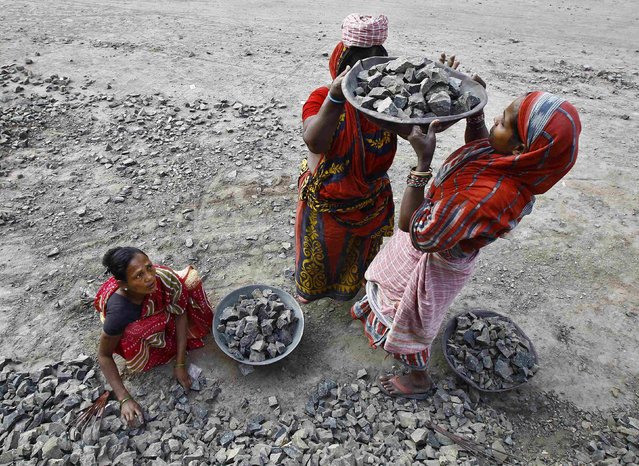
Women labourers work at the construction site of a road in Kolkata January 8, 2015. Across towns and cities in India, it is not uncommon to see women cleaning building sites, carrying bricks and or shoveling gravel - helping construct the infrastructure necessary for the country's economic and social development. (Photo by Rupak De Chowdhuri/Reuters)

Women labourers work at the construction site of a road in Kolkata January 8, 2015. Across towns and cities in India, it is not uncommon to see women cleaning building sites, carrying bricks and or shoveling gravel – helping construct the infrastructure necessary for the country's economic and social development. They help build roads, railway tracks, airports, and offices. They lay pipes for clean water supplies, cables for telecommunications, and dig the drains for sewage systems. But although women make up at least 20 percent of India's 40 million construction workers, they are less recognized than male workers with lower pay and often prone to safety hazards and sexual harassment. They are often unaware of their rights or scared to complain, say activists now trying to campaign for better treatment of women in the construction industry. (Photo by Rupak De Chowdhuri/Reuters)
Details
15 Jan 2015 13:47:00