Loading...
Done
Galapagos – Rocking the Cradle: Four major ocean currents converge along the Galapagos archipelago, creating the conditions for an extraordinary diversity of animal life, April 25, 2016. The islands are home to at least 7,000 flora and fauna species, of which 97 percent of the reptiles, 80 percent of the land birds, 50 percent of the insects and 30 percent of the plants are endemic. The local ecosystem is highly sensitive to the changes in temperature, rainfall and ocean currents that characterize the climatic events known as El Niño and La Niña. These changes cause marked fluctuations in weather and food availability. Many scientists expect the frequency of El Niño and La Niña to increase as a result of climate change, making the Galapagos a possible early-warning location for its effects. (Photo by Thomas P. Peschak for National Geographic/World Press Photo)

Galapagos – Rocking the Cradle: Four major ocean currents converge along the Galapagos archipelago, creating the conditions for an extraordinary diversity of animal life, April 25, 2016. The islands are home to at least 7,000 flora and fauna species, of which 97 percent of the reptiles, 80 percent of the land birds, 50 percent of the insects and 30 percent of the plants are endemic. (Photo by Thomas P. Peschak for National Geographic/World Press Photo)
Details
16 Apr 2018 00:01:00
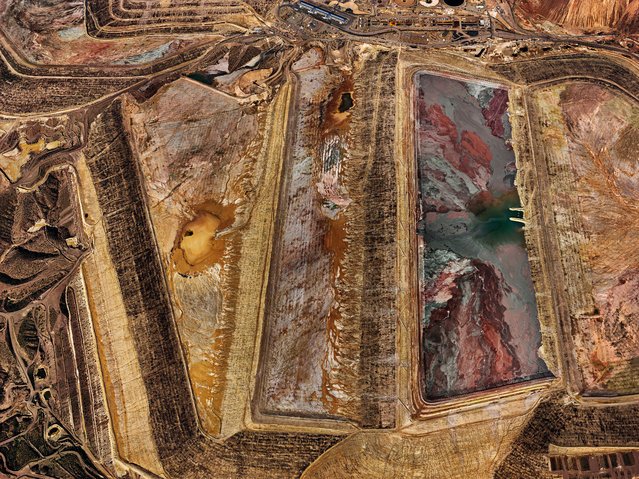
Morenci Mine #2, Clifton, Arizona, USA, 2012. (Photo by Edward Burtynsky/Metivier Gallery, Toronto/Flowers Gallery, London)

The Photo London Master of Photography award is given annually to a leading contemporary photographer. A special exhibition shows new and rarely seen images from Burtynsky’s portfolio. Here: Morenci Mine #2, Clifton, Arizona, USA, 2012. (Photo by Edward Burtynsky/Metivier Gallery, Toronto/Flowers Gallery, London)
Details
07 Feb 2018 06:43:00
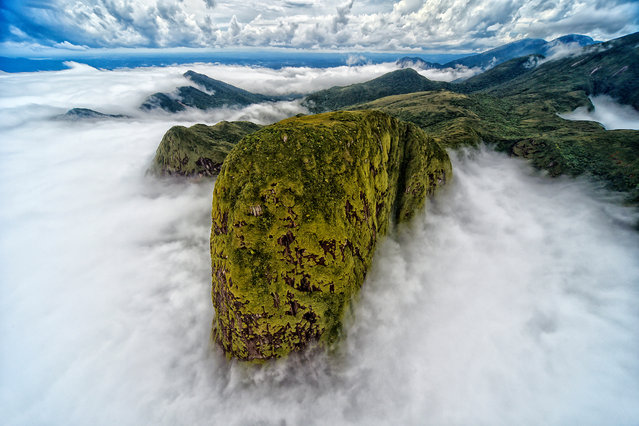
Landscape second place: Denis Ferreira Netto, Brazil. “In a helicopter flight through the sea mountain range, I came across this white cloud cover, which resulted in this magnificent image that resembles the head of a dinosaur”, the photographer said. (Photo by Denis Ferreira Netto/TNC Photo Contest 2021)

Landscape second place: Denis Ferreira Netto, Brazil. “In a helicopter flight through the sea mountain range, I came across this white cloud cover, which resulted in this magnificent image that resembles the head of a dinosaur”, the photographer said. (Photo by Denis Ferreira Netto/TNC Photo Contest 2021)
Details
06 Oct 2021 07:52:00
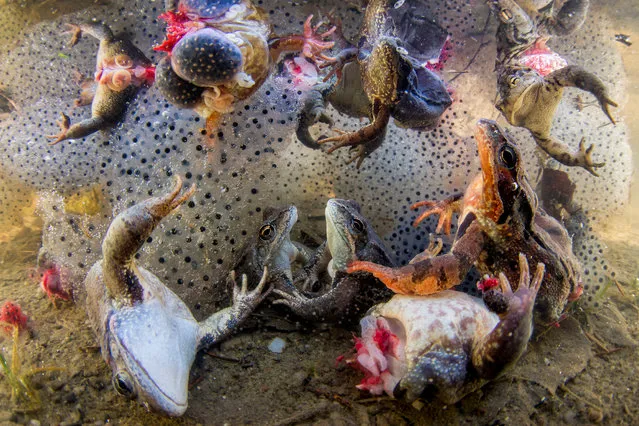
Nature, singles winner: Frogs with their legs severed struggle to the surface, surrounded by frogspawn, after being thrown back into the water in Covasna, Romania. (Photo by Bence Mate/World Press Photo 2019)

Nature, singles winner: Frogs with their legs severed struggle to the surface, surrounded by frogspawn, after being thrown back into the water in Covasna, Romania. (Photo by Bence Mate/World Press Photo 2019)
Details
13 Apr 2019 00:03:00
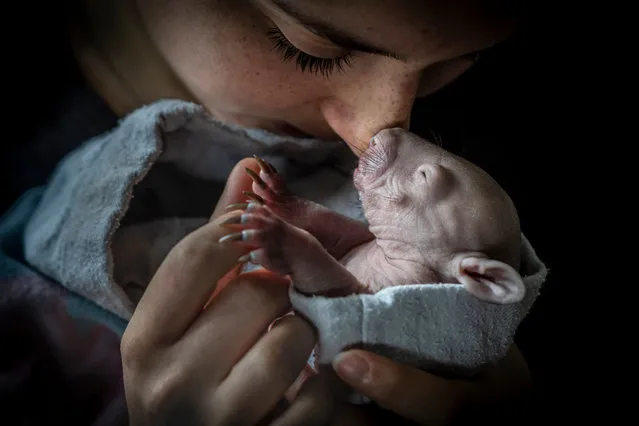
Nose to Nose; Human/Nature winner. “Doug Gimesy was documenting work at the Joey and Bat Sanctuary near Melbourne when he met a wombat (Vombatus ursinus) whose mother had been killed by a car. Gimesy watched as a young veterinary student bottle-fed the orphaned joey, then touched her nose to the joey’s in a tender moment of interspecies bonding”. (Photo by Doug Gimesy/BigPicture)

Nose to Nose; Human/Nature winner. “Doug Gimesy was documenting work at the Joey and Bat Sanctuary near Melbourne when he met a wombat (Vombatus ursinus) whose mother had been killed by a car. Gimesy watched as a young veterinary student bottle-fed the orphaned joey, then touched her nose to the joey’s in a tender moment of interspecies bonding”. (Photo by Doug Gimesy/BigPicture)
Details
25 Jun 2023 05:33:00
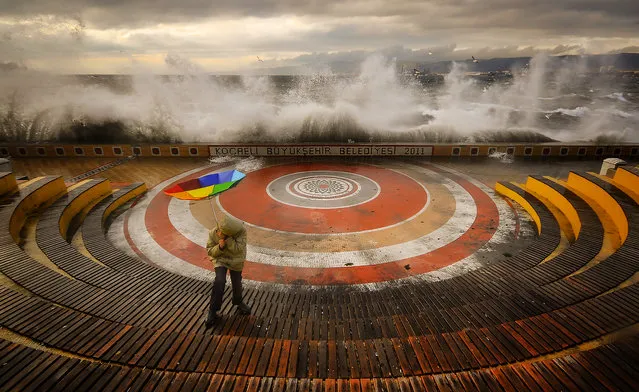
“The Storm”. During I was taking photo with my nephew, the storm came and I caught this beautiful moment. Photo location: Kocaeli, Turkey. (Photo and caption by Aytül Akbaş/National Geographic Photo Contest)

Honorable Mention: “The Storm”. During I was taking photo with my nephew, the storm came and I caught this beautiful moment. Photo location: Kocaeli, Turkey. (Photo and caption by Aytül Akbaş/National Geographic Photo Contest)
Details
28 Dec 2014 10:58:00
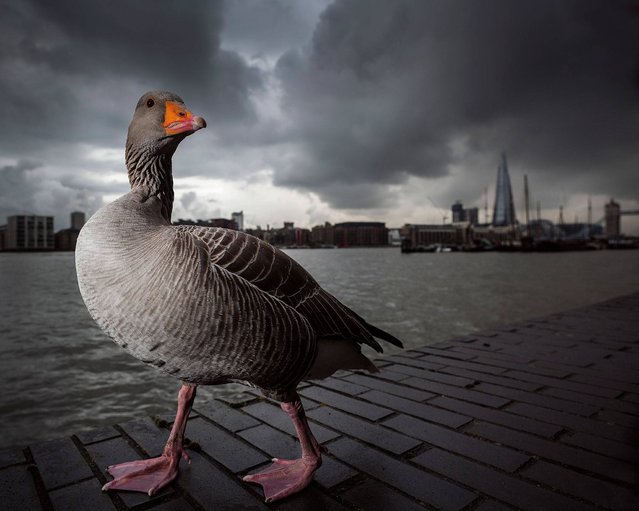
“Urban Tourist (Graylag Goose)”. Urban category and overall winner. (Photo by Lee Acaster/British Wildlife Photography Awards 2014)

The British Wildlife Photography Awards winners have been revealed, with Lee Acaster from Suffolk taking home the top prize for his shot of a Graylag Goose in London. Acaster, who received £5,000, photographed the animal against an ominous London skyline, with The Shard clearly visible in the background. Here: “Urban Tourist (Graylag Goose)”. Urban category and overall winner. (Photo by Lee Acaster/British Wildlife Photography Awards 2014)
Details
02 Sep 2014 12:24:00
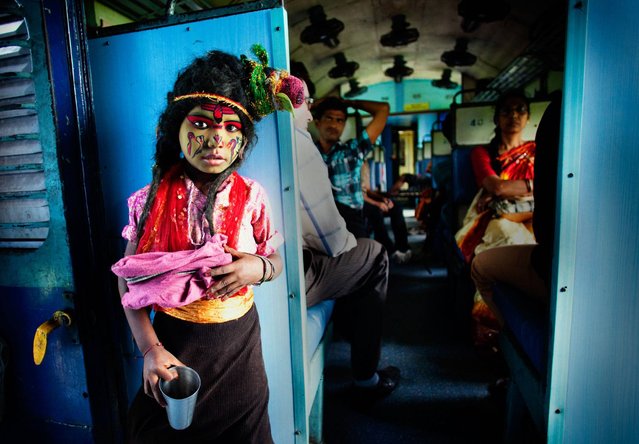
“I was on Durga Puja Festival vacation, travelling on a local train. A boy was singing devotional song and begging for alms. He was guised as a Hindu god, Lord Shiva. This is a common view in Indian trains but this boy was charming, bright and did have a melodious voice. My camera was ready hanging on my neck so I took a picture”. (Photo and caption by Arup Ghosh/2014 Sony World Photography Awards)

“I was on Durga Puja Festival vacation, travelling on a local train. A boy was singing devotional song and begging for alms. He was guised as a Hindu god, Lord Shiva. This is a common view in Indian trains but this boy was charming, bright and did have a melodious voice. My camera was ready hanging on my neck so I took a picture”. (Photo and caption by Arup Ghosh/2014 Sony World Photography Awards)
Details
18 Mar 2014 10:17:00