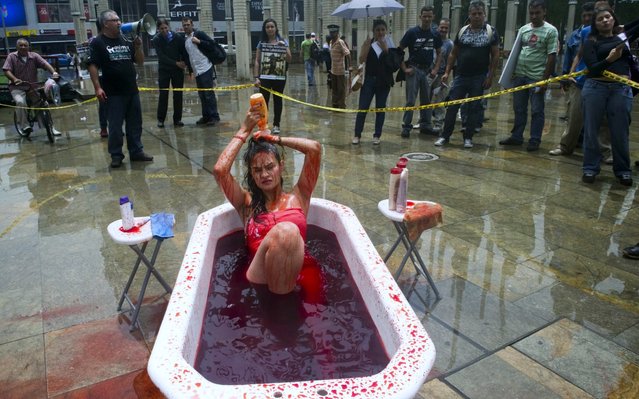
An animal rights activist washes herself with red dye to mimic blood during a protest against the testing of shampoo on animals in Barcelona. April 24, 2012. (Photo by Raul Albaledo/AFP Photo)
Animal rights activist, stained with fake blood, perform during a protest against the use of animal skins in the clothes and fashion industry, in Madrid, Sunday, December 10, 2017. (Photo by Francisco Seco/AP Photo)
An animal advocate lays in fake blood in a replica of a meat package with a label that reads “meat” during a protest “The meat is murder” in the Bulgarian capital Sofia on May 8, 2016. (Photo by Nikolay Doychinov/AFP Photo)
After being shunned for years, American actress Demi Moore is back in horror movie The Substance, which has stunned viewers with its shocking blood, gore and nudity. (Photo by Interview Magazine's September 2024)
Naked activists for animal rights, covered in fake blood, perform during a protest against the use of fur and leather, at Catalunya Square in Barcelona, Spain, December 16, 2018. (Photo by Albert Gea/Reuters)
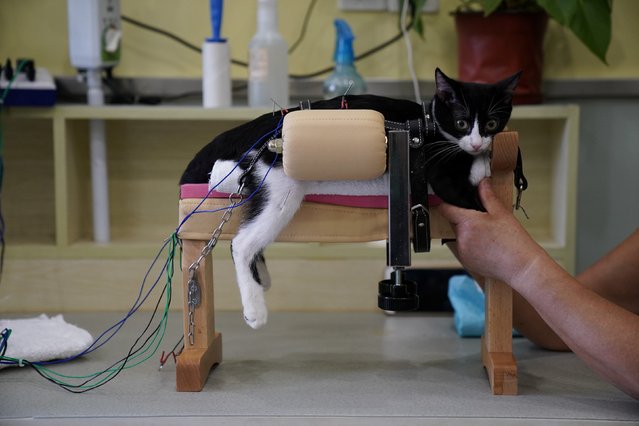
A cat receives acupuncture treatment in Shanghai, China on August 21, 2017. Traditional practitioners believe acupuncture of the body can stimulate blood circulation to promote healing and relieve some aches and pains. (Photo by Aly Song/Reuters)
Animal rights activists covered with fake blood sit on the floor during a protest against the use of animals in research to mark World Day for Animals in Laboratories in central Madrid April 24, 2014. The sign reads, “How many rabbits do your shampoo kill?”. (Photo by Andrea Comas/Reuters)
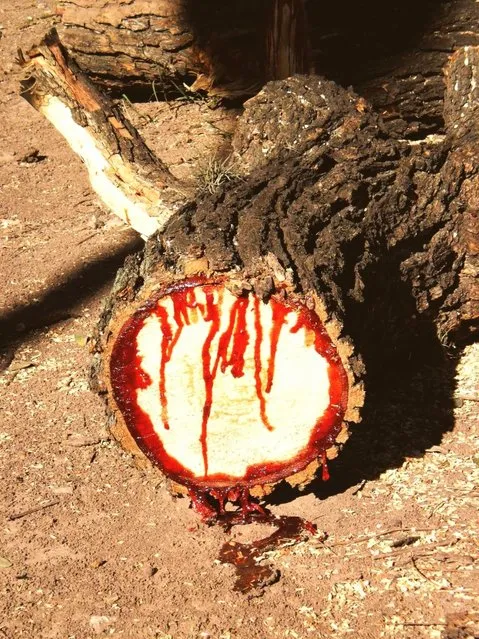
The bloodwood tree (Pterocarpus angolensis) is a deciduous tree with a high canopy, reaching about 15m in height and has dark bark. The red sap is used traditionally as a dye and in some areas mixed with animal fat to make a cosmetic for faces and bodies. It is also believed to have magical properties for the curing of problems concerning blood, apparently because of its close resemblance to blood. The name bloodwood for these trees stems from the dark red to brown sap that accumulates on wounds on the trunks.