Loading...
Done
London 2012 – UK Landmarks: Gloucester Cathedral

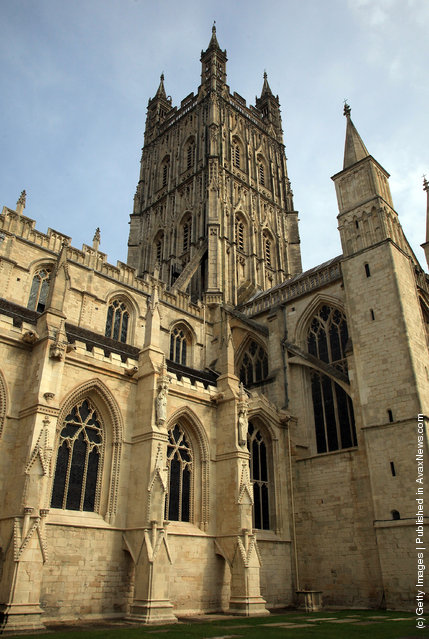
“Gloucester Cathedral, or the Cathedral Church of St Peter and the Holy and Indivisible Trinity, in Gloucester, England, stands in the north of the city near the river. It originated in 678 or 679 with the foundation of an abbey dedicated to Saint Peter (dissolved by King Henry VIII)”. – Wikipedia

Photo: A general view of Gloucester Cathedral is seen on March 22, 2012 in Gloucester, England. With only a few months to go until the opening ceremony of the London 2012 Olympic games, Britain's tourist industry is hoping to benefit from the influx of athletes, officials and visitors. (Photo by Matt Cardy/Getty Images)
Details
26 Mar 2012 10:30:00
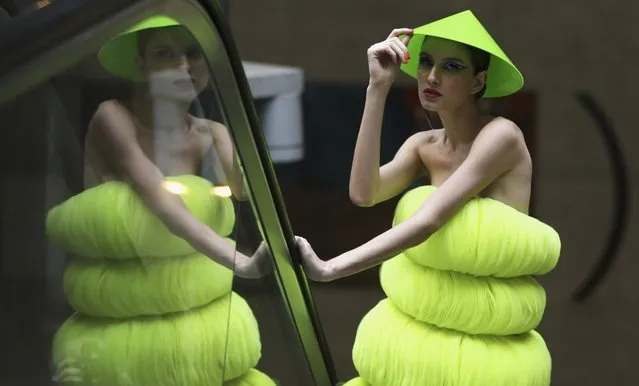
A model presents a creation in a subway station during the Sao Paulo Fashion Week in Sao Paulo October 27, 2013. (Photo by Paulo Whitaker/Reuters)

“It’s Fashion Week in Sao Paulo, Brazil and you don’t have to be a celebrity or a designer to check out these couture pieces. Subway stations were used as improvised catwalks in order to give the general public a chance to see these creations up close and at the price of a subway fare”. – Reuters. Photo: A model presents a creation in a subway station during the Sao Paulo Fashion Week in Sao Paulo October 27, 2013. (Photo by Paulo Whitaker/Reuters)
Details
31 Oct 2013 07:18:00
A dog dressed like of a bee is seen during the “Blocao” dog carnival in Rio de Janeiro. (Photo by Silvia Izquierdo/AP Photo)

A dog dressed like of a bee is seen during the “Blocao” dog carnival in Rio de Janeiro, Brazil, Sunday, February 16, 2014. About 100 dogs have had their day at a pre-Carnival bash in Rio de Janeiro. A 10-man brass band and a singer belting out Rio's anthem song “Cidade Maravilhosa” (Marvelous City) kicked off the four-footed fest as dog owners gathered to party down with pooches on Copacabana beach Sunay. (Photo by Silvia Izquierdo/AP Photo)
Details
18 Feb 2014 14:50:00
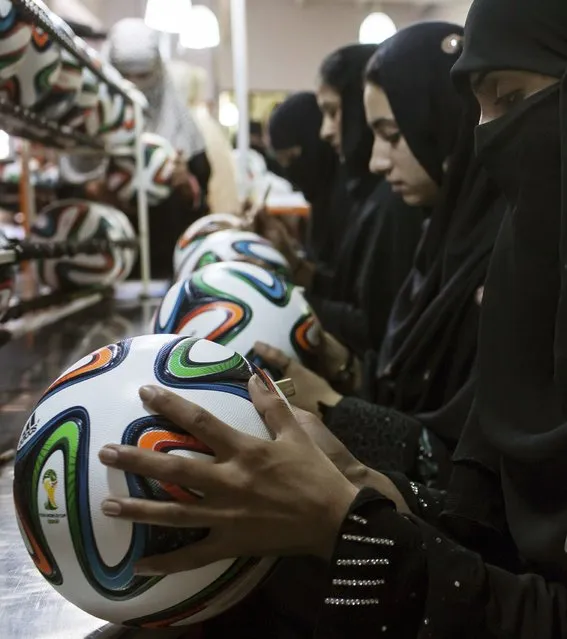
Employees conduct a final check to fix any cavities in the seams of balls inside the soccer ball factory that produces official match balls for the 2014 World Cup in Brazil, in Sialkot, Punjab province May 16, 2014. (Photo by Sara Farid/Reuters)

Employees conduct a final check to fix any cavities in the seams of balls inside the soccer ball factory that produces official match balls for the 2014 World Cup in Brazil, in Sialkot, Punjab province May 16, 2014. It was when he felt the roar of the crowd at the 2006 World Cup in Germany that Pakistani factory owner Khawaja Akhtar first dreamt up a goal of his own: to manufacture the ball for the biggest soccer tournament on the planet. Last year he finally got his chance – but only 33 days to make it happen. (Photo by Sara Farid/Reuters)
Details
26 May 2014 13:59:00
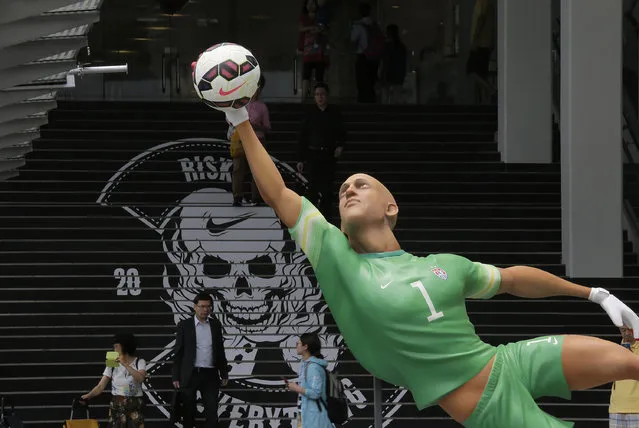
A giant size figure of the United States' goalkeeper Tim Howard is displayed outside a shopping mall in Hong Kong, Thursday, June 12, 2014, to promote the upcoming 2014 World Cup in Brazil. A total of seven 3.5 meters to 4 meters (11 feet 6 inch to 13 feet one inch) tall figures of famous players attract many soccer fans. (Photo by Vincent Yu/AP Photo)

A giant size figure of the United States' goalkeeper Tim Howard is displayed outside a shopping mall in Hong Kong, Thursday, June 12, 2014, to promote the upcoming 2014 World Cup in Brazil. A total of seven 3.5 meters to 4 meters (11 feet 6 inch to 13 feet one inch) tall figures of famous players attract many soccer fans. (Photo by Vincent Yu/AP Photo)
Details
13 Jun 2014 11:31:00
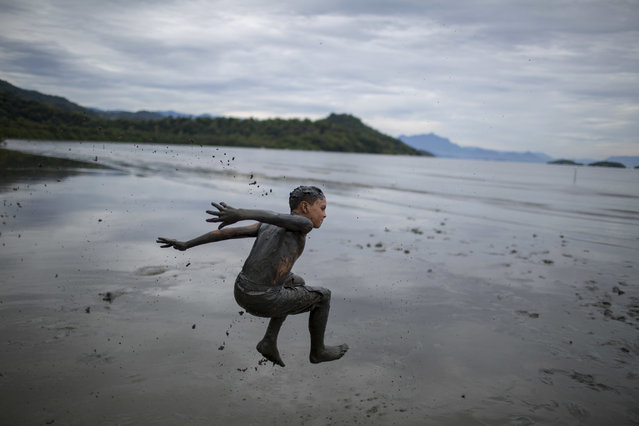
A boy jumps into a pool of mud during the traditional “Bloco da Lama” or “Mud Street” carnival party, in Paraty, Brazil, Saturday, February 25, 2017. Legend has it the “bloco” was born in 1986 after local teens hiking in a nearby mangrove forest smeared themselves with mud to discourage mosquitoes and then wandered through Paraty. The party grew year after year, but revelers eventually were banned from parading in the colonial downtown after shopkeepers complained pristine white walls were stained with the hard-to-remove mud. (Photo by Mauro Pimentel/AP Photo)

A boy jumps into a pool of mud during the traditional “Bloco da Lama” or “Mud Street” carnival party, in Paraty, Brazil, Saturday, February 25, 2017. Legend has it the “bloco” was born in 1986 after local teens hiking in a nearby mangrove forest smeared themselves with mud to discourage mosquitoes and then wandered through Paraty. The party grew year after year, but revelers eventually were banned from parading in the colonial downtown after shopkeepers complained pristine white walls were stained with the hard-to-remove mud. (Photo by Mauro Pimentel/AP Photo)
Details
28 Mar 2017 09:07:00
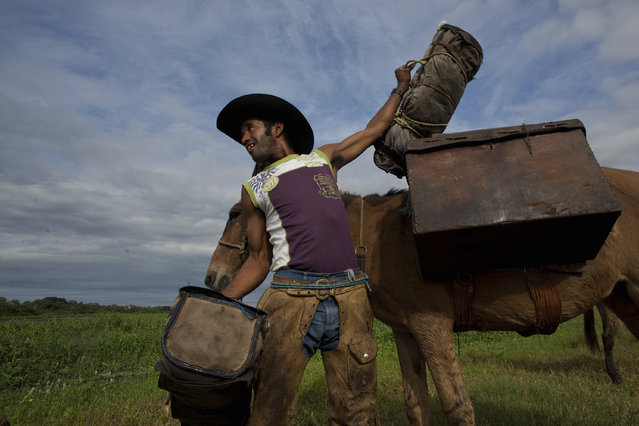
In this May 17, 2017 photo, cowboy cook Odair Batista carries a case with food in Corumba, the Pantanal wetlands of Mato Grosso do Sul state, Brazil. Dressed with leather chaps on top of their jeans, stetson hats and a machete attached to their waists, before setting off, the men finish their breakfast with Terere, an herbal “mate” beverage served ice cold in an ox drinking horn. (Photo by Eraldo Peres/AP Photo)

In this May 17, 2017 photo, cowboy cook Odair Batista carries a case with food in Corumba, the Pantanal wetlands of Mato Grosso do Sul state, Brazil. Dressed with leather chaps on top of their jeans, stetson hats and a machete attached to their waists, before setting off, the men finish their breakfast with Terere, an herbal “mate” beverage served ice cold in an ox drinking horn. (Photo by Eraldo Peres/AP Photo)
Details
12 Jun 2017 09:00:00
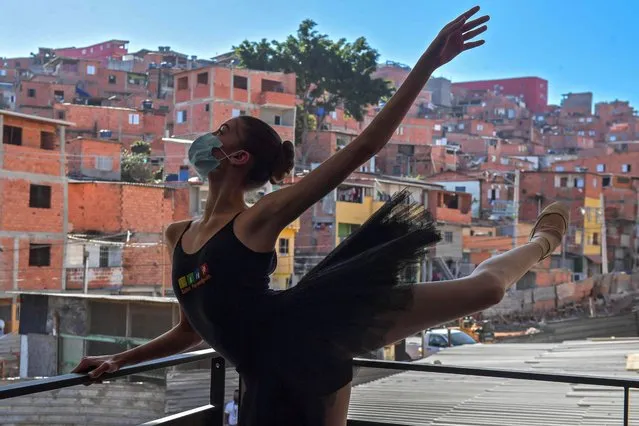
Mariana Sousa, student of the Ballet Paraisopolis, warms up during a rehearse in Paraisopolis favela, outskirts of Sao Paulo, Brazil on August 27, 2020, amid the new coronavirus COVID-19 pandemic. The 200 ballet students of Paraisopolis, the second largest favela in Sao Paulo, restarted rehearsals after five months with a coreography about a police operation that put their community in mourning last year. (Photo by Nelson Almeida/AFP Photo)

Mariana Sousa, student of the Ballet Paraisopolis, warms up during a rehearse in Paraisopolis favela, outskirts of Sao Paulo, Brazil on August 27, 2020, amid the new coronavirus COVID-19 pandemic. The 200 ballet students of Paraisopolis, the second largest favela in Sao Paulo, restarted rehearsals after five months with a coreography about a police operation that put their community in mourning last year. (Photo by Nelson Almeida/AFP Photo)
Details
11 Sep 2020 00:03:00