Loading...
Done
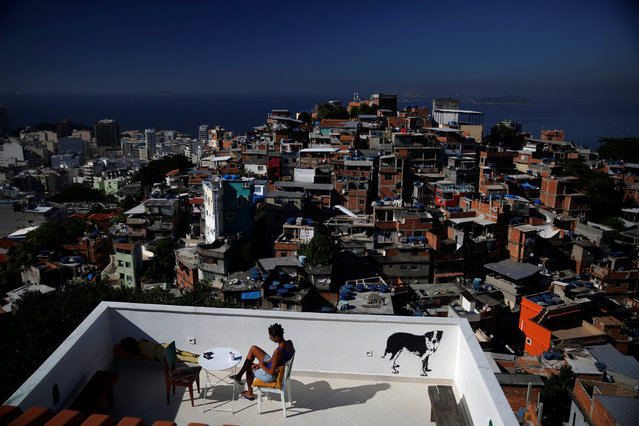
A woman sits on a terrace at Tiki hostel in Cantagalo favela, in Rio de Janeiro, Brazil, April 16, 2016. (Photo by Pilar Olivares/Reuters)

A woman sits on a terrace at Tiki hostel in Cantagalo favela, in Rio de Janeiro, Brazil, April 16, 2016. Hostels in a few of Rio's more than 1,000 slums serve not only as a cheap housing alternative for the more adventurous among the estimated 500,000 foreign tourists expected to arrive for the Olympics in August. The establishments also open up the rich culture of the city's shantytowns for travellers, giving them a glimpse into once “no-go” areas where about one-fifth of Rio's population lives. (Photo by Pilar Olivares/Reuters)
Details
04 May 2016 12:18:00
A sеx worker protests at Rua Guaicurus, the main bohemian area of Belo Horizonte, state of Minas Gerais, Brazil on April 5, 2021, asking to be considered a priority group to receive the vaccine agaisnt COVID-19. (Photo by Douglas Magno/AFP Photo)

A sеx worker protests at Rua Guaicurus, the main bohemian area of Belo Horizonte, state of Minas Gerais, Brazil on April 5, 2021, asking to be considered a priority group to receive the vaccine agaisnt COVID-19. (Photo by Douglas Magno/AFP Photo)
Details
04 Feb 2022 07:35:00
Tercio Galdino, 66, and his wife Aliceia, 65, wear their protective “space suits” as they walk on the sidewalk of Copacabana Beach amid the coronavirus outbreak in Rio de Janeiro, Brazil, July 11, 2020. (Photo by Ricardo Moraes/Reuters)

Tercio Galdino, 66, and his wife Aliceia, 65, wear their protective “space suits” as they walk on the sidewalk of Copacabana Beach amid the coronavirus outbreak in Rio de Janeiro, Brazil, July 11, 2020. (Photo by Ricardo Moraes/Reuters)
Details
25 Nov 2020 00:03:00
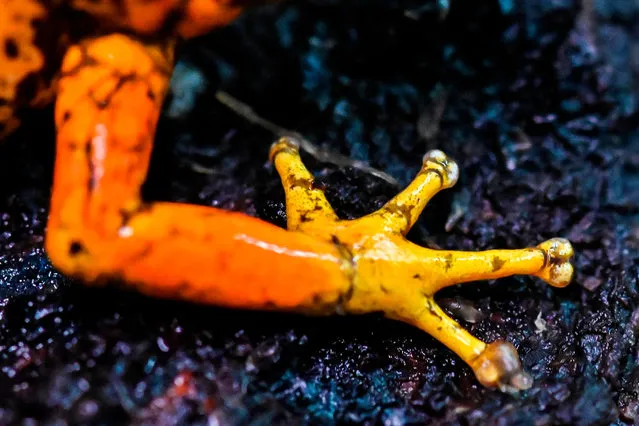
A leg of a “diablito” frog (Oophaga sylvatica) is photographed in a laboratory at a laboratory in the zoo of Cali, Colombia, on July 19, 2019. Colombia is the second country with the largest number of amphibians in the world after Brazil. More than 40% of amphibian species worldwide are in danger of extinction. (Photo by Luis Robayo/AFP Photo)

A leg of a “diablito” frog (Oophaga sylvatica) is photographed in a laboratory at a laboratory in the zoo of Cali, Colombia, on July 19, 2019. Colombia is the second country with the largest number of amphibians in the world after Brazil. More than 40% of amphibian species worldwide are in danger of extinction. (Photo by Luis Robayo/AFP Photo)
Details
28 Nov 2020 00:03:00
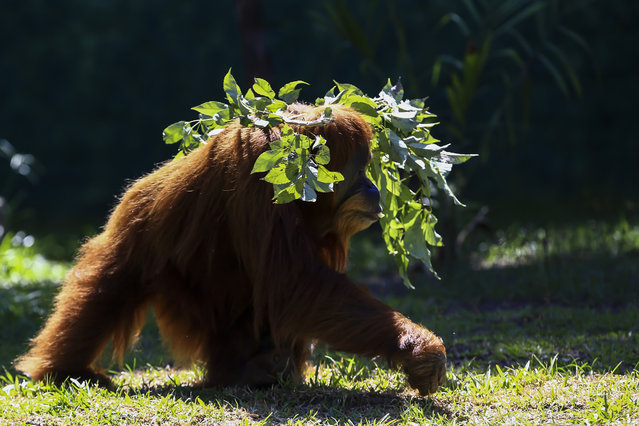
An Orangutan named Elze walks in the Biopark of Rio during a media tour in Rio de Janeiro, Brazil, Thursday, March 18, 2021. The park was closed to the public for renovations to convert the city zoo into a center for biodiversity conservation and will reopen to the general public at the end of March. (Photo by Bruna Prado/AP Photo)

An Orangutan named Elze walks in the Biopark of Rio during a media tour in Rio de Janeiro, Brazil, Thursday, March 18, 2021. The park was closed to the public for renovations to convert the city zoo into a center for biodiversity conservation and will reopen to the general public at the end of March. (Photo by Bruna Prado/AP Photo)
Details
28 Mar 2021 09:55:00
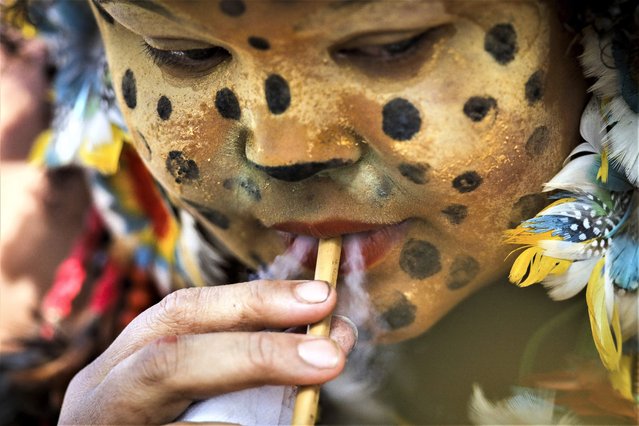
An Indigenous woman smokes during a protest demanding a better health care system be made available in her region, including the hiring of more doctors and nurses as well as the building of more clinics, outside the Ministry of Health in Brasilia, Brazil, Wednesday, February 8, 2023. (Photo by Gustavo Moreno/AP Photo)

An Indigenous woman smokes during a protest demanding a better health care system be made available in her region, including the hiring of more doctors and nurses as well as the building of more clinics, outside the Ministry of Health in Brasilia, Brazil, Wednesday, February 8, 2023. (Photo by Gustavo Moreno/AP Photo)
Details
21 May 2024 13:50:00
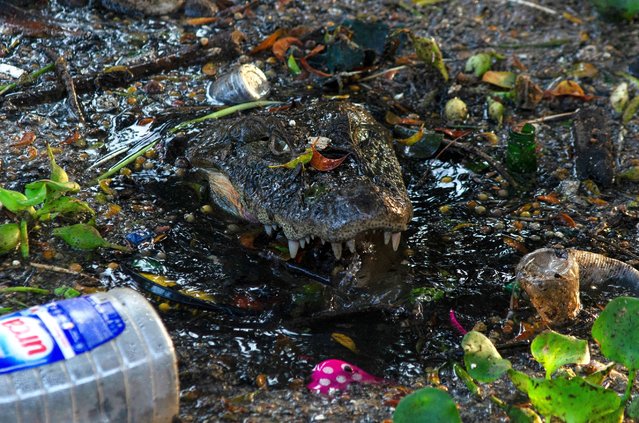
A caiman swims amidst trash in Canal das Taxas at the Recreio dos Bandeirantes neighborhood in west Rio de Janeiro, Brazil, on November 22, 2023. The urban expansion of the area and the resulting pollution have put the yacare caiman (Caiman latirostris) “in danger of extinction”. (Photo by Tercio Teixeira/AFP Photo)

A caiman swims amidst trash in Canal das Taxas at the Recreio dos Bandeirantes neighborhood in west Rio de Janeiro, Brazil, on November 22, 2023. The urban expansion of the area and the resulting pollution have put the yacare caiman (Caiman latirostris) “in danger of extinction”. (Photo by Tercio Teixeira/AFP Photo)
Details
12 Jun 2024 03:33:00
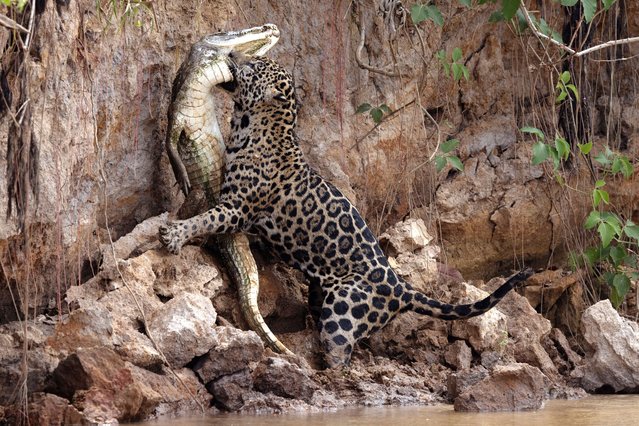
A female jaguar named Ti, by the NGO Jaguar ID, bites an alligator at Encontro das Aguas State Park, in the Pantanal, the largest wetland in the world, in Pocone, Mato Grosso, Brazil, on October 10, 2024. (Photo by Sergio Moraes/Reuters)

A female jaguar named Ti, by the NGO Jaguar ID, bites an alligator at Encontro das Aguas State Park, in the Pantanal, the largest wetland in the world, in Pocone, Mato Grosso, Brazil, on October 10, 2024. (Photo by Sergio Moraes/Reuters)
Details
10 Nov 2024 04:10:00