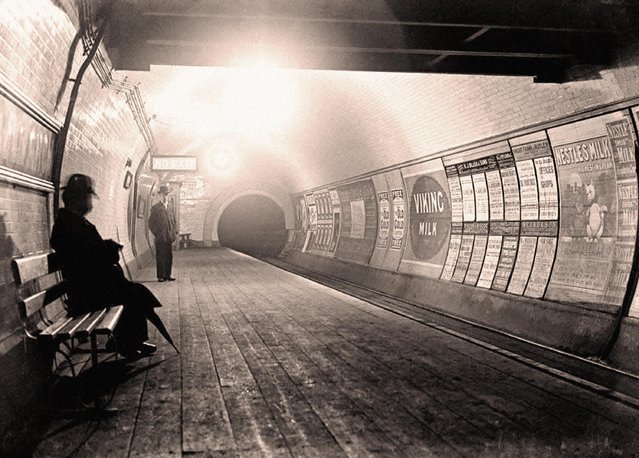
A man sits waiting for a train on the London Underground in 1890, when the platform floors were still made from wooden floorboards. (Photo by Hi-Story/Alamy Stock Photo)
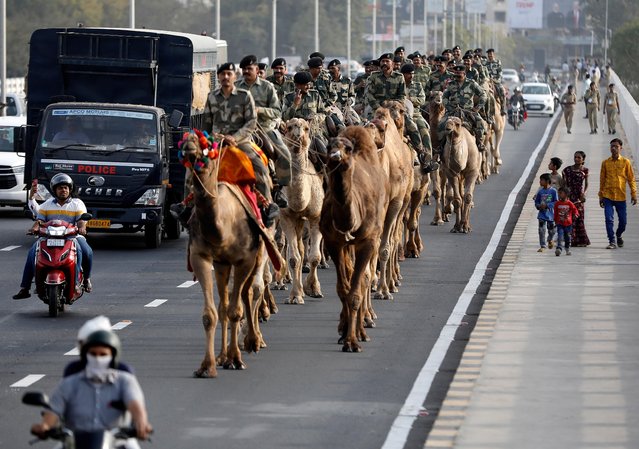
Border Security Force (BSF) soldiers ride their camels as they take part in a rehearsal for a road show ahead of the visit of U.S. President Donald Trump, in Ahmedabad, India, February 21, 2020. (Photo by Amit Dave/Reuters)
Catholic faithful attend a Palm Sunday mass at the start of Holy Week in San Lorenzo, Paraguay, Sunday, March 24, 2024. (Photo by Jorge Saenz/AP Photo)
A youth rolls a hoop in the National Theater where families displaced by gang violence are taking shelter in Port-au-Prince, Haiti, May 9, 2024. (Photo by Ramon Espinosa/AP Photo)
Villagers wade through a flooded road following heavy rains after cyclone Remal's landfall at Singi Mari village of Nagaon district, in India's Assam state on May 29, 2024. A powerful cyclone that smashed into low-lying Bangladesh and India killed at least 65 people, including in torrential rain storms in its wake, state government officials and media said on May 29. (Photo by Biju Boro/AFP Photo)
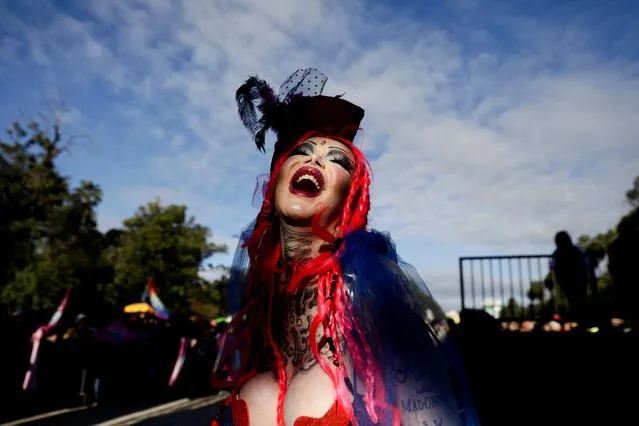
A reveller takes part in the “Free Parade” during LGBTIQ Pride Month in Porto Alegre, state of Rio Grande do Sul, Brazil on June 12, 2022. (Photo by Diego Vara/Reuters)
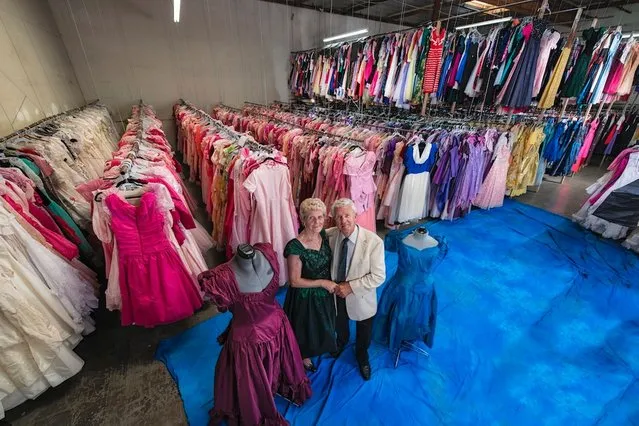
There are many types of collections. Some are formed by purposefully collecting certain objects, such as stamps or coins. However, some collections are only a byproduct of an obsession, a quirk of mind. For example, Paul Brockmann got into the habit of buying his girlfriend and later his wife a dress every time they went ballroom dancing. It might seem excessive to some, but it was his way of showing his affection. Overtime, this collection grew to be enormous, counting 55,000 dresses in total. Basic math tells us that either they went ballroom dancing three times per day for every day of their lives, or he bought them in huge bundles every time.