Loading...
Done
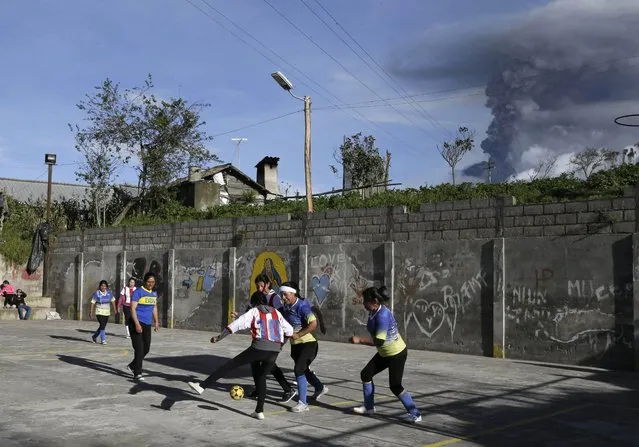
Women play soccer as  the Tungurahua volcano spews a column of ash during an eruption in Huambalo, Ecuador, Saturday, March 5, 2016. Tungurahua is 16,480 feet (5,023 meters) high and has been active since 1999. (Photo by Dolores Ochoa/AP Photo)

Women play soccer as the Tungurahua volcano spews a column of ash during an eruption in Huambalo, Ecuador, Saturday, March 5, 2016. Tungurahua is 16,480 feet (5,023 meters) high and has been active since 1999. (Photo by Dolores Ochoa/AP Photo)
Details
07 Mar 2016 11:28:00
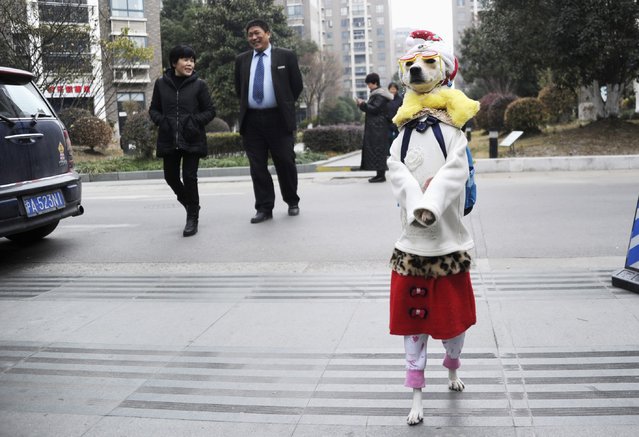
Dog Xiaoniu dressed in clothes walks across a street with its owner (not pictured) in Shanghai, December 19, 2014. According to local media, Xiaoniu accompanies its owner to the food market everyday and is able to walk with its hind legs for up to about an hour. (Photo by Reuters/Stringer)

Dog Xiaoniu dressed in clothes walks across a street with its owner (not pictured) in Shanghai, December 19, 2014. According to local media, Xiaoniu accompanies its owner to the food market everyday and is able to walk with its hind legs for up to about an hour. (Photo by Reuters/Stringer)
Details
27 Dec 2014 12:03:00
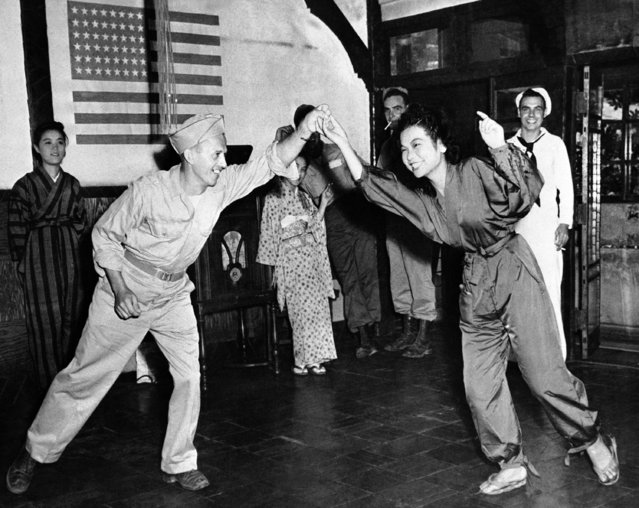
U.S. Corporal Stanley Suski, left, and Miss Tamako, a Geisha girl, whirl a bit of Jitterbug, in a bar, in Tokyo, Japan, on October 1, 1945. (Photo by AP Photo)

U.S. Corporal Stanley Suski, left, and Miss Tamako, a Geisha girl, whirl a bit of Jitterbug, in a bar, in Tokyo, Japan, on October 1, 1945. (Photo by AP Photo)
Details
06 Oct 2015 08:07:00
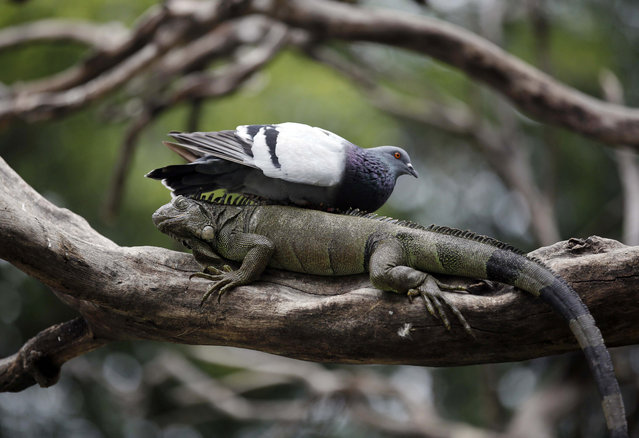
A pigeon rests on a wild iguana in a tree inside Seminario Park in Guayaquil, Ecuador, Thursday, April 3, 2014. Pigeons coexist with the wild iguanas at this park in the middle of the city surrounded by savannah. (Photo by Dolores Ochoa/AP Photo)

A pigeon rests on a wild iguana in a tree inside Seminario Park in Guayaquil, Ecuador, Thursday, April 3, 2014. Pigeons coexist with the wild iguanas at this park in the middle of the city surrounded by savannah. (Photo by Dolores Ochoa/AP Photo)
Details
05 Apr 2014 14:04:00
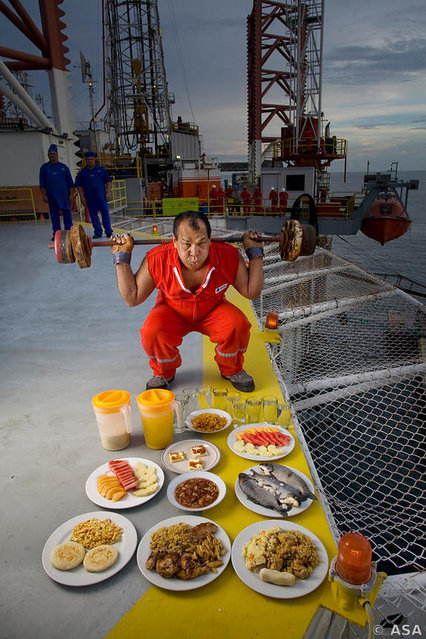
What the World Eats By Peter Menzel And Faith D'Aluisio Part 1

A stunning photographic collection featuring portraits of people from 30 countries and the food they eat in one day. In this fascinating study of people and their diets, 80 profiles are organized by the total number of calories each person puts away in a day. Featuring a Japanese sumo wrestler, a Massai herdswoman, world-renowned Spanish chef Ferran Adria, an American competitive eater, and more, these compulsively readable personal stories also include demographic particulars, including age, activity level, height, and weight. Essays from Harvard primatologist Richard Wrangham, journalist Michael Pollan, and others discuss the implications of our modern diets for our health and for the planet. This compelling blend of photography and investigative reportage expands our understanding of the complex relationships among individuals, culture, and food.
Details
23 Apr 2014 14:34:00
Members of the Russian Red Army Choir perform at Water Front Theatre in Beirut September 13, 2014. (Photo by Jamal Saidi/Reuters)

Members of the Russian Red Army Choir perform at Water Front Theatre in Beirut September 13, 2014. (Photo by Jamal Saidi/Reuters)
Details
20 Sep 2014 10:09:00
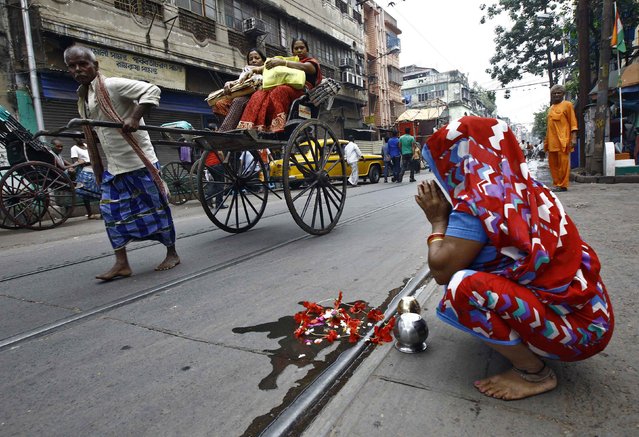
A woman offers prayers by a road as a rickshaw puller transports passengers in Kolkata October 28, 2014. (Photo by Rupak De Chowdhuri/Reuters)

A woman offers prayers by a road as a rickshaw puller transports passengers in Kolkata October 28, 2014. (Photo by Rupak De Chowdhuri/Reuters)
Details
01 Nov 2014 14:25:00
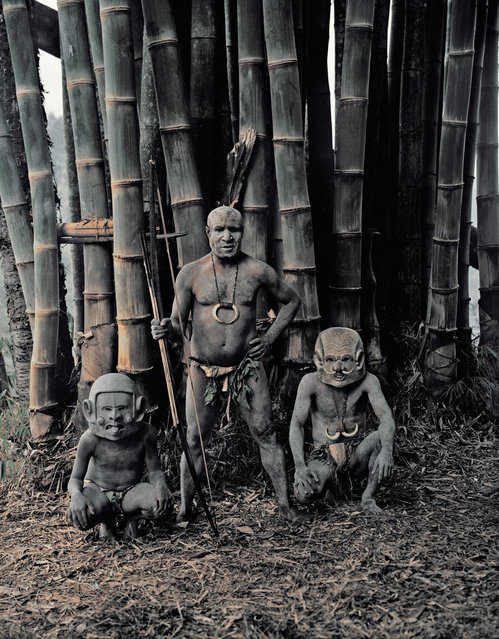
“Asaro from the Eastern Highlands”. The mudmen could not cover their faces with mud because the people of Papua New Guinea thought that the mud from the Asaro river was poisonous. So instead of covering their faces with this alleged poison, they made masks from pebbles that they heated and water from the waterfall, with unusual designs such as long or very short ears either going down to the chin or sticking up at the top, long joined eyebrows attached to the top of the ears, horns and sideways mouths. (Jimmy Nelson)

“Asaro from the Eastern Highlands”. The mudmen could not cover their faces with mud because the people of Papua New Guinea thought that the mud from the Asaro river was poisonous. So instead of covering their faces with this alleged poison, they made masks from pebbles that they heated and water from the waterfall, with unusual designs such as long or very short ears either going down to the chin or sticking up at the top, long joined eyebrows attached to the top of the ears, horns and sideways mouths. (Photo and caption by Jimmy Nelson)
Details
20 Oct 2013 08:54:00