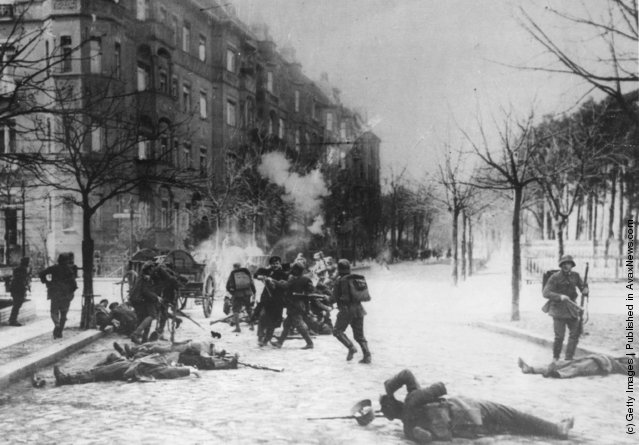
Street fighting in Berlin between Government troops and Spartacists, during the Spartacist uprising which followed Germany's defeat in World War I. (Photo by Keystone/Getty Images). 1919
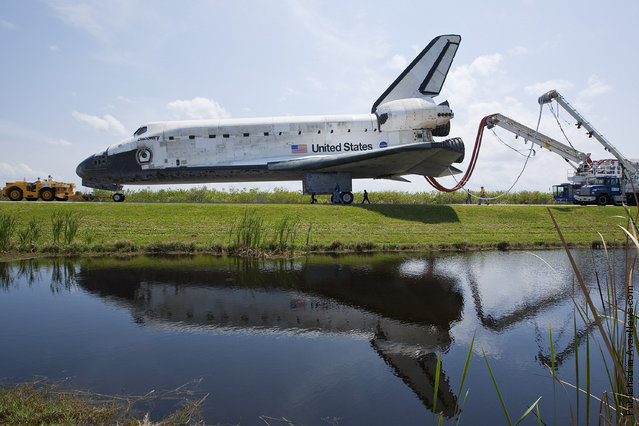
Space Shuttle Discovery is towed from the shuttle landing facility to the orbiter processing facility at Kennedy Space Center on April 20, 2010 in Cape Canaveral, Florida. Discovery's landing attempts at KSC were scrubbed yesterday due to unacceptable weather conditions. Discovery is returning from a successful mission to the International Space Station. (Photo by Matt Stroshane/Getty Images). CAPE CANAVERAL, FL – APRIL 20 2010
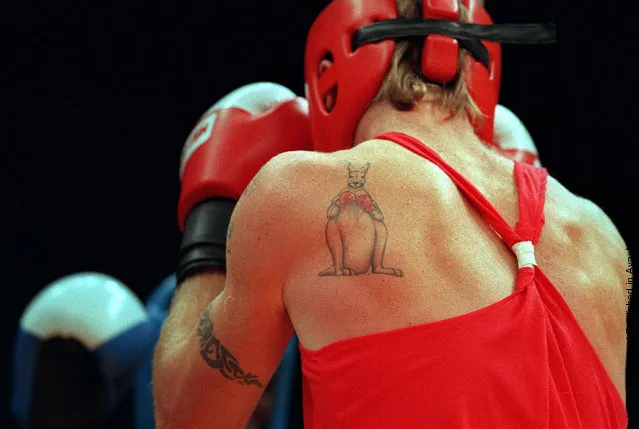
Paul Doherty of Australia with tatoo against Timothy Mareke of Solomon Island during the men's 75kg class at the Sydney International Invitation Boxing held at the Sydney Exhibition Centre, Darling Harbour, Sydney, Australia.
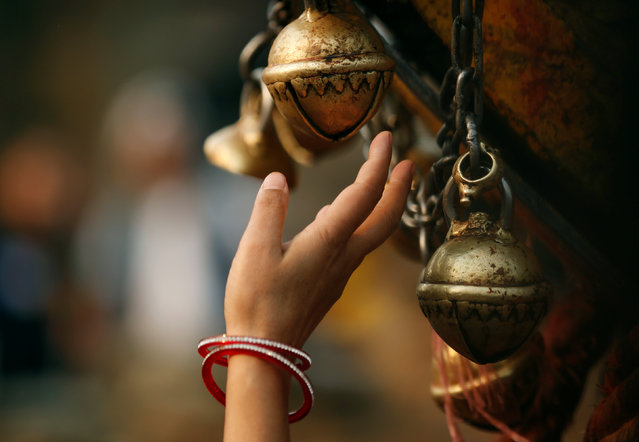
A hand of a devotee is pictured as she rings a bell while offering prayers to the chariot of God Bhairab during the Bisket festival in Bhaktapur, Nepal, April 13, 2016. During the festival, also regarded as Nepalese New Year, images of the Hindu god Bhairava and his female counterpart Bhadrakali are enshrined in two large chariots and pulled to an open square after which rituals and festivities are performed. (Photo by Navesh Chitrakar/Reuters)
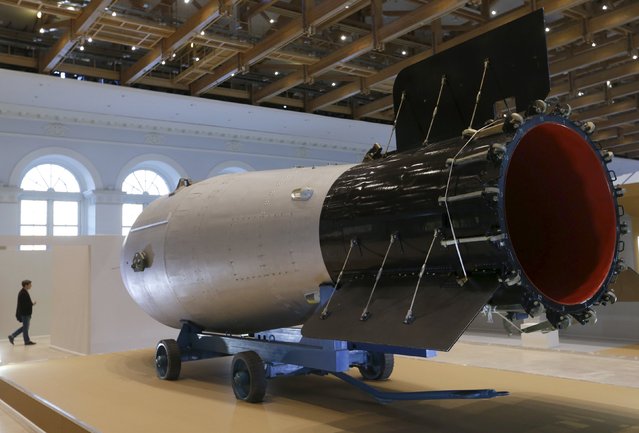
Shell, which is the replica of the biggest detonated Soviet nuclear bomb AN-602 (Tsar-Bomb), is on display in Moscow, Russia, August 31, 2015. The shell is part of an exhibition organized by the state nuclear corporation Rosatom. (Photo by Maxim Zmeyev/Reuters)
A light-up bow whose arrows are advertised as flying up to 145 feet and the “Catapencil” – a pencil with a miniature slingshot-style launcher on its end – are on an annual list of unsafe toys released Wednesday by a Massachusetts-based consumer watchdog group. World Against Toys Causing Harm, or W.A.T.C.H., issued the “10 Worst Toys” list to remind parents and consumers of the potential hazards in some toys as the holiday shopping season gets underway. (Photo by Charles Krupa/AP Photo)
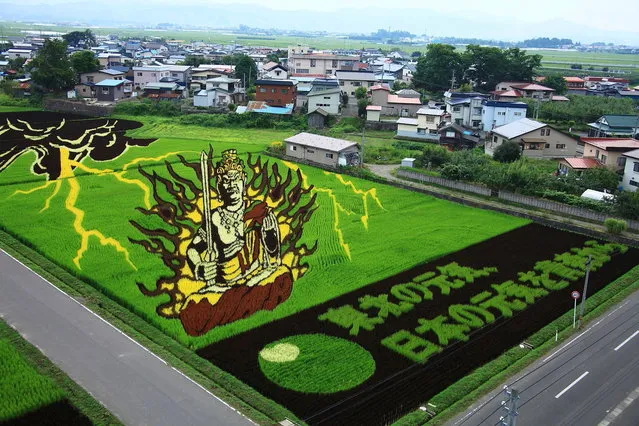
Tanbo Art is the strategic planting of four varieties of rice which have different colored leaves in order to create a giant image in the rice paddy. This type of aesthetic planting began in the Japanese village of Inakadate in 1993 in order to celebrate the village’s over 2000 year history of rice farming. The practice has spread to other rice cultivating communities in Japan and even other countries such as Thailand and South Korea.