Loading...
Done
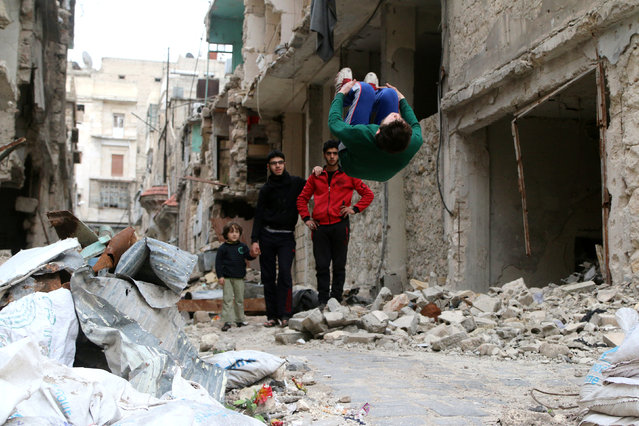
Gymnast Ahmad al-Sawas performs gymnastic moves near damaged buildings in the rebel-held Bustan al-Qasr neighbourhood of Aleppo, Syria March 26, 2016. As Syrian gymnast Ahmad al-Sawas watched his country fall apart, his Olympic dream collapsed too. The last national champion before the fighting began, he knew that supporting the anti-government side in the five-year-old civil war would prevent him from being selected for the Rio Games. “I chose to be an athlete who participates in the revolution”, said Ahmad, who trains where he can for two hours a day – be it on a mattress on a soccer field, in a local hall or somersaulting off a wall. (Photo by Abdalrhman Ismail/Reuters)

Gymnast Ahmad al-Sawas performs gymnastic moves near damaged buildings in the rebel-held Bustan al-Qasr neighbourhood of Aleppo, Syria March 26, 2016. As Syrian gymnast Ahmad al-Sawas watched his country fall apart, his Olympic dream collapsed too. The last national champion before the fighting began, he knew that supporting the anti-government side in the five-year-old civil war would prevent him from being selected for the Rio Games. (Photo by Abdalrhman Ismail/Reuters)
Details
05 Aug 2016 13:25:00
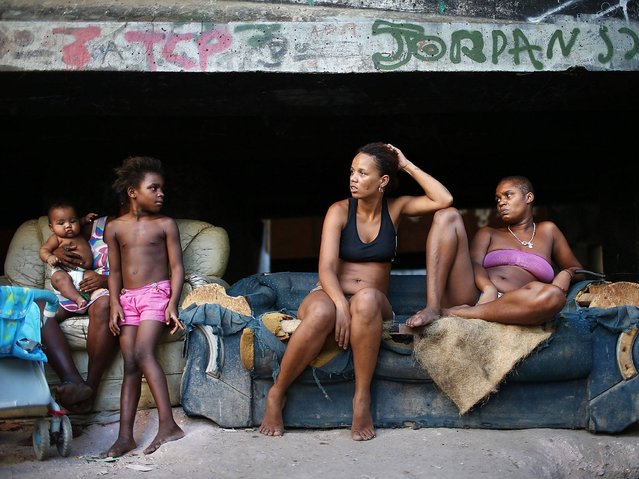
Residents (R to L) Luiza, Janubie, Leiticia and Lucas sit beneath an overpass near their houses in an impoverished area in the unpacified Complexo da Mare slum complex, one of the largest “favela” complexes in Rio de Janeiro. (Photo by Mario Tama/Getty Images)

Residents (R to L) Luiza, Janubie, Leiticia and Lucas sit beneath an overpass near their houses in an impoverished area in the unpacified Complexo da Mare slum complex, one of the largest “favela” complexes in Rio, on March 18, 2014 in Rio de Janeiro, Brazil. (Photo by Mario Tama/Getty Images)
Details
21 Mar 2014 06:07:00
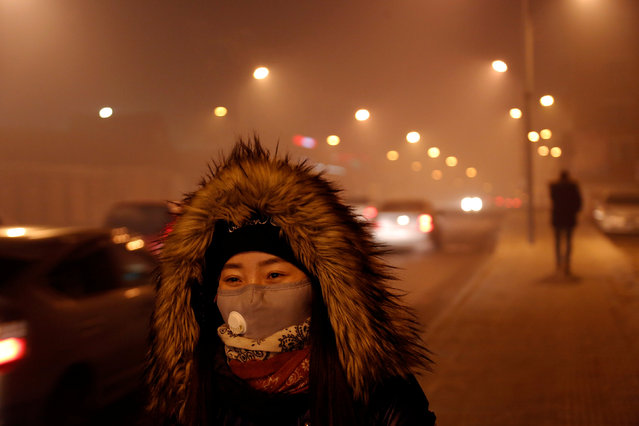
A woman wears a face mask in the part of the city near neighbourhoods known for burning coal for heating in Ulaanbaatar, Mongolia January 26, 2017. Not many people in Ulaanbaatar wear masks to protect themselves against pollution. (Photo by B. Rentsendorj/Reuters)

A woman wears a face mask in the part of the city near neighbourhoods known for burning coal for heating in Ulaanbaatar, Mongolia January 26, 2017. Not many people in Ulaanbaatar wear masks to protect themselves against pollution. (Photo by B. Rentsendorj/Reuters)
Details
09 Feb 2017 00:00:00
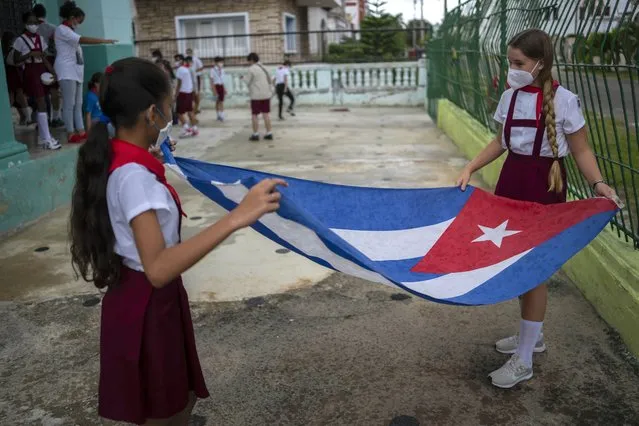
Students wearing masks as a precaution amid the spread of COVID-19 put away a Cuban flag so it does not get wet in the rain on their first day of school after months without face-to-face classes in Havana, Cuba, Monday, November 8, 2021. As Cuba approaches the announced date of Nov. 15 for the reopening of the entire country to the world, getting children back to school is one of its priorities. (Photo by Ramon Espinosa/AP Photo)

Students wearing masks as a precaution amid the spread of COVID-19 put away a Cuban flag so it does not get wet in the rain on their first day of school after months without face-to-face classes in Havana, Cuba, Monday, November 8, 2021. As Cuba approaches the announced date of Nov. 15 for the reopening of the entire country to the world, getting children back to school is one of its priorities. (Photo by Ramon Espinosa/AP Photo)
Details
19 Nov 2021 08:45:00
Katjinga, a Rhodesian ridgeback dog who lives on a 20-acre farm in Germany, adopted an abandoned pot-bellied piglet in August 2009. The tiny black piglet, named Paulinchen, had been so small at birth that her mother likely overlooked it. Katjinga's owner, Roland Adam, found the piglet alone and cold and brought it to his 8-year-old dog

Katjinga, a Rhodesian ridgeback dog who lives on a 20-acre farm in Germany, adopted an abandoned pot-bellied piglet in August 2009. The tiny black piglet, named Paulinchen, had been so small at birth that her mother likely overlooked it. Katjinga's owner, Roland Adam, found the piglet alone and cold and brought it to his 8-year-old dog. (Photo by Fame Pictures)
Details
23 Apr 2012 13:45:00
Mimi Pineda, 15, whose parents are from El Salvador, rides to church in a limousine with her friend Christian Flores, 17, during her quinceanera in Santa Clarita, California August 23, 2014. Quinceanera is a rite of passage celebrated on the fifteenth birthday of many female Latino teenagers. (Photo by Lucy Nicholson/Reuters)

Reuters photographer Lucy Nicholson documented some of the migrant communities that live in Los Angeles. Los Angeles is a culturally thriving city and one of the most ethnically diverse in the United States, with a population that is 48.5 percent Latino and 11.3 percent Asian, according to a 2010 census. Immigration has become a hot button issue ahead of U.S. midterm elections on November 4, and despite arguments from the White House that legal migration benefits businesses, a recent opinion poll found most Americans believe migrants place a burden on the economy. (Photo by Lucy Nicholson/Reuters)
Details
02 Nov 2014 11:03:00
Ballet dancer and performer Ashlee Montague of New York wears a gas mask while she dances in Times Square as the coronavirus disease (COVID-19) outbreak continued in Manhattan, New York City, U.S., March 18, 2020. (Photo by Andrew Kelly/Reuters)

Ballet dancer and performer Ashlee Montague of New York wears a gas mask while she dances in Times Square as the coronavirus disease (COVID-19) outbreak continued in Manhattan, New York City, U.S., March 18, 2020. (Photo by Andrew Kelly/Reuters)
Details
30 Mar 2020 00:01:00
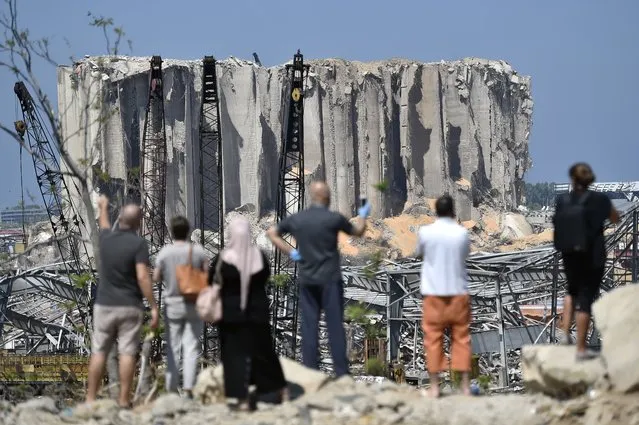
Lebanese people take pictures for damaged grain silos in Beirut port following a huge explosion rocked the city in Beirut, Lebanon, 23 August 2020. According to Lebanese Health Ministry at least 181 people were killed, and more than 6,000 injured in the Beirut blast that devastated the port area on 04 August and believed to have been caused by an estimated 2,750 tons of ammonium nitrate stored in a warehouse. (Photo by Wael Hamzeh/EPA/EFE)

Lebanese people take pictures for damaged grain silos in Beirut port following a huge explosion rocked the city in Beirut, Lebanon, 23 August 2020. According to Lebanese Health Ministry at least 181 people were killed, and more than 6,000 injured in the Beirut blast that devastated the port area on 04 August and believed to have been caused by an estimated 2,750 tons of ammonium nitrate stored in a warehouse. (Photo by Wael Hamzeh/EPA/EFE)
Details
04 Sep 2020 00:05:00