Loading...
Done
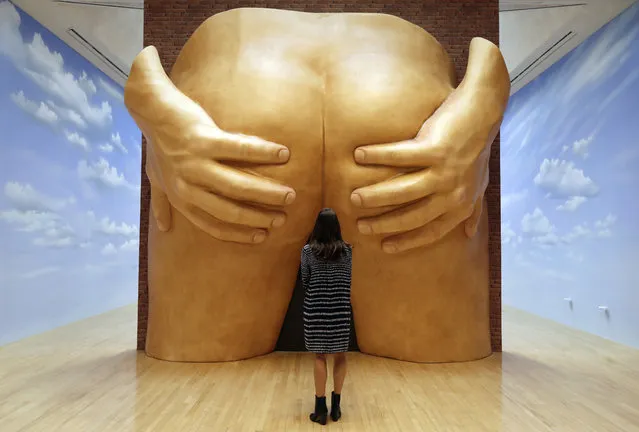
A woman looks towards part of an artwork called “Lichen! Libido! (London!) Chastity!” by Anthea Hamilton, one of the four artists shortlisted for the Turner Prize 2016, as it is displayed at the Tate Britain gallery in London, Monday, September 26, 2016. The Turner Prize aims to promote public debate around new developments in contemporary British art. (Photo by Kirsty Wigglesworth/AP Photo)

A woman looks towards part of an artwork called “Lichen! Libido! (London!) Chastity!” by Anthea Hamilton, one of the four artists shortlisted for the Turner Prize 2016, as it is displayed at the Tate Britain gallery in London, Monday, September 26, 2016. The Turner Prize aims to promote public debate around new developments in contemporary British art. (Photo by Kirsty Wigglesworth/AP Photo)
Details
27 Sep 2016 09:51:00
Valentine Shmalentine

“Valentine Shmalentine”, 2011. (Photo by GillyFace)
Details
27 Jul 2012 09:21:00
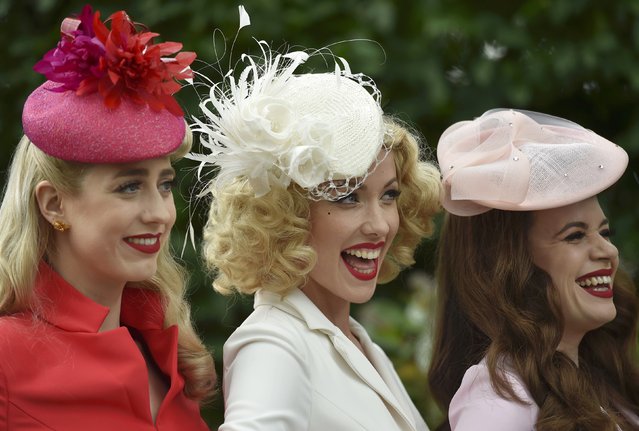
Britain Horse Racing, Royal Ascot, Ascot Racecourse on June 16, 2016. Ladies Day Racegoers wear hats. (Photo by Toby Melville/Reuters)

Britain Horse Racing, Royal Ascot, Ascot Racecourse on June 16, 2016. Ladies Day Racegoers wear hats. (Photo by Toby Melville/Reuters)
Details
17 Jun 2016 13:43:00
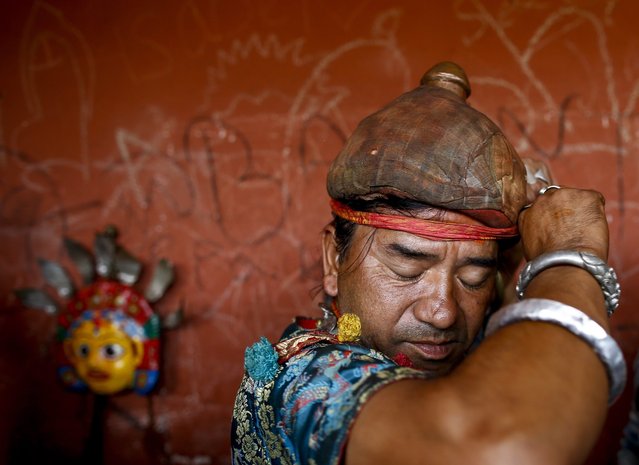
A Nepalese devotee prepares for a religious mask performance during the Seekaali Festival in Khokna village, near Kathmandu, Nepal, 07 October 2016. During the 300-year-old Seekali festival, elderly ethnic Newari devotees wear masks of 14 various goddesses including Lord Ganesha, Lord Shiva, Lord Laxmi, Lord Brahma and Lord Bishnu. The Khokna people celebrate the Seekaali festival as an alternative of the Dashain festival which is biggest festival of Nepalese Hindus that celebrates the victory of the gods over demons. (Photo by Narendra Shrestha/EPA)

A Nepalese devotee prepares for a religious mask performance during the Seekaali Festival in Khokna village, near Kathmandu, Nepal, 07 October 2016. During the 300-year-old Seekali festival, elderly ethnic Newari devotees wear masks of 14 various goddesses including Lord Ganesha, Lord Shiva, Lord Laxmi, Lord Brahma and Lord Bishnu. The Khokna people celebrate the Seekaali festival as an alternative of the Dashain festival which is biggest festival of Nepalese Hindus that celebrates the victory of the gods over demons. (Photo by Narendra Shrestha/EPA)
Details
09 Oct 2016 07:14:00
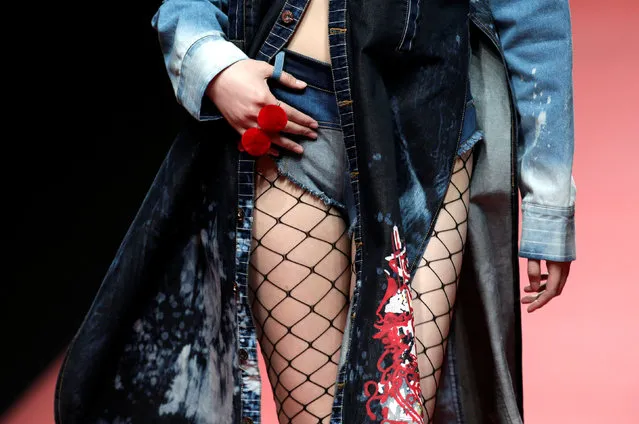
A model presents a creation by Chinese designer Chen Wen at China Fashion Week in Beijing, China March 29, 2017. (Photo by Jason Lee/Reuters)

A model presents a creation by Chinese designer Chen Wen at China Fashion Week in Beijing, China March 29, 2017. (Photo by Jason Lee/Reuters)
Details
03 Apr 2017 09:03:00
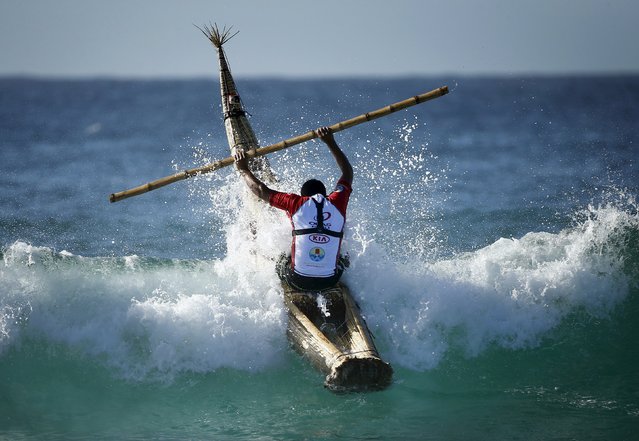
Peruvian surfer Carlos “Huevito” Areola rides a reed board, or “caballito” (little horse), into a wave at Sydney's Bondi Beach, February 24, 2016. (Photo by Jason Reed/Reuters)

Peruvian surfer Carlos “Huevito” Areola rides a reed board, or “caballito” (little horse), into a wave at Sydney's Bondi Beach, February 24, 2016. Areola is part of a group of Peruvian surfers touring Australia’s east coast to promote the use of the “caballito”. The “caballito” is thought to have been invented around 3,000 BC in northern Peru. (Photo by Jason Reed/Reuters)
Details
25 Feb 2016 11:46:00
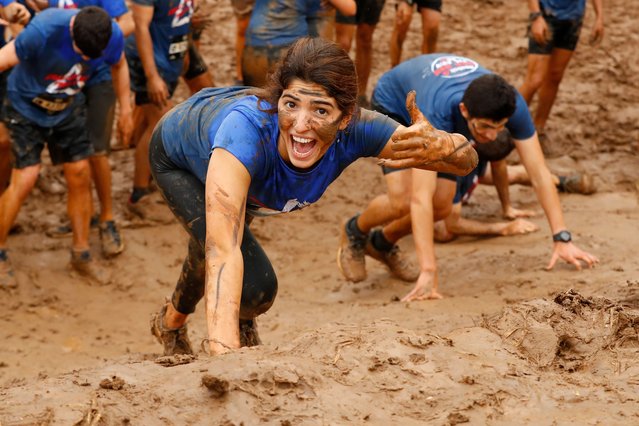
Participants climb a 10km muddy obstacle course during the “Run Mud” race, on March 29, 2019 in the Israeli mediterranean coastal city of Tel Aviv. (Photo by Jack Guez/AFP Photo)

Participants climb a 10km muddy obstacle course during the “Run Mud” race, on March 29, 2019 in the Israeli mediterranean coastal city of Tel Aviv. Over 6,000 participants took part in the obstacle race, with up to 18 artificial obstacles on three tracks (10 km, five km or two km). (Photo by Jack Guez/AFP Photo)
Details
01 Apr 2019 00:05:00
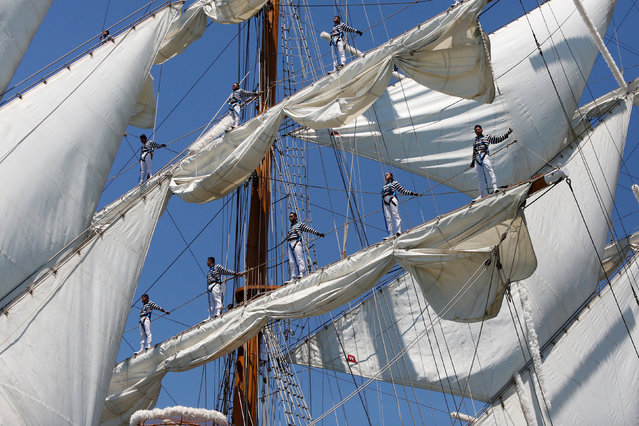
The Mexican ship Cuauhtemoc is pictured during the Tall Ships Races 2016 parade, in Lisbon, Portugal, July 25, 2016. (Photo by Pedro Nunes/Reuters)

The Mexican ship Cuauhtemoc is pictured during the Tall Ships Races 2016 parade, in Lisbon, Portugal, July 25, 2016. The Tall Ships' Races are races for sail training “tall ships” (sailing ships). The races are designed to encourage international friendship and training for young people in the art of sailing. The races are held annually in European waters and consists of two racing legs of several hundred nautical miles, and a “cruise in company” between the legs. Over one half (fifty-percent) of the crew of each ship participating in the races must consist of young people. (Photo by Pedro Nunes/Reuters)
Details
26 Jul 2016 10:49:00