Loading...
Done
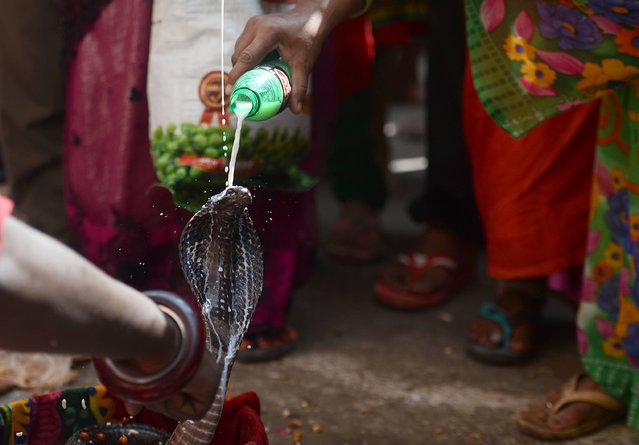
An Indian Hindu devotee pours milk on a snake as an offering during the annual Nag Panchami festival, dedicated to the worship of snakes outside the Nagvasuki temple, in Allahabad, on July 28, 2017. (Photo by Sanjay Kanojia/AFP Photo)

An Indian Hindu devotee pours milk on a snake as an offering during the annual Nag Panchami festival, dedicated to the worship of snakes outside the Nagvasuki temple, in Allahabad, on July 28, 2017. Officially the snake charmers' profession is banned in India, but many in the country offered prayers and milk blessings to cobras and other deadly serpents on July 28 in an annual tribute. The 800,000 charmers and their young apprentices come to the fore for the Nag Panchami festival which dates back several centuries. (Photo by Sanjay Kanojia/AFP Photo)
Details
31 Jul 2017 09:17:00
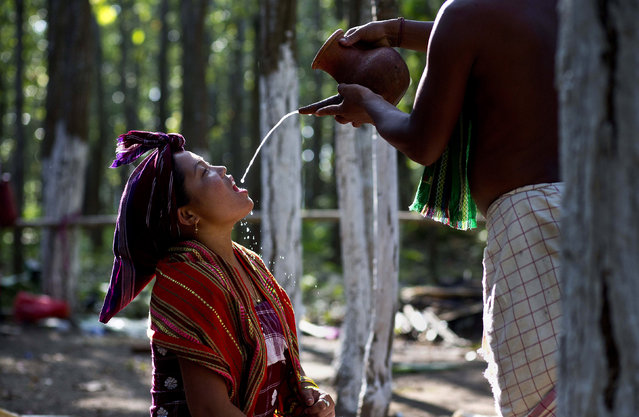
In this Monday, June 10, 2019 photo, an Indian Rabha tribal Hindu priest pours traditional rice beer to a Rabha girl to perform rituals during Baikho festival at Pantan village, west of Gauhati, India. Every year, the community in India’s northeastern state of Assam celebrates the festival, to please a deity of wealth and ask for good rains and a good harvest. (Photo by Anupam Nath/AP Photo)

In this Monday, June 10, 2019 photo, an Indian Rabha tribal Hindu priest pours traditional rice beer to a Rabha girl to perform rituals during Baikho festival at Pantan village, west of Gauhati, India. Every year, the community in India’s northeastern state of Assam celebrates the festival, to please a deity of wealth and ask for good rains and a good harvest. (Photo by Anupam Nath/AP Photo)
Details
15 Jun 2019 00:05:00
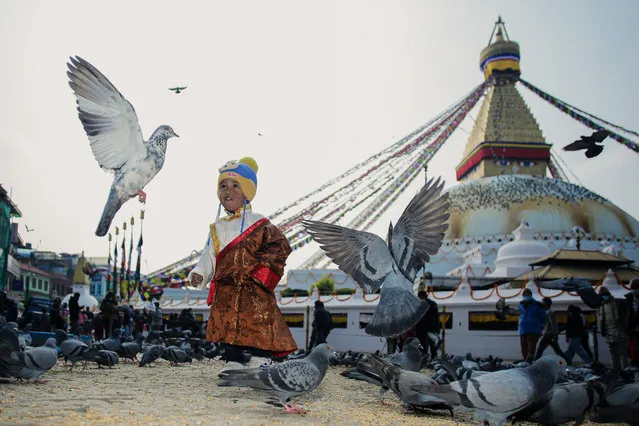
A young boy dressed in traditional Tamang dress plays with pigeons as Sonam Lhosar (the new year festival) is observed in Kathmandu, Nepal on February 2, 2022. (Photo by Amit Machamasi/ZUMA Press Wire/Rex Features/Shutterstock)

A young boy dressed in traditional Tamang dress plays with pigeons as Sonam Lhosar (the new year festival) is observed in Kathmandu, Nepal on February 2, 2022. (Photo by Amit Machamasi/ZUMA Press Wire/Rex Features/Shutterstock)
Details
07 Mar 2022 05:36:00
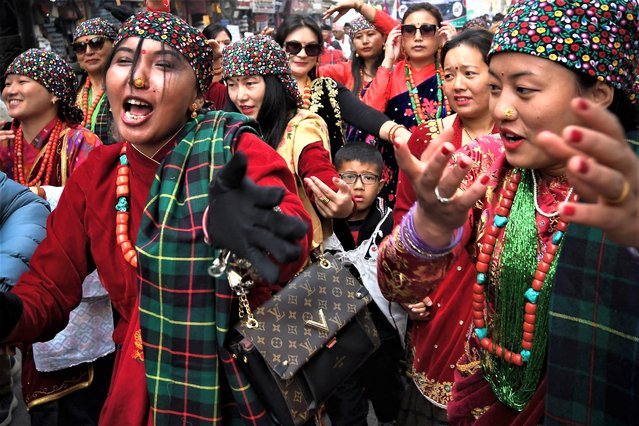
Members of indigenous Gurung community wearing traditional attire takes part with others in a New Year celebration ceremony known as “Tamu Lhosar” in Kathmandu on December 30, 2022. (Photo by Prakash Mathema/AFP Photo)

Members of indigenous Gurung community wearing traditional attire takes part with others in a New Year celebration ceremony known as “Tamu Lhosar” in Kathmandu on December 30, 2022. (Photo by Prakash Mathema/AFP Photo)
Details
18 Jan 2023 00:13:00
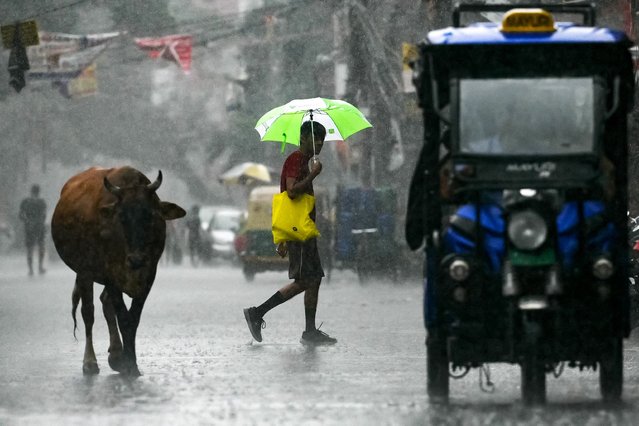
Commuters make their way across a street during rainfall in New Delhi on June 27, 2024. (Photo by Arun Sankar/AFP Photo)

Commuters make their way across a street during rainfall in New Delhi on June 27, 2024. (Photo by Arun Sankar/AFP Photo)
Details
08 Jul 2024 05:51:00
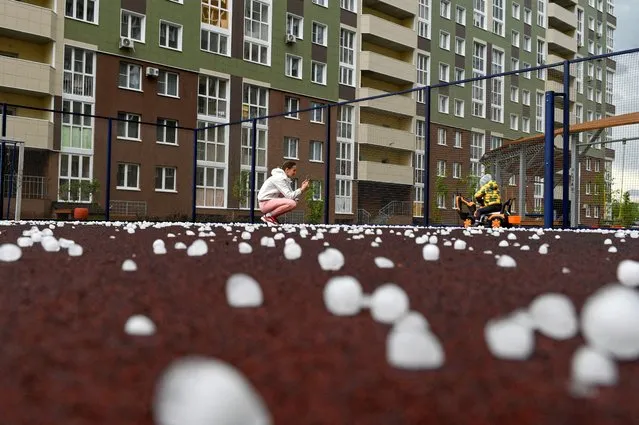
A woman takes photos of a child on a sports ground covered with hailstones following a hail storm in the Siberian city of Omsk, Russia on June 27, 2023. (Photo by Alexey Malgavko/Reuters)

A woman takes photos of a child on a sports ground covered with hailstones following a hail storm in the Siberian city of Omsk, Russia on June 27, 2023. (Photo by Alexey Malgavko/Reuters)
Details
08 Jul 2023 02:26:00
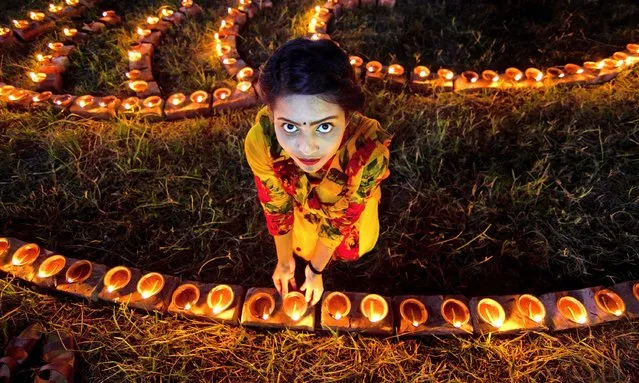
Hindu devotees light “Diyas” (earthen lamps) on a Rangoli, a framework of decorated pattern, as part of Diwali festivities in a temple premises in Dhaka, Bangladesh on November 12, 2023. The festival takes place every year in accordance with the Hindu lunar calendar. The word “Diwali” is derived from the Sanskrit word “Deepavali”, meaning series of lighted lamps; hence, it is also known as the festival of lights. Diwali is typically celebrated by socializing and exchanging gifts with family and friends. Many light oil lamps or candles to symbolize a victory of light over darkness, and fireworks are set off as part of the celebrations. (Photo by Joy Saha/Rex Features/Shutterstock)

Hindu devotees light “Diyas” (earthen lamps) on a Rangoli, a framework of decorated pattern, as part of Diwali festivities in a temple premises in Dhaka, Bangladesh on November 12, 2023. The festival takes place every year in accordance with the Hindu lunar calendar. The word “Diwali” is derived from the Sanskrit word “Deepavali”, meaning series of lighted lamps; hence, it is also known as the festival of lights. Diwali is typically celebrated by socializing and exchanging gifts with family and friends. Many light oil lamps or candles to symbolize a victory of light over darkness, and fireworks are set off as part of the celebrations. (Photo by Joy Saha/Rex Features/Shutterstock)
Details
18 Dec 2023 00:11:00
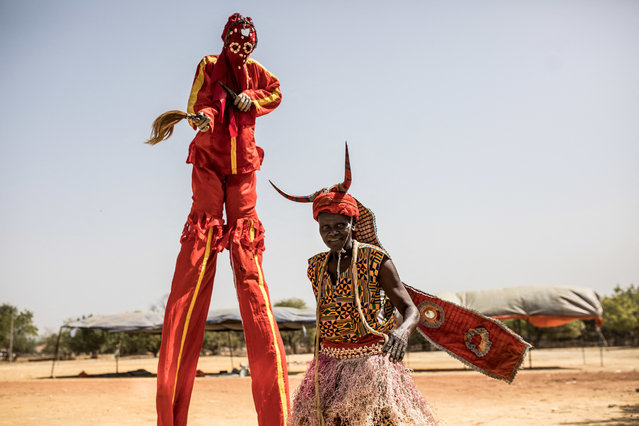
A masquerade dances to drums along the streets during the kankurang Festival in Janjanbureh on January 27, 2024. Listed as a UNESCO World Heritage Site since 2005, Kankurang, a combination of the Mandingo words “kango” and “Kurango”, literally translated as “voice” and “force”, ensures the transmission and teaching of the values and practices that form the basis of Mandingo cultural identity, a West African people whose historical home was the Mali empire. (Photo by Muhamadou Bittaye/AFP Photo)

A masquerade dances to drums along the streets during the kankurang Festival in Janjanbureh on January 27, 2024. Listed as a UNESCO World Heritage Site since 2005, Kankurang, a combination of the Mandingo words “kango” and “Kurango”, literally translated as “voice” and “force”, ensures the transmission and teaching of the values and practices that form the basis of Mandingo cultural identity, a West African people whose historical home was the Mali empire. (Photo by Muhamadou Bittaye/AFP Photo)
Details
13 Mar 2025 01:44:00