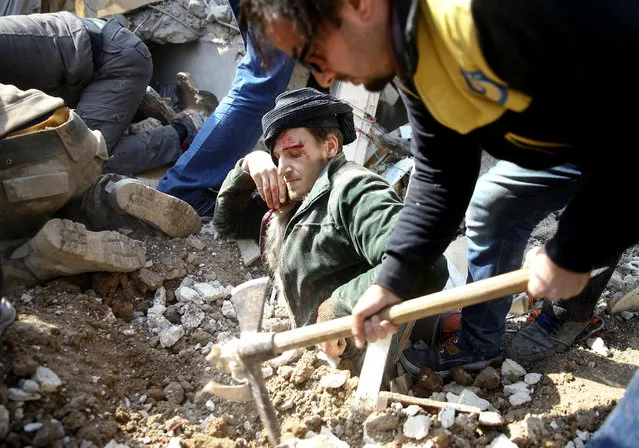
A man gets stuck under debris at a damaged site after an airstrike in the Saqba area, in the eastern Damascus suburb of Ghouta, Syria, January 9, 2018. (Photo by Bassam Khabieh/Reuters)
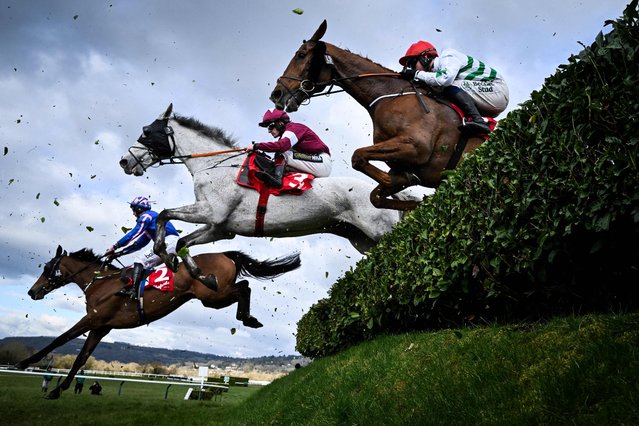
Jockeys and their horses compete in the Cross Country Chase, the fourth race on the second day of the Cheltenham Festival at Cheltenham Racecourse, in Cheltenham, western England on March 12, 2025. (Photo by Justin Tallis/AFP Photo)
Denmark's midfielder #06 Morten Frendrup lies behind teammates during the UEFA Nations League quarter final second leg football match between Portugal and Denmark at the Jose Alvalade stadium in Lisbon, on March 23, 2025. (Photo by Patricia de Melo Moreira/AFP Photo)
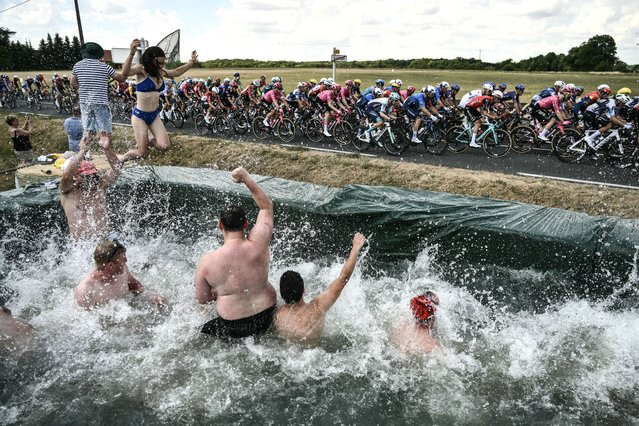
Spectators jump in a makeshift swimming pool set up along the race route as the pack of riders (peloton) cycles past, during the 9th stage of the 112th edition of the Tour de France cycling race, 174.1 km between Chinon and Chateauroux, central France, on July 13, 2025. (Photo by Marco Bertorello/AFP Photo)
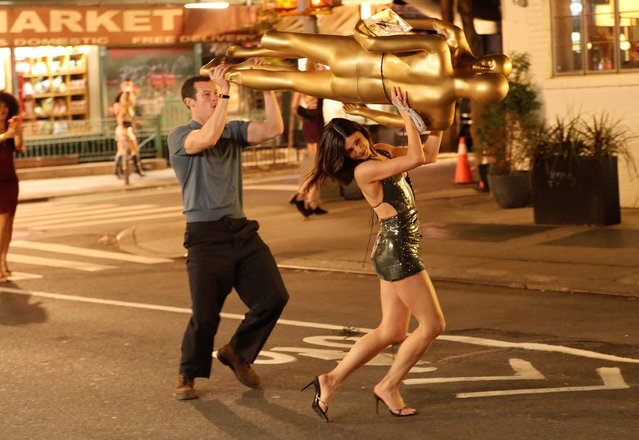
Monica Barbaro and Callum Turner are seen filming at the “One Night Only” set in SoHo, Manhattan on November 07, 2025 in New York City. (Photo by Jose Perez/Bauer-Griffin/GC Images)
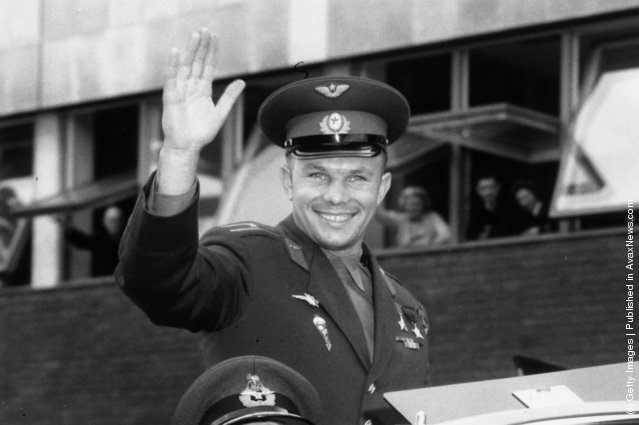
Soviet cosmonaut and the first man to travel in space, Yury Alekseyvich Gagarin (1934–1968) arriving in London for a Russian trade fair. (Photo by Douglas Miller/Getty Images)
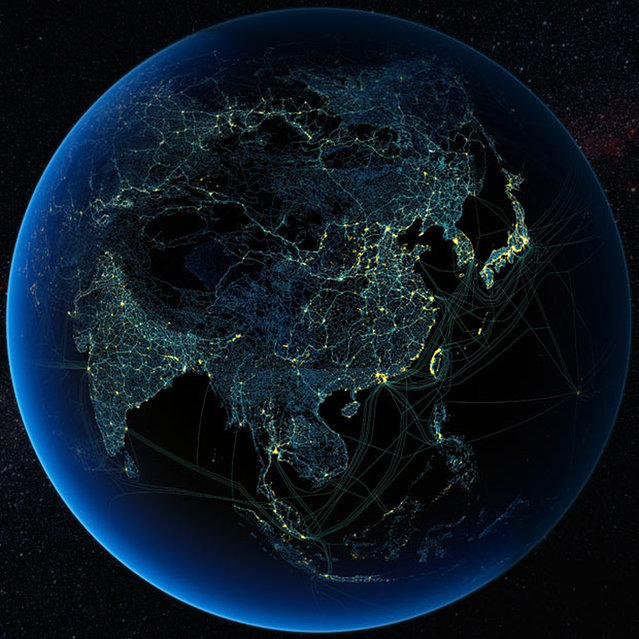
Defined according to wikipedia it is “a recent and informal geologic chronological term that serves to mark the evidence and extent of human activities that have had a significant global impact on the Earth’s ecosystems. The term was coined by ecologist Eugene Stoermer but has been widely popularized by the Nobel Prize-winning atmospheric chemist Paul Crutzen.”
The images here where created by Felix Pharand-Deschenes depicting how various human influences, from road and rail, to internet cables and airlines create significant patterns covering the Earth. What can we learn from these patterns in how they are influencing the environment