Loading...
Done
At 10,582 square kilometres, the Bolivian salt flats – otherwise known as Salar de Uyuni – are the largest on the planet and contain between 50 and 70% of the world’s lithium reserves. After exploring Chile and Argentina, photographer Joel Santos decided to travel to Bolivia in January 2017 to check the salt flats off his bucket list. With an electrical storm rolling in, Joel and his two travelling companions were the only souls left on the vast flats and captured the eerie flats without a person in sight. (Photo by Joel Santos/Barcroft Images)

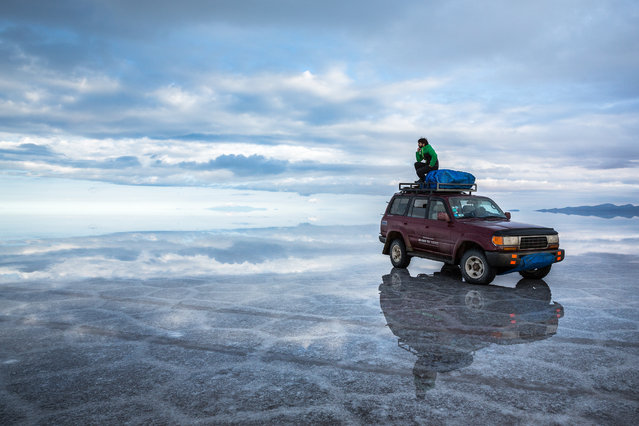
At 10,582 square kilometres, the Bolivian salt flats – otherwise known as Salar de Uyuni – are the largest on the planet and contain between 50 and 70% of the world’s lithium reserves. After exploring Chile and Argentina, photographer Joel Santos decided to travel to Bolivia in January 2017 to check the salt flats off his bucket list. With an electrical storm rolling in, Joel and his two travelling companions were the only souls left on the vast flats and captured the eerie flats without a person in sight. (Photo by Joel Santos/Barcroft Images)
Details
12 Aug 2019 00:03:00
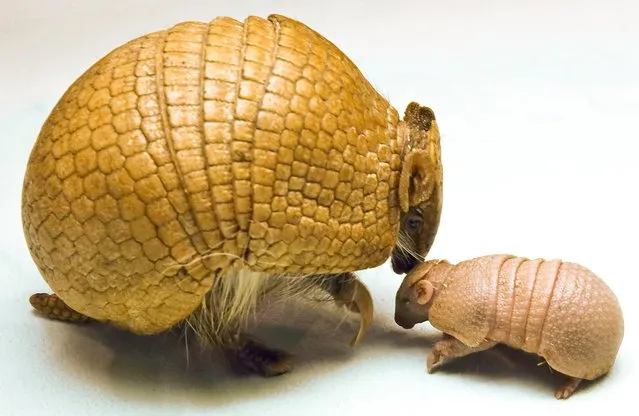
In this Sunday, April 27, 2014 handout photo provided by Busch Gardens Tampa, mother armadillo Zowie, left, welcomes her newborn Southern three-banded armadillo baby at the Animal Ambassador Team, in Tampa, Fla. The baby was able to walk and roll into a ball within moments of its birth. Southern three-banded armadillos are the only species of armadillo that can fully roll up into a ball. The baby armadillo currently weighs 118 grams, which is about the weight equivalent to an average cell phone. (Photo by AP Photo/Busch Gardens Tampa)

In this Sunday, April 27, 2014 handout photo provided by Busch Gardens Tampa, mother armadillo Zowie, left, welcomes her newborn Southern three-banded armadillo baby at the Animal Ambassador Team, in Tampa, Fla. The baby was able to walk and roll into a ball within moments of its birth. Southern three-banded armadillos are the only species of armadillo that can fully roll up into a ball. (Photo by AP Photo/Busch Gardens Tampa)
Details
03 May 2014 16:16:00
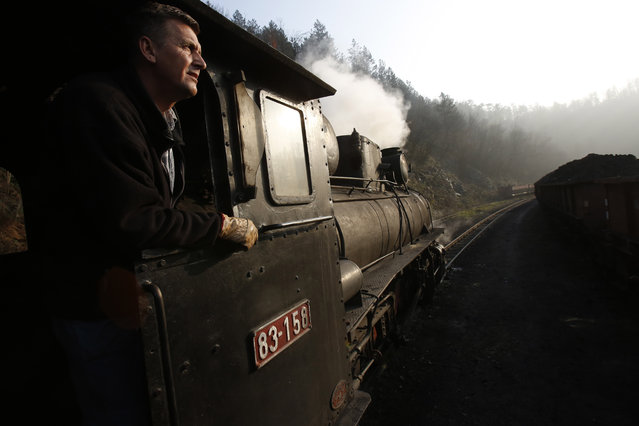
Bosnian worker Sefik Salihovic drives a steam engine in the Bosnian town of Banovici, 140 kms (86.9 miles) north of Sarajevo, on Monday, November 24, 2014. Every day, steam engines over 60 years old, defy their age and still pull wagons of coal from Banovici's coal mine to clients in nearby towns. But in the summer some of them turn into the only tourist attraction this impoverished north Bosnian town has to offer. (Photo by Amel Emric/AP Photo)

Bosnian worker Sefik Salihovic drives a steam engine in the Bosnian town of Banovici, 140 kms (86.9 miles) north of Sarajevo, on Monday, November 24, 2014. Every day, steam engines over 60 years old, defy their age and still pull wagons of coal from Banovici's coal mine to clients in nearby towns. But in the summer some of them turn into the only tourist attraction this impoverished north Bosnian town has to offer. (Photo by Amel Emric/AP Photo)
Details
05 Dec 2014 13:07:00
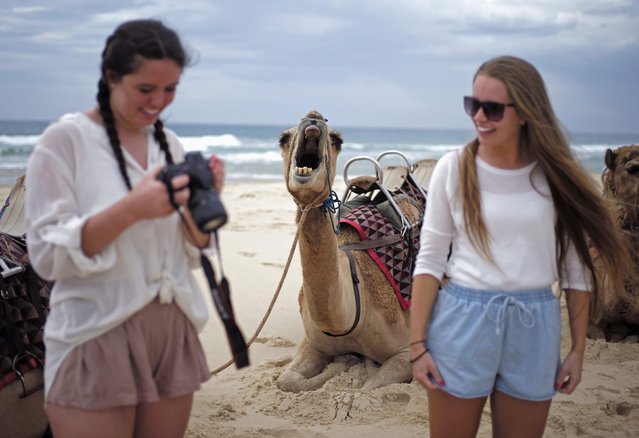
A camel yawns as a tourist checks images on her camera following a ride on a camel safari alongside the Pacific Ocean on Lighthouse Beach, north of Sydney, December 4, 2014. For 25 years camel rides on this beach have given visitors to Australia's holiday coast a rare experience available only in a handful of locations in the country. (Photo by Jason Reed/Reuters)

A camel yawns as a tourist checks images on her camera following a ride on a camel safari alongside the Pacific Ocean on Lighthouse Beach, north of Sydney, December 4, 2014. For 25 years camel rides on this beach have given visitors to Australia's holiday coast a rare experience available only in a handful of locations in the country. Australia's long history with the “ships of the desert” goes back to the 1800s when they were imported from Afghanistan and India for use as transportation across Australia's vast deserts before being released into the wild following their replacement by motorised transport. (Photo by Jason Reed/Reuters)
Details
06 Dec 2014 12:48:00
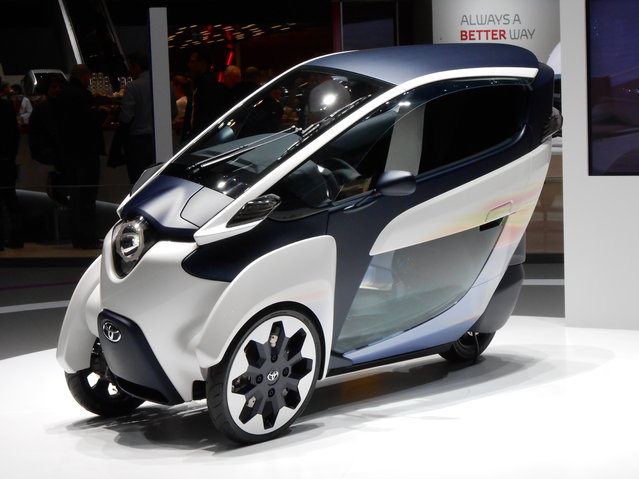
Toyota revealed its i-Road concept, a three-wheeled all-electric motorcycle of sorts that seats two. The unique design is only 33 inches wide, which would make it tops in buzzing in through and around traffic. An Active Lean system tilts the i-Road through corners like a motorbike, while the cabin (which seats two in a tandem layout) is fully enclosed. Maximum range is about 30 miles. (Photo by Luis Fernando Ramos/G1)

Toyota revealed its i-Road concept, a three-wheeled all-electric motorcycle of sorts that seats two. The unique design is only 33 inches wide, which would make it tops in buzzing in through and around traffic. An Active Lean system tilts the i-Road through corners like a motorbike, while the cabin (which seats two in a tandem layout) is fully enclosed. Maximum range is about 30 miles. (Photo by Luis Fernando Ramos/G1)
Details
08 Mar 2013 12:29:00
Darlene Eddy packages up a chocolate Easter bunny that she made in her store Amazing Chocolates on March 28, 2013 in Hollywood, Florida. As Easter Sunday approaches chocolatiers are busy manufacturing many different types of delights for the holiday when Americans spend roughly $1.9 billion on Easter candy, second only to Halloween in candy consumption. Around ninety million chocolate Easter bunnies are produced each year, from white to dark chocolate, and with an unlimited varieties of styles. (Photo by Joe Raedle)

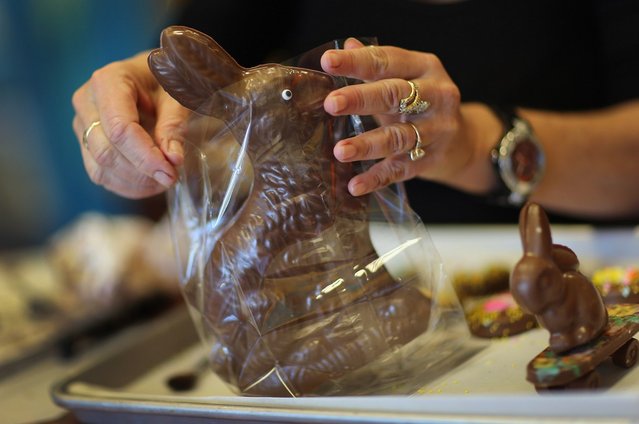
Darlene Eddy packages up a chocolate Easter bunny that she made in her store Amazing Chocolates on March 28, 2013 in Hollywood, Florida. As Easter Sunday approaches chocolatiers are busy manufacturing many different types of delights for the holiday when Americans spend roughly $1.9 billion on Easter candy, second only to Halloween in candy consumption. Around ninety million chocolate Easter bunnies are produced each year, from white to dark chocolate, and with an unlimited varieties of styles. (Photo by Joe Raedle)
Details
29 Mar 2013 12:39:00


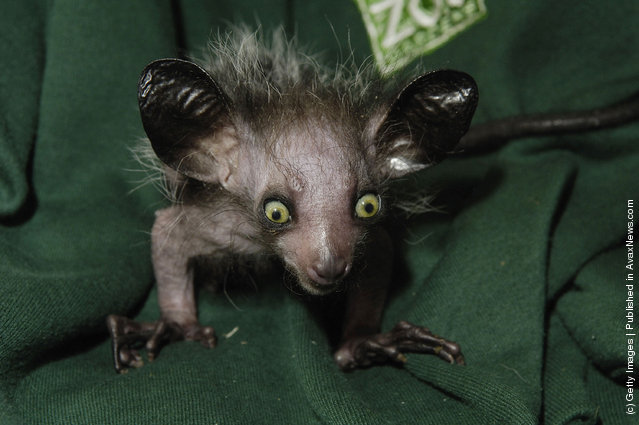
“The aye-aye (Daubentonia madagascariensis) is a lemur, a strepsirrhine primate native to Madagascar that combines rodent-like teeth and a special thin middle finger to fill the same ecological niche as a woodpecker. It is the world's largest nocturnal primate, and is characterized by its unusual method of finding food; it taps on trees to find grubs, then gnaws holes in the wood and inserts its narrow middle finger to pull the grubs out. The only other animal species known to find food in this way is the striped possum. From an ecological point of view the aye-aye fills the niche of a woodpecker as it is capable of penetrating wood to extract the invertebrates within”. – Wikipedia

Photo: In this handout image from Bristol Zoo is seen the first captive bred aye-aye in the UK named “Kintana” (meaning star in Malagasy) April 15, 2005 at Bristol Zoo Gardens, England. The zoo announced today only the second baby aye-aye to be hand-reared in the world (the first was in Jersey Zoo) and has now made his first public appearance since his birth on 11 February 2005. (Photo by Rob Cousins/Bristol Zoo via Getty Images)
Details
13 Apr 2011 13:33:00
Some of the best entries so far in the 2016 Insight Astronomy Photographer of the Year competition. There are two weeks left to enter, and the winners will be announced in September. Here: Aurora over Laksvatn Fjord, Laksvatn, Norway. The aurora borealis dances in the skies over the town of Laksvatn, with the Milky Way to the left. The image is a single shot with no compositing, only post-processing to bring out the aurora, and some colour corrections. (Photo by Matt Walford/National Maritime Museum)

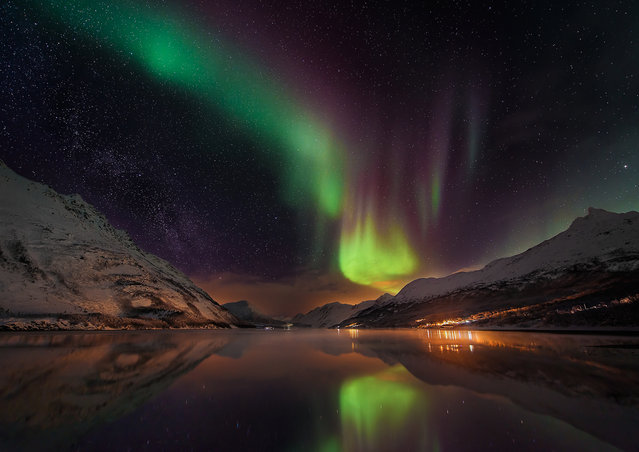
Some of the best entries so far in the 2016 Insight Astronomy Photographer of the Year competition. There are two weeks left to enter, and the winners will be announced in September. Here: Aurora over Laksvatn Fjord, Laksvatn, Norway. The aurora borealis dances in the skies over the town of Laksvatn, with the Milky Way to the left. The image is a single shot with no compositing, only post-processing to bring out the aurora, and some colour corrections. The photographer Matt Walford said: “I love the way the northern lights look like they are just wistfully dancing over the fjord, framed by the mountains on either side”. (Photo by Matt Walford/National Maritime Museum)
Details
01 Jul 2016 12:13:00