Loading...
Done
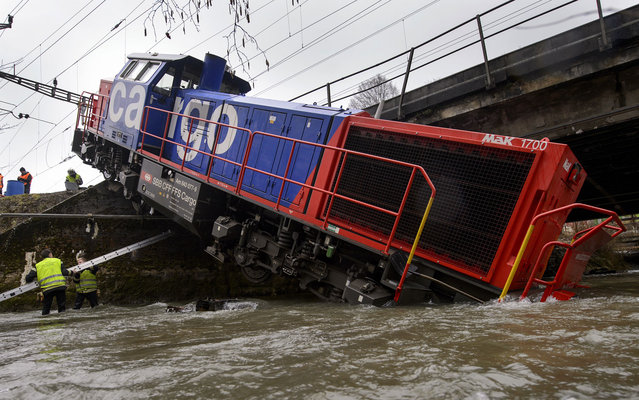
A diesel locomotive has ended up in the river Venoge on March 8, 2013 near Penthalaz, Western Switzerland. The freight locomotive derailed near Cossonez railway station with its driver slightly injured. (Photo by Fabrice Coffrini/AFP Photo)

A diesel locomotive has ended up in the river Venoge on March 8, 2013 near Penthalaz, Western Switzerland. The freight locomotive derailed near Cossonez railway station with its driver slightly injured. (Photo by Fabrice Coffrini/AFP Photo)
Details
09 Mar 2013 12:26:00
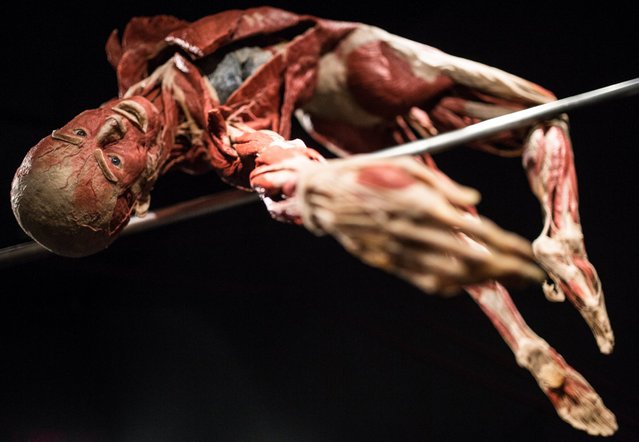
A plastinated body presented as a pole vaulter is exhibited at the Menschen Museum, Museum of Humans, in Berlin, August 29, 2016. The museum was caught up in a legal dispute with the district office of Berlin-Mitte for years before it was able to meet the requirements made by the court. (Photo by Sophia Kembowski/DPA Photo via Newscom)

A plastinated body presented as a pole vaulter is exhibited at the Menschen Museum, Museum of Humans, in Berlin, August 29, 2016. The museum was caught up in a legal dispute with the district office of Berlin-Mitte for years before it was able to meet the requirements made by the court. (Photo by Sophia Kembowski/DPA Photo via Newscom)
Details
30 Aug 2016 12:15:00
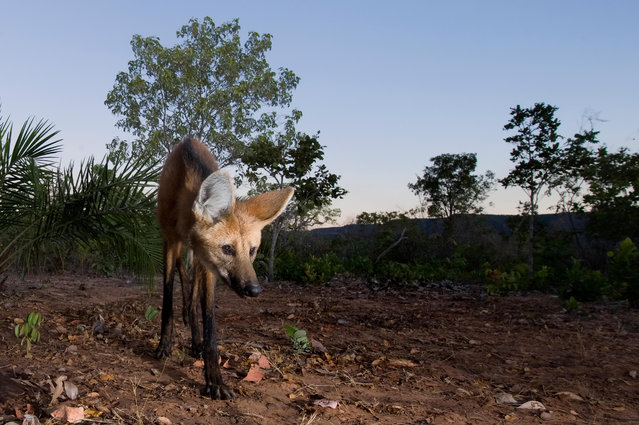
The maned wolf is among the large mammals in the Brazilian Cerrado that are threatened by the increasing conversion of grasslands into farmland for grazing and growing crops. (Photo by Ben Cranke/Nature Picture Library/Alamy Stock Photo)

Global wildlife populations will decline by 67% by 2020 unless urgent action is taken to reduce human impact on species and ecosystems, warns the biennial Living Planet Index report from WWF (World Wide Fund for Nature) and ZSL (Zoological Society of London). From elephants to eels, here are some of the wildlife populations most affected by human activity. Here: The maned wolf is among the large mammals in the Brazilian Cerrado that are threatened by the increasing conversion of grasslands into farmland for grazing and growing crops. (Photo by Ben Cranke/Nature Picture Library/Alamy Stock Photo)
Details
28 Oct 2016 10:47:00
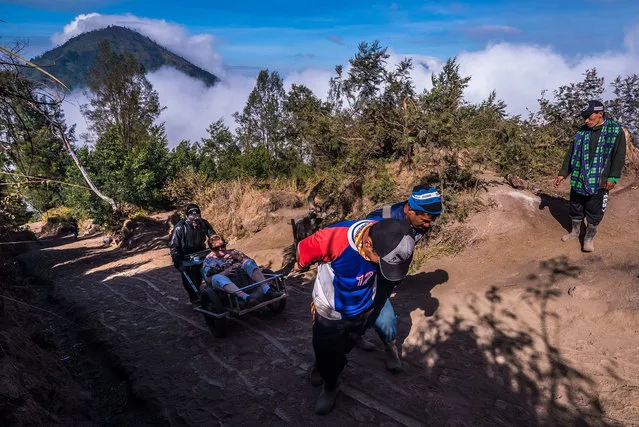
Miners pulling up lazy tourists to the rim of Kawah Ijen (Ijen Volcano), East Java, Indonesia on September 21, 2017. They will earn as much as they would bring down a load of sulfur. Nomadic Explorer, Cultural Lifestyle Photographer Claudio Sieber captured striking images of miners working at Ijen volcanic range in East Java, Indonesia. The sulphur miners risk their lives daily as they climb the active volcano carrying heavy loads, which they sell to sugar refineries. Shortly after midnight curious tourists are flocking in hundreds through the gate of Ijen's foothills to be right on time, driven by the images others took before them. Kawah Ijen is the one of the world's largest acidic volcanic crater lake; famous for its turquoise color as well as the unreal atmosphere it offers during darkness. A dusty path zigzags 3 kilometers up to the crater rim. This doesn't mean anything challenging; in particular, special sights have to be deserved anyway. The irritating smell of sulfur announces the near of the crater's existence. Arriving on the crater's rim the reward for the torture becomes visible. Blue fire darts its tongues through the fumes of sulfur dioxide. Somehow, the spectacle isn't as romantic as expected, since it is also the rough working space of approx. 150 sulfur miners who start their shift at 1 am. Lately, harvesting the abundance of devil's gold received international attention. This did obviously not really improve a miner's lifestyle; neither did it contribute to a better wage. (Photo by Claudio Sieber/Barcroft Images)

Miners pulling up lazy tourists to the rim of Kawah Ijen (Ijen Volcano), East Java, Indonesia on September 21, 2017. They will earn as much as they would bring down a load of sulfur. Nomadic Explorer, Cultural Lifestyle Photographer Claudio Sieber captured striking images of miners working at Ijen volcanic range in East Java, Indonesia. The sulphur miners risk their lives daily as they climb the active volcano carrying heavy loads, which they sell to sugar refineries. (Photo by Claudio Sieber/Barcroft Images)
Details
02 Oct 2017 08:31:00
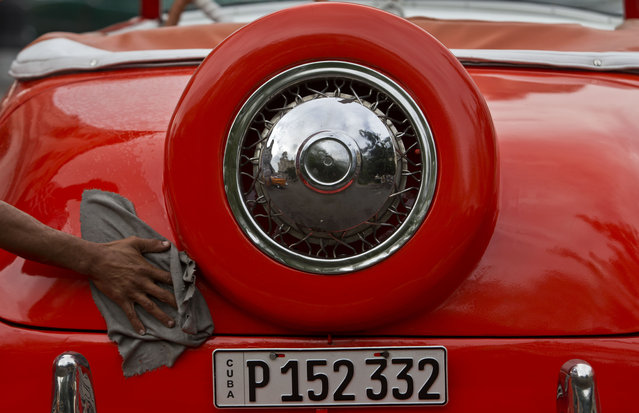
In this October 16, 2014 photo, a man cleans his American classic car before going to work in Havana, Cuba. While the U.S. embargo that took effect in 1961 stopped the flow of new cars, and most parts, a few Cubans now manage to bring in replacement parts when friends or family visit from the U.S. (Photo by Franklin Reyes/AP Photo)

In this October 16, 2014 photo, a man cleans his American classic car before going to work in Havana, Cuba. While the U.S. embargo that took effect in 1961 stopped the flow of new cars, and most parts, a few Cubans now manage to bring in replacement parts when friends or family visit from the U.S. (Photo by Franklin Reyes/AP Photo)
Details
20 Oct 2014 09:01:00
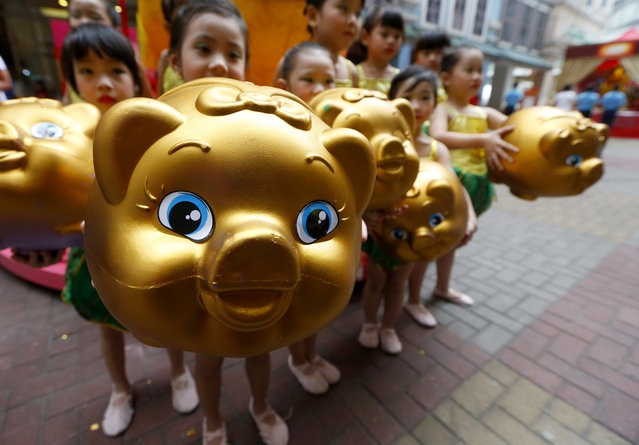
In this Friday, February 1, 2019, photo, Filipino-Chinese display piggy banks at the start of celebrations leading to next week's Lunar New Year in Chinatown, Manila, Philippines. This year is the Year of the Earth Pig on the Lunar calendar and is supposed to represent abundance, diligence and generosity. (Photo by Bullit Marquez/AP Photo)

In this Friday, February 1, 2019, photo, Filipino-Chinese display piggy banks at the start of celebrations leading to next week's Lunar New Year in Chinatown, Manila, Philippines. This year is the Year of the Earth Pig on the Lunar calendar and is supposed to represent abundance, diligence and generosity. (Photo by Bullit Marquez/AP Photo)
Details
09 Feb 2019 00:05:00
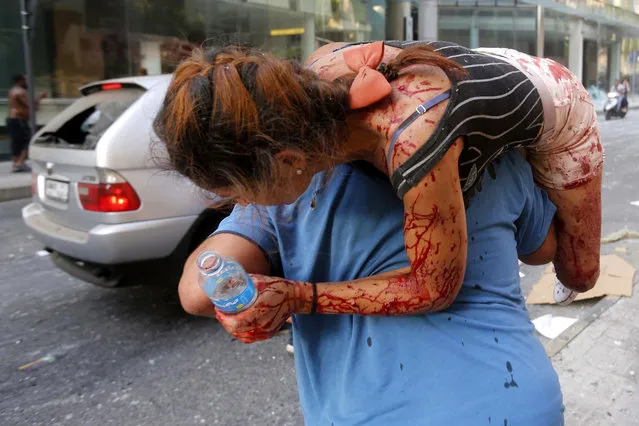
A man carries away an injured girl while walking through debris past in the Achrafiyeh district in the centre of Lebanon's capital Beirut on August 4, 2020, following an explosion at the nearby port of Beirut. (Photo by The Mega Agency/Stringer)

A man carries away an injured girl while walking through debris past in the Achrafiyeh district in the centre of Lebanon's capital Beirut on August 4, 2020, following an explosion at the nearby port of Beirut. (Photo by The Mega Agency/Stringer)
Details
06 Aug 2020 00:03:00
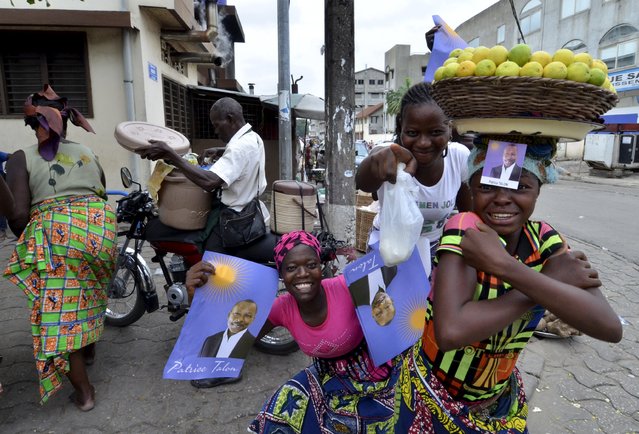
Street vendors hold campaign posters for presidential candidate Patrice Talon ahead of the second round of Benin's presidential election on Sunday in Cotonou, Benin, March 18, 2016. (Photo by Charles Placide Tossou/Reuters)

Street vendors hold campaign posters for presidential candidate Patrice Talon ahead of the second round of Benin's presidential election on Sunday in Cotonou, Benin, March 18, 2016. (Photo by Charles Placide Tossou/Reuters)
Details
19 Mar 2016 12:55:00