Loading...
Done
Nightjars And Pooto Bird

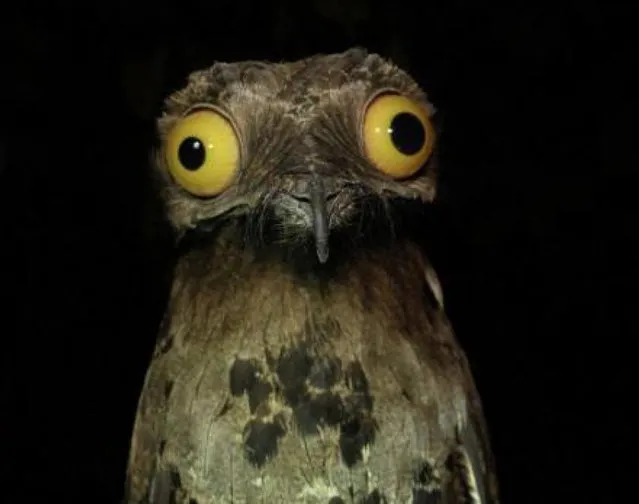
Potoos (family Nyctibiidae) are a group of near passerine birds related to the nightjars and frogmouths. They are sometimes called Poor-me-ones, after their haunting calls. There are seven species in one genus, Nyctibius, in tropical Central and South America.
These are nocturnal insectivores which lack the bristles around the mouth found in the true nightjars. They hunt from a perch like a shrike or flycatcher. During the day they perch upright on tree stumps, camouflaged to look like part of the stump. The single spotted egg is laid directly on the top of a stump.
Details
20 Jan 2014 14:34:00
Kate & Canine Partner "Byron"

As dog owners know, you are lucky if your pooch can be persuaded to collect your slippers without chewing them to pieces.
But golden labrador Byron performs dozens of such tasks faultlessly for his owner every day.
He helps 'best friend' Kate Cross peg out her washing, make her bed, go shopping and even take money out of the cash machine.
Details
12 Feb 2013 13:57:00
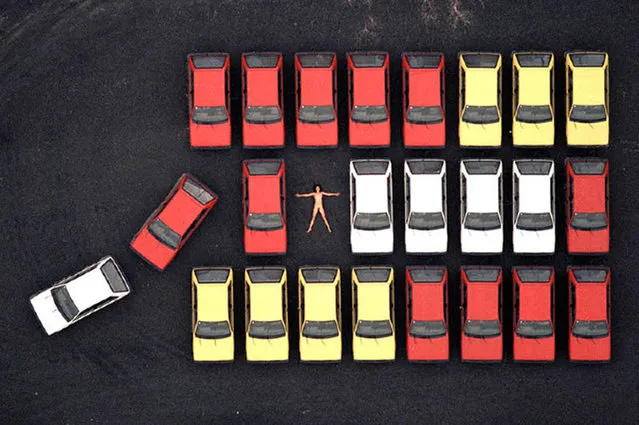
Aerial Nudes by John Crawford

John Crawford was always fascinated of a birds eye view, looking straight down in a vertical perspective. In his series ‘Aerial Nudes’ he is photographing single naked bodies from a high elevation. Perfectly timed photographs show a distant nude body laying down in a series of interesting locations. On each selected shoot day Crawford would deliver his model Carina to the location in the helicopter, positioning her in the carefully arranged set-up, then flying to 600 feet and capturing the image, which would take no more than ten minutes.
Details
09 Aug 2012 11:35:00
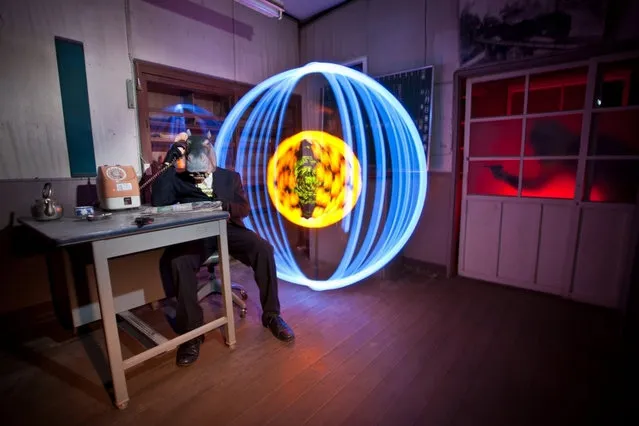
Light Painting By Trevor Williams

Light painting photographer Trevor Williams, also known as TDUB303, is a present day light painting pioneer. He creates some of his light painting imagery alone and also works with the group Fiz-iks, which he founded. Trevor is from Canada, he has lived in Japan since 2002 which is where he creates the majority of his work. His light painting images are produced with special attention to location, Trevor says, ““If you want to take an epic picture you need to go to an epic location.”
Details
16 Sep 2013 10:37:00


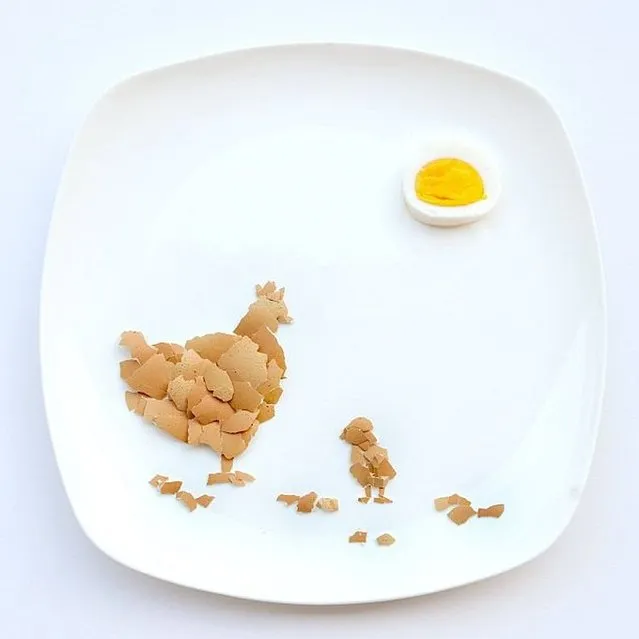
Hong Yi is a Malaysian architect and artist whose impressive portfolio includes work for Chicago’s Union Station, the Melbourne Hall of Music, and alternative medium portraits using coffee stains or tea bags. Her unorthodox approach to creation has led her to her most recent blog project. Over the course of 31 days, Hong Yi (who also goes by Red) will post art pieces made from food. So far, the pieces range from simpler ones of a watermelon sailboat to a complex recreation of Hokusai’s “The Great Wave.”
Details
29 Mar 2013 10:31:00
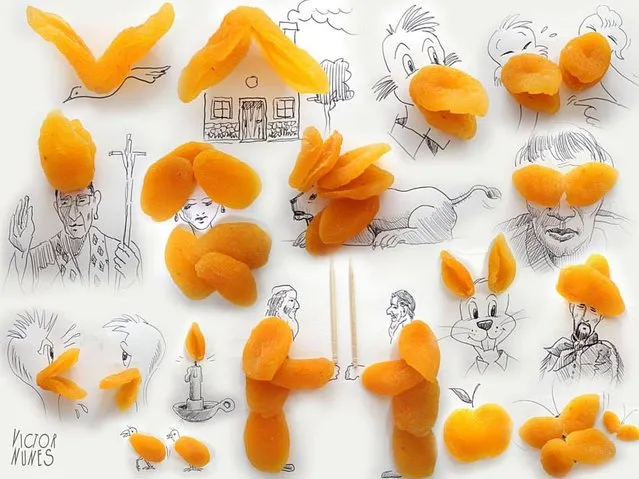
Food In Faces By Victor Nunes

Artist Victor Nunes combines every-day objects with simple illustrations to turn them into pictures of faces, animals and other playful scenes. His images invite us to look at the world differently and find creative images in our surroundings. Nunes’ art is a great example of pareidolia, which is our propensity to give meaning to random objects (like in this post about seeing faces in random objects). It’s the reason why we associate a smiley face with a human face and why some of Nunes’ pieces of popcorn or bread resemble faces to us.
Details
02 Feb 2014 11:58:00
Giant Polar Bear Of London

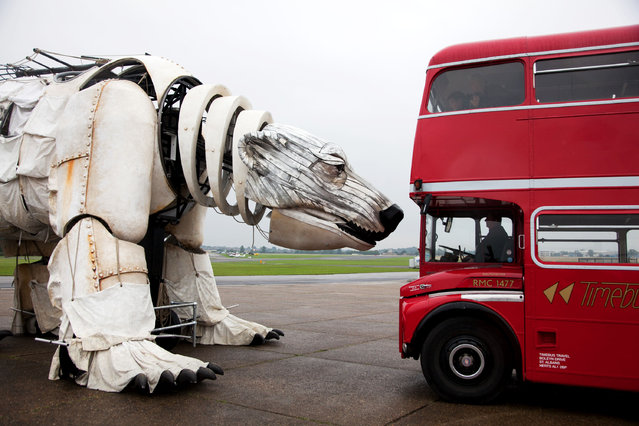
Her name is Aurora, and she is the star of “Aurora's Parade”, the London chapter of ceride – Greenpeace’s global day of action to protest against Arctic destruction. According to DesignBoom, this giant people-powered super-puppet weighs about 3 tons and needs 15 puppeteers and 30 volunteers to operate. Aurora, described as “part protest, part performance”, has fur that includes the names of each supporter in the movement. Greenpeace hopes she will bring the voice and spirit of the Arctic to the public.
Details
13 Mar 2014 13:41:00
Chernobyl

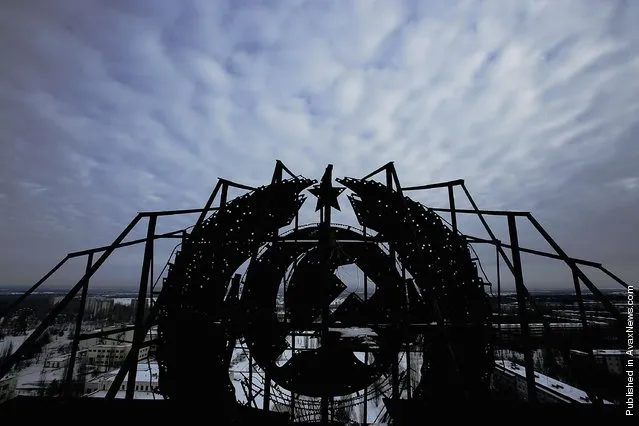
Scaffolding holding a remnant of the Soviet Union, the hammer and sickle, is seen on a rooftop of an abandoned building in the town of Pripyat on January 25, 2006 near Chernobyl, Ukraine. The town of Pripyat, deserted since the 1986 catastrophe, once housed 30,000 people, the majority of being workers from the Chernobyl Nuclear Power Plant. Days after the catastrophe the inhabitants were relocated to other locations in the Soviet Union. The town of Pripyat has remained uninhabited since. Prypyat and the surrounding area will not be safe for human habitation for several centuries. Scientists estimate that the most dangerous radioactive elements will take up to 900 years to decay sufficiently to render the area safe.
Details
14 Mar 2011 10:20:00