Loading...
Done


Libya's leader Muammar Gaddafi attends a meeting with Italian President Giorgio Napolitano at the Quirinale Palace on June 10, 2009 in Rome, Italy. Colonel Gaddafi is in Rome to attend a meeting of G8 Development Ministers. (Photo by Franco Origlia/Getty Images). ROME – JUNE 10
Details
10 Mar 2011 12:38:00


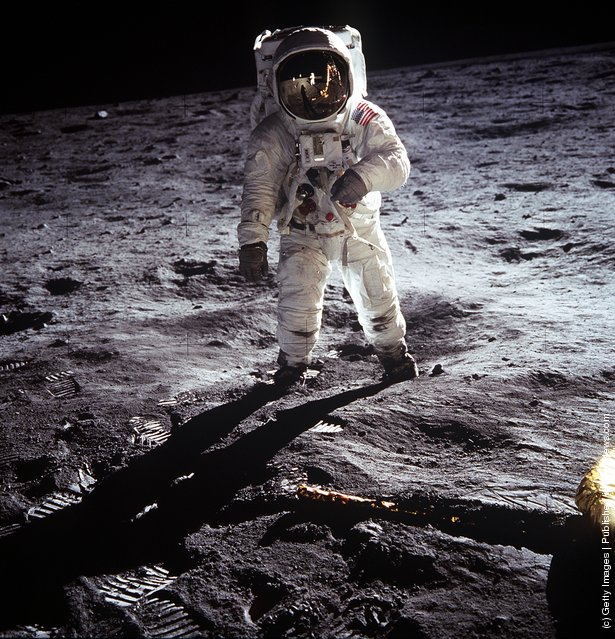
Astronaut Edwin E. Aldrin Jr. walks near the Lunar Module during the Apollo 11 extravehicular activity July 20, 1969 on the Moon. (Photo by NASA/Newsmakers)
Details
28 May 2011 11:04:00


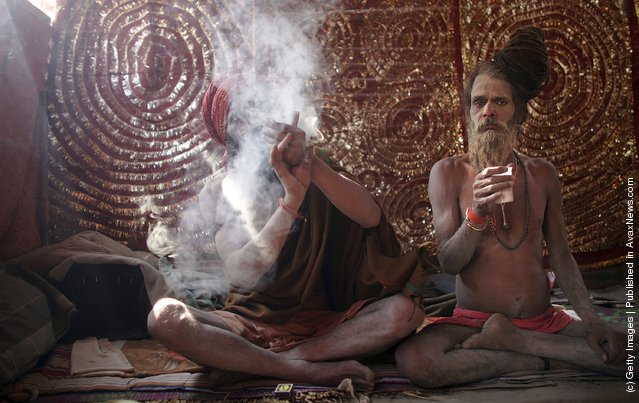
“Kumbh Mela is a mass Hindu pilgrimage in which Hindus gather at the Ganges river. The normal Kumbh Mela is celebrated every 3 years, the Ardh (half) Kumbh Mela is celebrated every six years at Haridwar and Prayag, the Purna (complete) Kumbh takes place every twelve years, at four places (Prayag (Allahabad), Haridwar, Ujjain, and Nashik). The Maha (great) Kumbh Mela which comes after 12 “Purna Kumbh Melas”, or 144 years, is held at Allahabad.

The last Ardh Kumbh Mela was held over a period of 45 days beginning in January 2007, more than 70 million Hindu pilgrims took part in the Ardh Kumbh Mela at Prayag, and on January 15, the most auspicious day of the festival of Makar Sankranti, more than 5 million participated. The previous Maha Kumbh Mela, held in 2001, was attended by around 60 million people, making it at the time the largest gathering anywhere in the world in recorded history”. – Wikipedia

Photo: Sadhus (holy men) smoke at their camp near the ritual site at Sangam, the confluence of the Ganges, Yamuna and mythical Saraswati rivers during the Ardh Kumbh Mela festival (Half Pitcher festival) January 18, 2007 in Allahabad, India. Millions of Hindu pilgrims have flocked to the largest religious gathering in the world which lasts for 45 days in northern India. The festival commemorates the mythical conflict between gods and demons over a pitcher filled with the “nectar of immortality”. Devotees believe that taking a holy dip in the Ganges at this time washes away their sins and paves the path to salvation. (Photo by Mario Tama/Getty Images)

Details
30 Jun 2011 10:27:00


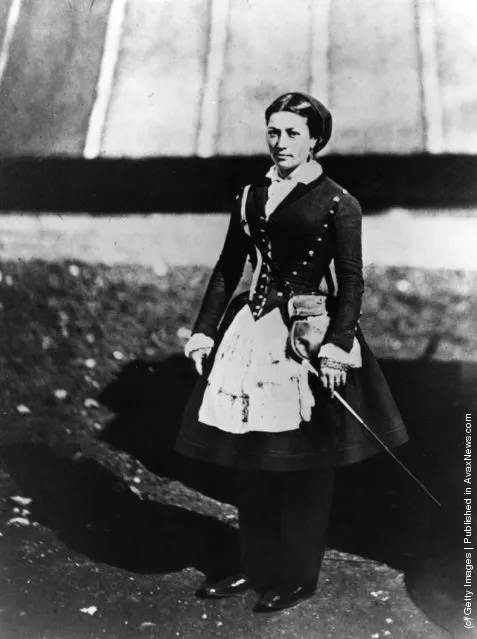
“The Crimean War (October 1853 – February 1856) was a conflict fought between the Russian Empire and an alliance of the French Empire, the British Empire, the Ottoman Empire, and the Kingdom of Sardinia. The war was part of a long-running contest between the major European powers for influence over territories of the declining Ottoman Empire. Most of the conflict took place on the Crimean Peninsula, but there were smaller campaigns in western Anatolia, Caucasus, the Baltic Sea, the Pacific Ocean and the White Sea”. – Wikipedia

Photo: A vivandiere, a female soldier selling provisions and spirits, with the Allied forces during the Crimean War. (Photo by Hulton Archive/Getty Images)
Details
18 Jul 2011 11:57:00
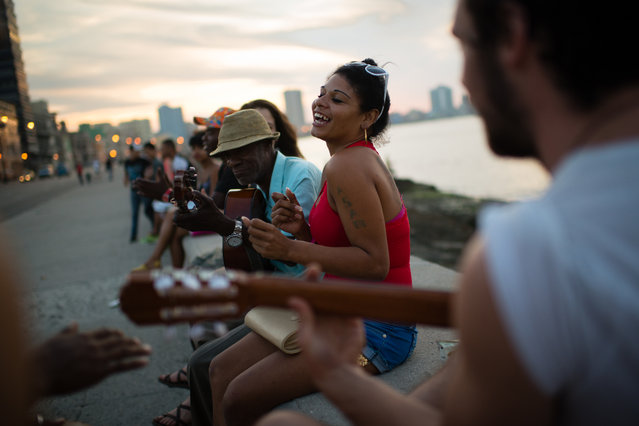
As the sun sets on the Malecon in Havana on Friday January 23, 2015, Surenis Angulo de la Paz, 24, center, dances as group of locals play music around her.  Behind her is Fidel Lopez, 55. (Photo by Sarah L. Voisin/The Washington Post)

As the sun sets on the Malecon in Havana on Friday January 23, 2015, Surenis Angulo de la Paz, 24, center, dances as group of locals play music around her. Behind her is Fidel Lopez, 55. (Photo by Sarah L. Voisin/The Washington Post)
Details
16 Sep 2015 14:04:00
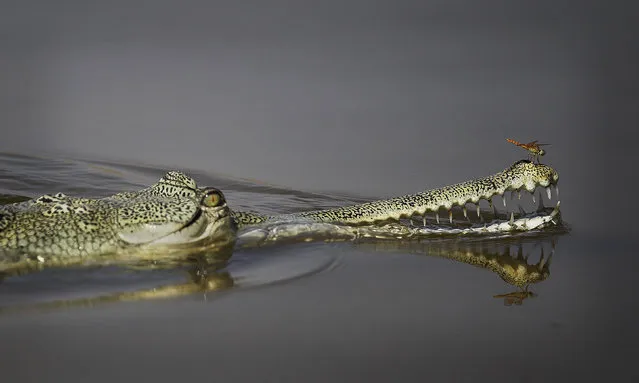
In this photo taken Wednesday, April 30, 2014, a dragonfly sits on the nose of a Gharial, rare crocodile-like creatures, in the River Chambal near Bhopepura village in the northern Indian state of Uttar Pradesh. The narrow 250-mile stretch of the Chambal is a place of crocodiles and jackals, of river dolphins and the occasional wolf. Hundreds of species of birds, storks, geese, babblers, larks, falcons and so many more, nest along the river. (Photo by Altaf Qadri/AP Photo)

In this photo taken Wednesday, April 30, 2014, a dragonfly sits on the nose of a Gharial, rare crocodile-like creatures, in the River Chambal near Bhopepura village in the northern Indian state of Uttar Pradesh. The narrow 250-mile stretch of the Chambal is a place of crocodiles and jackals, of river dolphins and the occasional wolf. Hundreds of species of birds, storks, geese, babblers, larks, falcons and so many more, nest along the river. Endangered birds lay small speckled eggs in tiny pits they dig in the sandbars. Gharials, rare crocodile-like creatures that look like they swaggered out of the Mesozoic Era, are commonplace here and nowhere else. (Photo by Altaf Qadri/AP Photo)
Details
23 Feb 2015 12:55:00
A Chinese shopper sleeps on a bed in the showroom of the IKEA store on July 6, 2014 in Beijing, China. Of the world's ten biggest Ikea stores, 8 of them are in China to cater to the country's growing middle class. The stores are designed with extra room displays given the tendency for customers to make a visit an all-day affair. Store management does not discourage shoppers from sleeping on Ikea furniture, even marking them with signs inviting customers to try them out. (Photo by Kevin Frayer/Getty Images)

A Chinese shopper sleeps on a bed in the showroom of the IKEA store on July 6, 2014 in Beijing, China. Of the world's ten biggest Ikea stores, 8 of them are in China to cater to the country's growing middle class. The stores are designed with extra room displays given the tendency for customers to make a visit an all-day affair. Store management does not discourage shoppers from sleeping on Ikea furniture, even marking them with signs inviting customers to try them out. (Photo by Kevin Frayer/Getty Images)
Details
09 Jul 2014 12:27:00
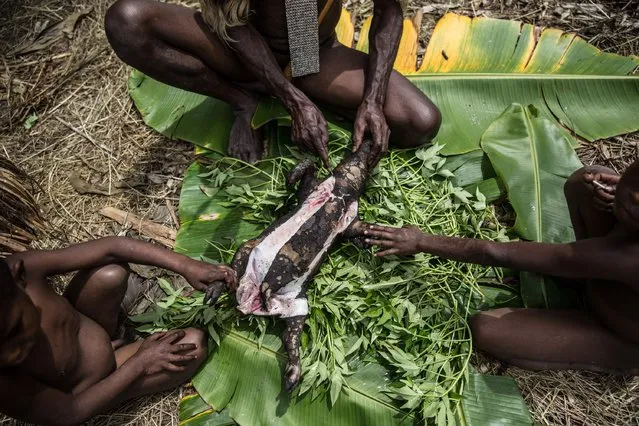
A man from the Dani tribe cuts the head of a pig after cooked by traditional way which is use burned hot stones at Obia Village on August 9, 2014 in Wamena, Papua, Indonesia. The stone-age Dani tribe live a traditional existence in the Baliem Valley, which is situated 1600 metres above sea level in the heart of the Cyclops Mountains. (Photo by Agung Parameswara/Getty Images)

A man from the Dani tribe cuts the head of a pig after cooked by traditional way which is use burned hot stones at Obia Village on August 9, 2014 in Wamena, Papua, Indonesia. The stone-age Dani tribe live a traditional existence in the Baliem Valley, which is situated 1600 metres above sea level in the heart of the Cyclops Mountains. (Photo by Agung Parameswara/Getty Images)
Details
14 Aug 2014 10:30:00