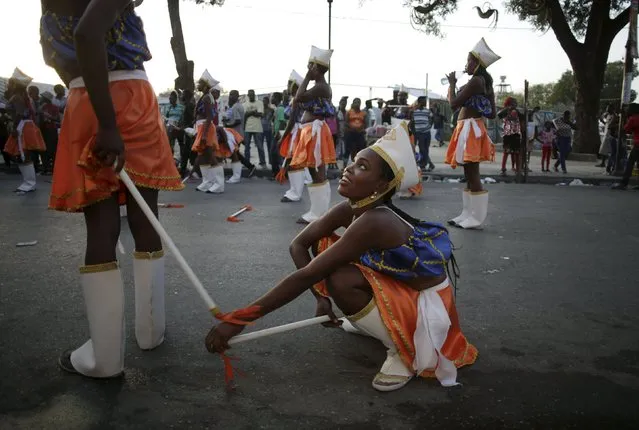
A man wearing a mask and dressed in a clown costume rides an electric tricycle while carrying a container in the shape of a rubber duck amid heavy smog in Beijing, China, December 29, 2015. (Photo by Jason Lee/Reuters)
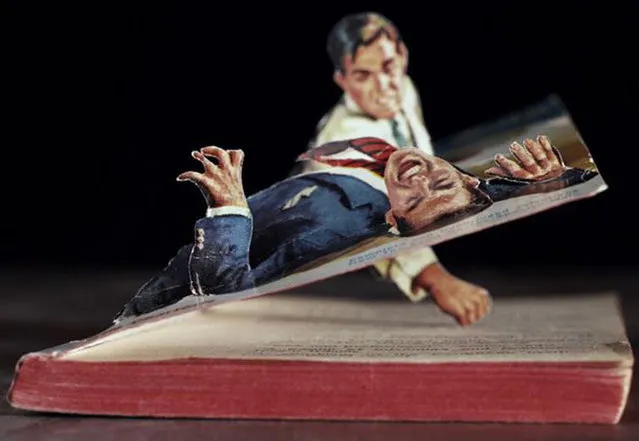
American photographer Thomas Allen constructs witty and clever dioramas using figures cut from the covers of old pulp paperbacks. Using salacious pulp art drawing’s of the ’40s and ’50s that covered books such as ” I Married a Dead Man” and ” Marihuana Girl’, Allen constructs one set of pictures up close while obscuring another, and in the process creates a different context. Each piece is given a brand new storyline, though never quite strays from their cheeky origins.
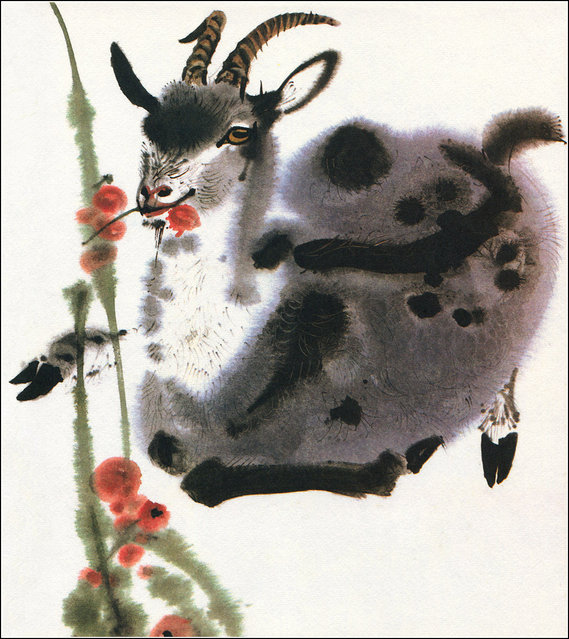
Mirko Hanák was born in 1921 in Prague, Czech Republic and worked as a painter, graphic designer and illustrator. His specialties were animals and human figures that were full of life and fun. He also had a firm grasp on composition as his paintings were so well balanced despite his casual fluid line. He was working on “Charlotte's Web” the movie when he tragically died at the height of his career from leukemia in 1971.
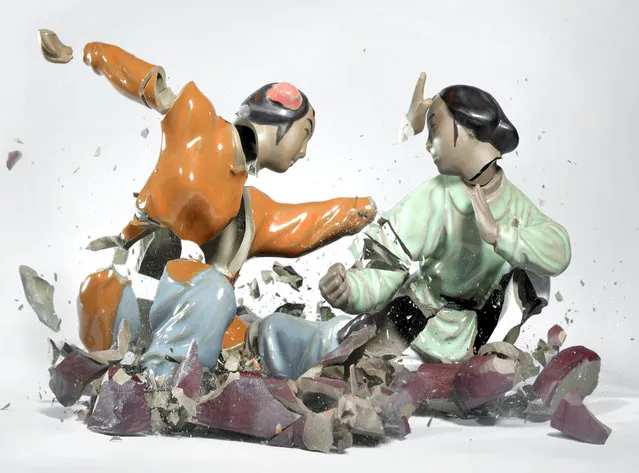
From a height of three meters, porcelain figurines are dropped on the ground, and the sound they make when they hit trips the shutter release. The result: razor-sharp images of disturbing beauty—temporary sculptures made visible to the human eye by high-speed photography technology. The porcelain statuette bursting into pieces isn't what really captures the attention; the fascination lies in the genesis of a dynamic figure that replaces the static pose. In contrast to the inertness of the intact kitsch figurines Klimas started out with, the photographs of their destruction possess a powerfully narrative character.
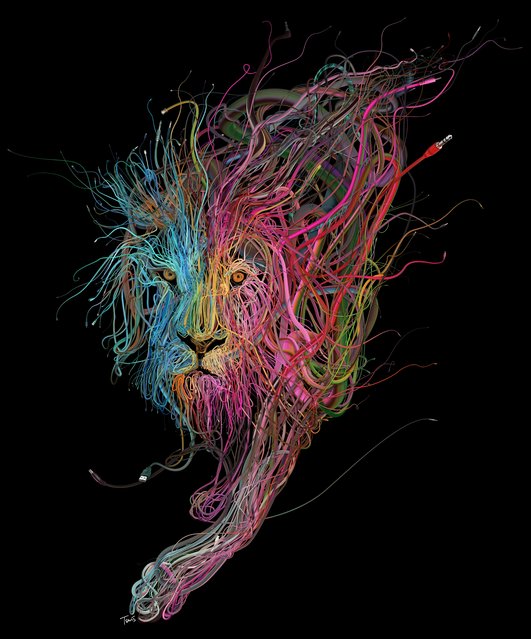
Greece-based illustrator, Charis Tsevis took his fascination with our wired world to develop his series of colorful and detailed wire illustrations. He uses all types of wires, including USB cords and phone cables, and creates form figures, faces and animals by tangling them together. Tsevis says, “All of them have to do with the relationship between the network and the human body and spirit”. Photo: “The Conquering Lion: Plug into the power of Reggae”. (Photo by Charis Tsevis)
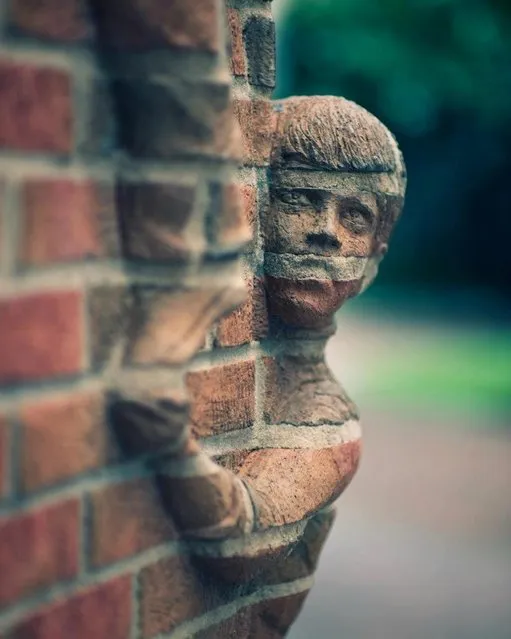
Brad Says “Brick sculpture can be dated back to ancient Babylon but remains a fresh and interesting enhancement to any building, wall or environment. The brick medium has all the same characteristics of durability and low maintenance as a brick building, blends well in settings where other brick construction is present, looks good with landscaping and has a familiarity which is comforting to people. Brick sculpture adds intrigue and interest to a commonly understood material as viewers try to figure out the techniques by which it was created.”
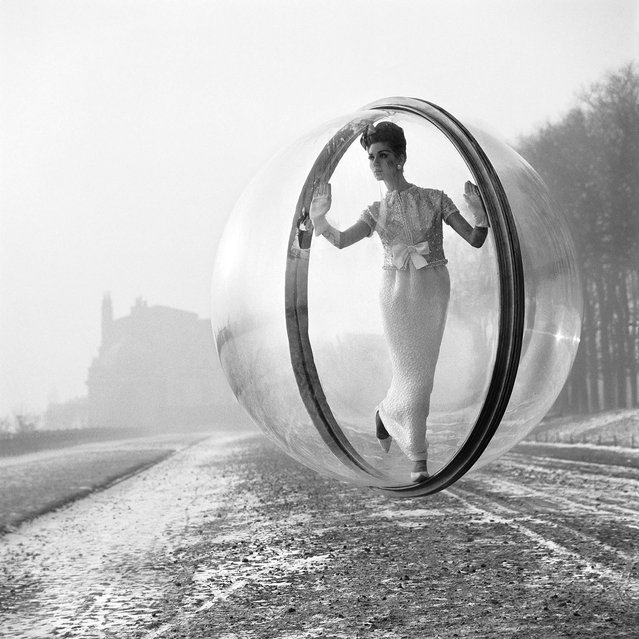
Born 1938 in New York, Melvin Sokolsky was a major figure in the revival of fashion photography from the 1960s. He was only 21 when he started working at Harper's Bazaar for which he produced the “Bubble” series of photographs depicting fashion models floating in giant clear plastic bubbles suspended in midair above the Seine river in Paris. Alongside his steady collaboration with Bazaar, he also worked for publications such as Vogue and the New York Times. Photo: “After Delvaux” – “Paris 1963” – Harper's Bazaar “Bubble” Spring Collection. (Photo by Melvin Sokolsky)