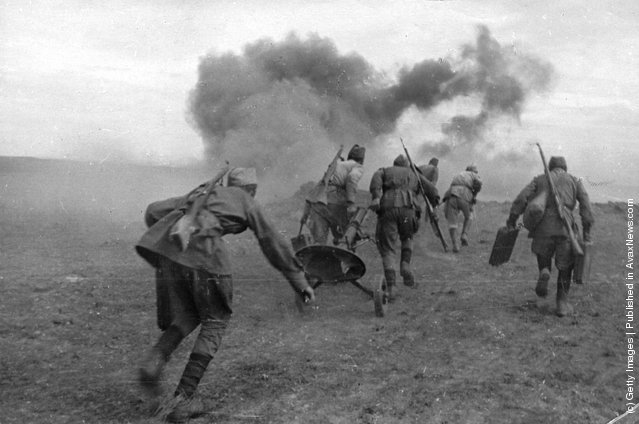
A Russian trenchmortar crew run to take up a new firing position in the Stalingrad area during the Great Patriotic War. (Photo by Keystone/Getty Images). October 1942
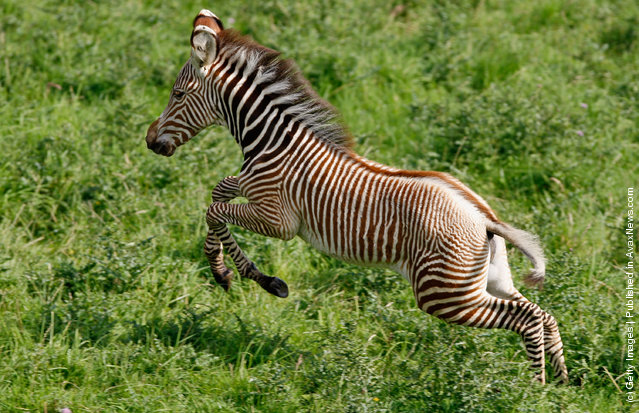
Florence the baby zebra foal, runs in its enclosure at Edinburgh zoo September 4, 2008 in Edinburgh, Scotland. This arrival at the zoo is particularly important as the Grevy's zebra is listed as endangered, with only an estimated 1,500 to 2,000 remaining in the wild. (Photo by Jeff J Mitchell/Getty Images)
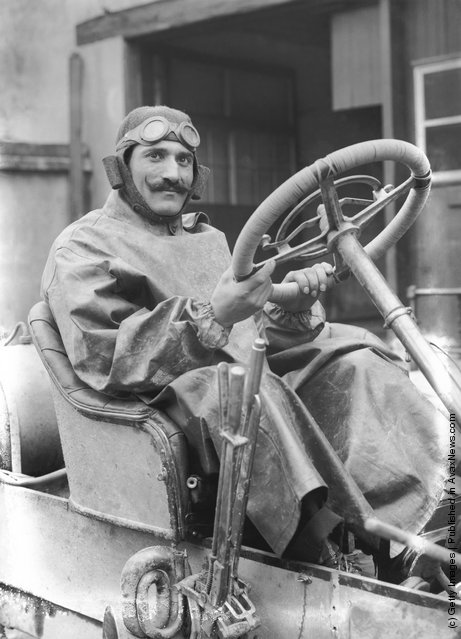
Racing driver J. Gaal at the wheel of car number 26 at the RAC Tourist Trophy, run, for the first time, over the Four Inch Course on the Isle of Man, 17th September 1908. Gaal is racing in waterproofs. (Photo by Topical Press Agency/Hulton Archive/Getty Images)
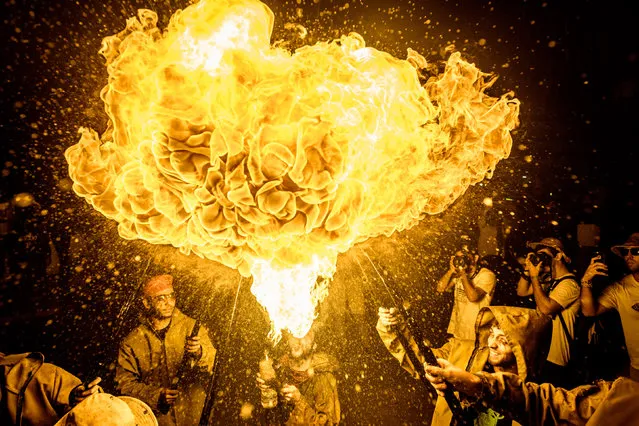
A fire-eater of the “Diables de Terrassa” performs during Sitges' little “Festa Major”, “Santa Tecla” in Sitges, Spain on September 19, 2016. This celebration brings together some of Catalonia’s most emblematic festive traditions. The central axis of the celebrations is the traditional parade, made up of “big-head” carnival figures and characters who dance to music played on different traditional instruments. One of the most popular events is the Correfoc or fire-running, which is also the closing event of the fiesta. The people run and jump over characters dressed up as devils and dragons, carrying fire. (Photo by Matthias Oesterle/ZUMA Press/Splash News)
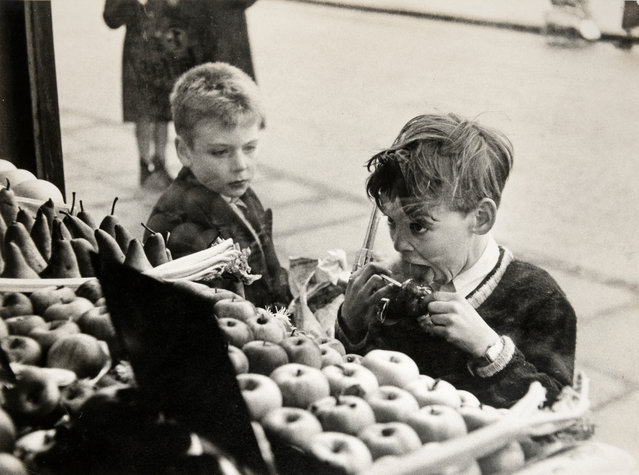
The Photographers 2015 runs from 25 November to 23 December at Osborne Samuel and Beetles+Huxley, London. Here: Untitled, 1950, by Bert Hardy. (Photo by Bert Hardy/Beetles+Huxley & Osborne Samuel)
Young Swiss photographer Cyril Porchet’s final year show included this awesome series of the most opulent Baroque church altars he could find in Spain, Austria and Germany. His intention was to explore the seductive power of display. What is extraordinary is how much you lose all sense of perspective and depth, such is the overabundance of detail. I like how the odd feature confuses all the more; like the red rope of the ornamental light in the image below for instance which neatly splices the image in half. I could pore over these for hours and hours.
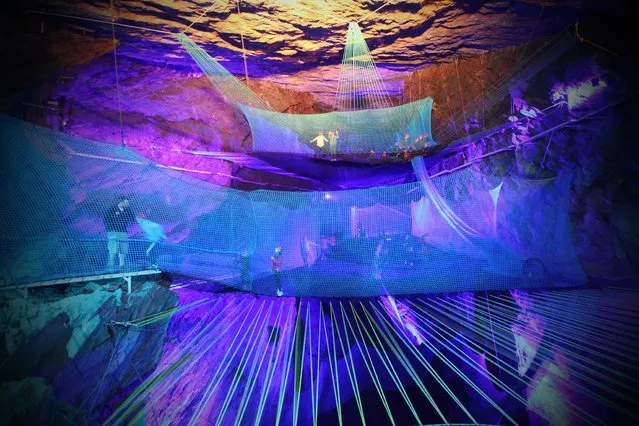
If you’re afraid of heights, caves, the dark, suffer from claustrophobia or vertigo, this might not be for you, but if not, a small Welsh town has the perfect subterranean adventure for you: the world’s largest underground trampoline. Just unveiled in Blaenau Ffestiniog, North Wales, Bounce Below is a network of trampolines and slides mounted to the walls of an abandoned slate mine at heights of 20 feet to 180 feet off the ground. Visitors are welcome to climb, bounce, slide, and jump in the netting amidst a technicolor light show.