People dressed as zombies participate in a parade for World Zombie Day 2016 in London's West End, Britain on October 9, 2016. (Photo by Splash News and Pictures)
Revelers, covered in coloured powder, celebrate, during a Holi Run Festival in Madrid, Spain, Sunday, April 12, 2015. Thousands of revelers took part in the festival that includes a mini marathon. The festivals are fashioned after the Hindu spring festival Holi, which is mainly celebrated in the north and east of India. (Photo by Andres Kudacki/AP Photo)
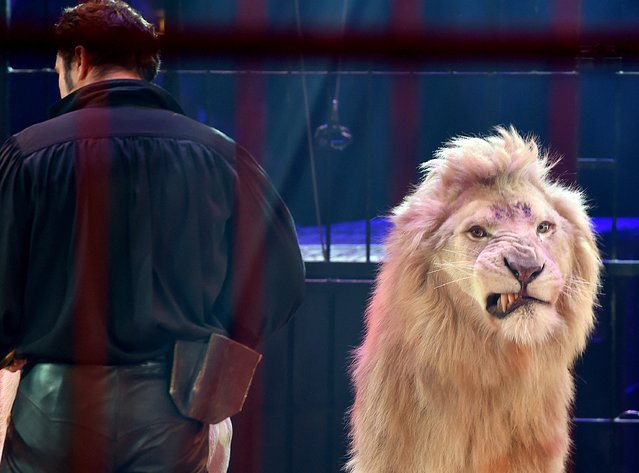
Martin Lacey Jr. with a lion during the premiere of the Circus Krone program “Circus der Preistraeger” at Circus Krone on February 2, 2016 in Munich, Germany. (Photo by Hannes Magerstaedt/Getty Images)
Brazilian navy soldiers watch a woman as they patrol the area at the Copacabana Beach before carnival festivities in Rio de Janeiro, Brazil February 14, 2017. (Photo by Sergio Moraes/Reuters)
Shell, which is the replica of the biggest detonated Soviet nuclear bomb AN-602 (Tsar-Bomb), is on display in Moscow, Russia, August 31, 2015. The shell is part of an exhibition organized by the state nuclear corporation Rosatom. (Photo by Maxim Zmeyev/Reuters)
An American inventor has built a unique upside-down racecar – and successfully taken it on a 24-hour spin around the LeMons track. Jeff Bloch – also known as SpeedyCop – built his upside down 1999 Chevrolet Camaro by combining it with a decrepit 1990 Ford Festiva. To enter the latest LeMons race the car had to cost less than $500, which Bloch achieved by picking a Festiva model with a worn-out 1.3-litre engine and more than 300,000 kilometres on the clock.
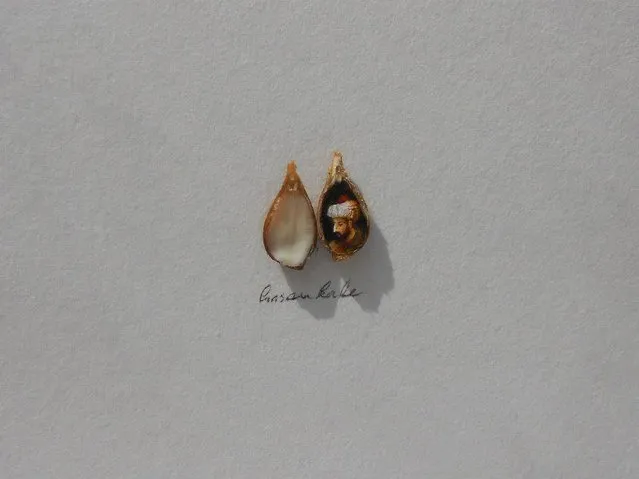
Born in 1959 in Bursa. He's interested in painting since his childhood, his career began by drawing a miniature of Istanbul, then he became involved in many art projects in other areas, as design. He produced many jewelry (special collections) to a famous company.
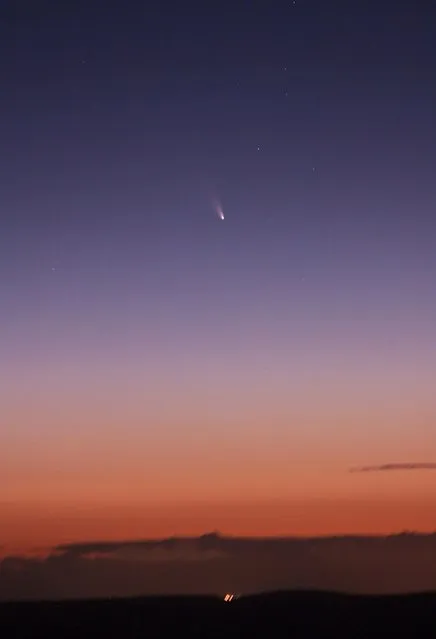
It’s time to start watching for Comet PANSTARRS, one of two comets to get excited about in 2013. Photo: This image provided by NASA shoaws the comet PANSTARRS as seen from Mount Dale, Western Australia on March 5, 2013. According to NASA on March 10, it will make its closest approach to the sun about 28 million miles (45 million kilometers) away. As it continues its nightly trek across the sky, the comet may get lost in the sun's glare but should return and be visible to the naked eye by March 12. (Photo by AP Photo/NASA)