Loading...
Done
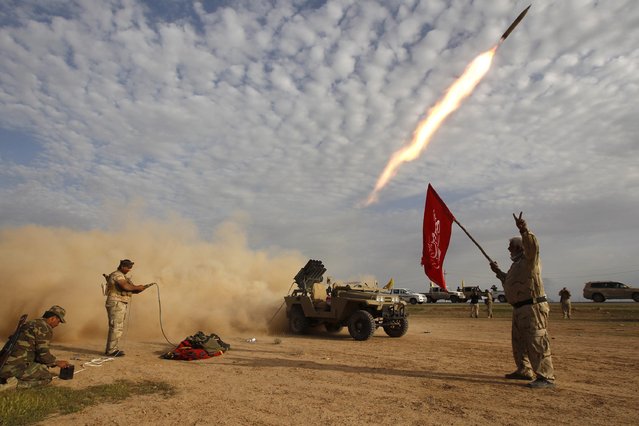
Shi'ite fighters launch a rocket during clashes with Islamic State militants on the outskirts of al-Alam March 8, 2015. Thaier Al-Sudani: “It was me and a few other Iraqi journalists working for local outlets. (Photo by Thaier Al-Sudani/Reuters)

Shi'ite fighters launch a rocket during clashes with Islamic State militants on the outskirts of al-Alam March 8, 2015. Thaier Al-Sudani: “It was me and a few other Iraqi journalists working for local outlets. We went to the frontlines in coordination with the Iraqi government forces and supporting militias. The press officer would come in the morning and take us to the frontline in a convoy. Whenever an area was won from Islamic State, the fighters would chant and pray and show victory signs. Most of the areas we were in didn't have residents, so after the battle they would resemble ghost towns; nothing but burnt cars and charred bodies of Islamic State fighters. Al-Alam was an exception as it had some residents who chanted for the government forces after their victory”. (Photo by Thaier Al-Sudani/Reuters)
Details
14 Mar 2015 14:33:00
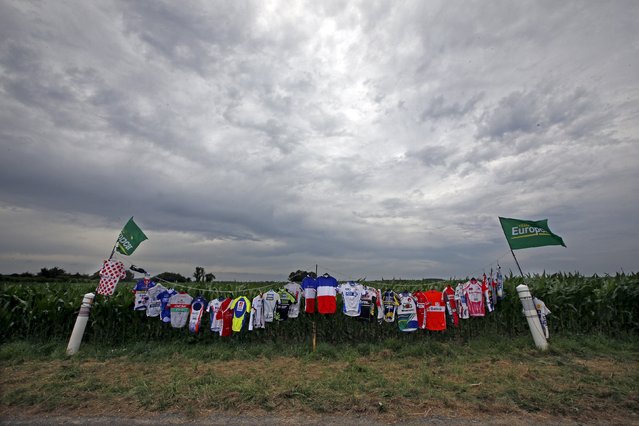
Cycling jerseys, part of a collection belonging to French cycling fan Gerald, hang from a line during the 4th stage of the Tour de France cycling race from Seraing in Belgium to Cambrai in France, July 7, 2015. (Photo by Eric Gaillard/Reuters)

Cycling jerseys, part of a collection belonging to French cycling fan Gerald, hang from a line during the 4th stage of the Tour de France cycling race from Seraing in Belgium to Cambrai in France, July 7, 2015. Photographing the Tour de France cycling race comes with highs and lows: the buzz from capturing just the right image, the tedium of long journeys, the painstaking set-up of equipment, the breath-taking scenery. Reuters photographers have worked not only to capture the thrills and spills on the roads and mountain passes. They have also shot a set of pictures showing their own quirky view from behind the scenes as they travelled through the Netherlands, Belgium and France. (Photo by Eric Gaillard/Reuters)
Details
25 Jul 2015 12:42:00
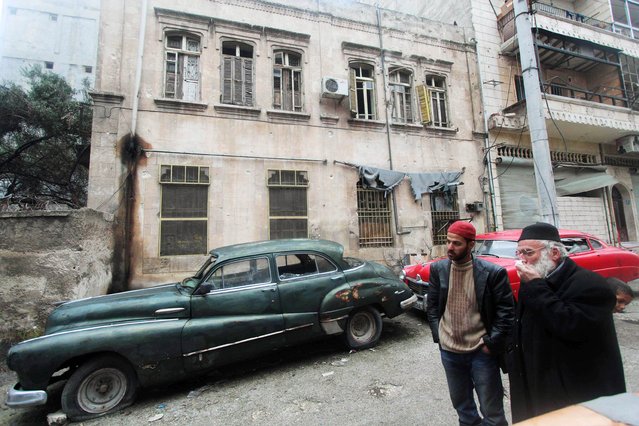
Mohamed Badr al-Din (R) stands in front of his vintage cars along a street where he keeps them, in the al-Shaar neighborhood of Aleppo January 31, 2015. The 66-year-old collector nicknamed Abu Omar inherited the hobby from his father and has a large collection of vintage cars, some of which he says belonged to former Syrian officials and were used in several movies and shows. (Photo by Abdalrhman Ismail/Reuters)

Mohamed Badr al-Din (R) stands in front of his vintage cars along a street where he keeps them, in the al-Shaar neighborhood of Aleppo January 31, 2015. The 66-year-old collector nicknamed Abu Omar inherited the hobby from his father and has a large collection of vintage cars, some of which he says belonged to former Syrian officials and were used in several movies and shows. Before the unrest, Abu Omar planned to open a museum to display his cars, which are guarded from pedestrians by a turkey that he owns. He hopes that the turmoil in the country will end so that he can pursue his hobby and repair his cars, which are heavily damaged from shelling. (Photo by Abdalrhman Ismail/Reuters)
Details
01 Feb 2015 10:34:00
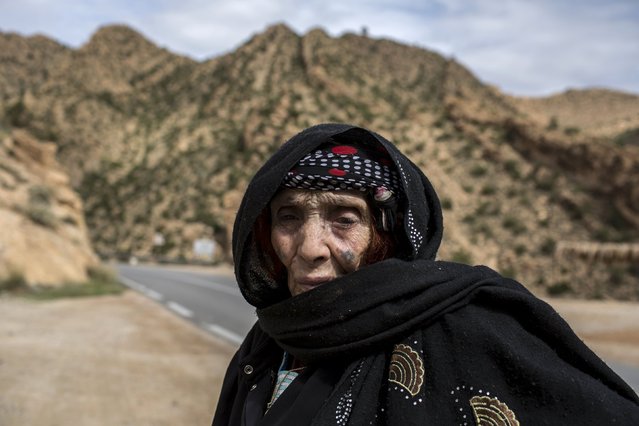
Mazouza Bouglada, 86, a berber woman from the Chaouia region, who has facial tattoos, poses for a photograph in Taghit in the Aures Mountain, Algeria October 8, 2015. Bouglada was tattooed aged 7 by a nomadic man from the Sahara region. She was advised by her mother to get tattooed. The more she got tattooed the more she showed off. Even if she still remembers the pain, she felt beautiful once it was done, Bouglada said. (Photo by Zohra Bensemra/Reuters)

Mazouza Bouglada, 86, a berber woman from the Chaouia region, who has facial tattoos, poses for a photograph in Taghit in the Aures Mountain, Algeria October 8, 2015. Bouglada was tattooed aged 7 by a nomadic man from the Sahara region. She was advised by her mother to get tattooed. The more she got tattooed the more she showed off. Even if she still remembers the pain, she felt beautiful once it was done, Bouglada said. She was very proud of her stars on her cheeks. Her eldest sister had been tattooed before her and she wanted to imitate her. Bouglada said she has now given away all her silver jewellery to atone for the sin that believers told her she had committed by being tattooed. (Photo by Zohra Bensemra/Reuters)
Details
01 Nov 2015 08:02:00
Singer Zendaya arrives at the 2015 American Music Awards in Los Angeles, California November 22, 2015. (Photo by David McNew/Reuters)

Singer Zendaya arrives at the 2015 American Music Awards in Los Angeles, California November 22, 2015. (Photo by David McNew/Reuters)
Details
24 Nov 2015 08:06:00
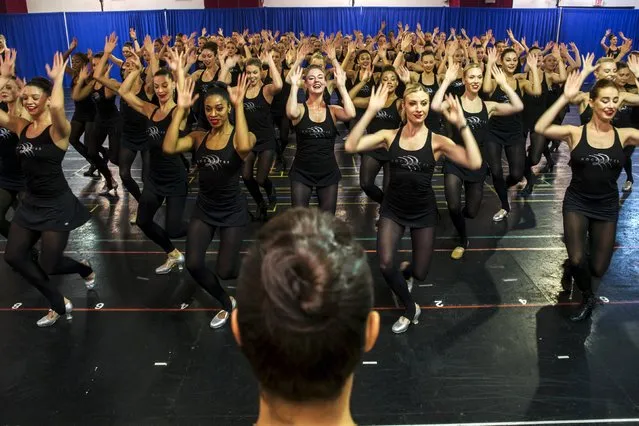
Dancers rehearse for the Rockettes 2015 Radio City Christmas Spectacular in New York October 15, 2015. (Photo by Lucas Jackson/Reuters)

Dancers rehearse for the Rockettes 2015 Radio City Christmas Spectacular in New York October 15, 2015. (Photo by Lucas Jackson/Reuters)
Details
19 Oct 2015 08:04:00
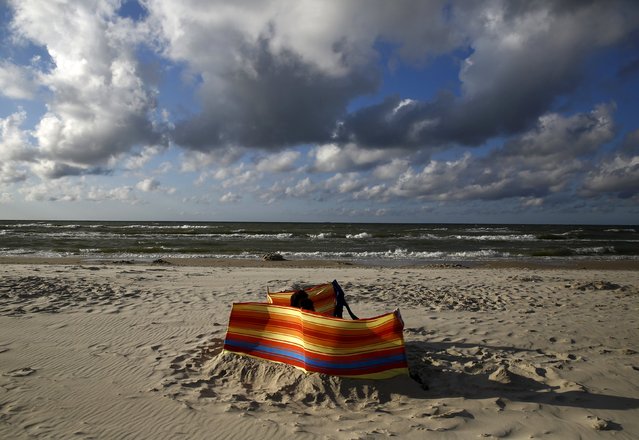
A couple sunbath on the beach in Ostrowo, northern Poland, July 20, 2015. Picture taken July 20, 2015. (Photo by Kacper Pempel/Reuters)

A couple sunbath on the beach in Ostrowo, northern Poland, July 20, 2015. Picture taken July 20, 2015. (Photo by Kacper Pempel/Reuters)
Details
10 Nov 2015 08:06:00


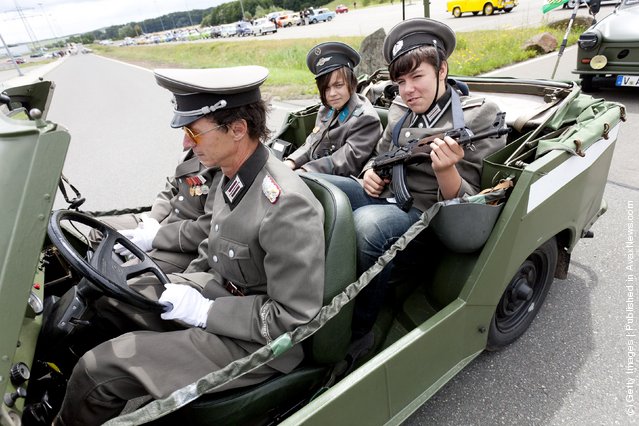
“The Trabant is a car that was produced by former East German auto maker VEB Sachsenring Automobilwerke Zwickau in Zwickau, Sachsen. It was the most common vehicle in East Germany, and was also exported to countries both inside and outside the communist bloc. The main selling points was that it had room for four adults and luggage in a compact, light and durable shell and that it was fast (when introduced) and durable. With its mediocre performance, smoky two-stroke engine, and production shortages, the Trabant is often cited as an example of the disadvantages of centralized planning; on the other hand, it is regarded with derisive affection as a symbol of the failed former East Germany and of the fall of communism (in former West Germany, as many East Germans streamed into West Berlin and West Germany in their Trabants after the opening of the Berlin Wall in 1989). It was in production without any significant changes for nearly 30 years with 3,096,099 Trabants produced in total”. – Wikipedia

Photo: Enthusiasts weared in uniforms of the former eastern german army trive in a military Trabant car as fans and owners of East German-era Trabant cars gather at the 2011 International Trabantfahrer Treffen (International Trabant Drivers Meeting) on June 26, 2011 in Zwickau, Germany. The Trabant, also known as the Trabi, was among the main cars produced in communist East Germany and built by VEB Sachsenring Automobilwerke in Zwickau for 30 years until 1989. Today the car has cult status for many followers and one company, IndiKar, is even seeking to revive the brand in a modern, electric version. (Photo by Carsten Koall/Getty Images)
Details
27 Jun 2011 12:21:00