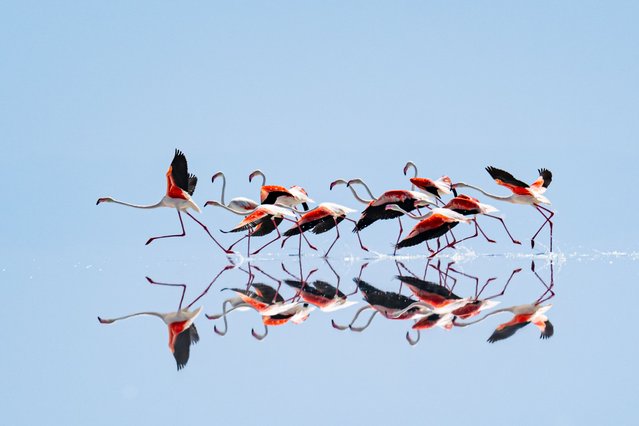
Flamingos preparing to take flight are reflected on Lake Tuz, which hosts thousands of flamingos every year, in Ankara, Turkiye, on June 24, 2025. This year, the lake has seen a decline in flamingo numbers due to drought, prompting the birds to shift their migration route to other wetlands across Turkiye. (Photo by Harun Ozalp/Anadolu via Getty Images)
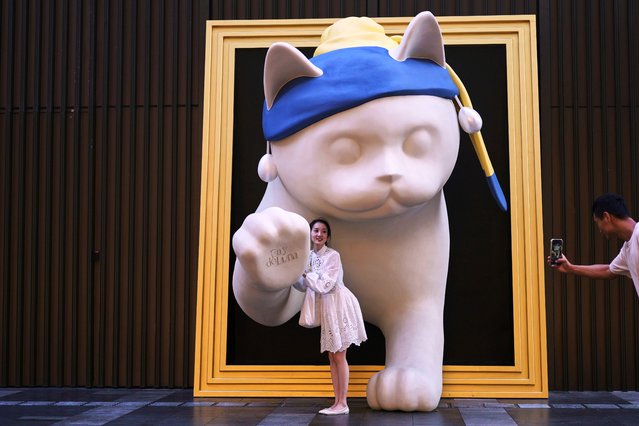
A woman poses for a souvenir photo with a cat statue on display at the Shenzhen Bay commercial district, in Shenzhen, China's Guangdong province, Monday, September 15, 2025. (Photo by Andy Wong/AP Photo)
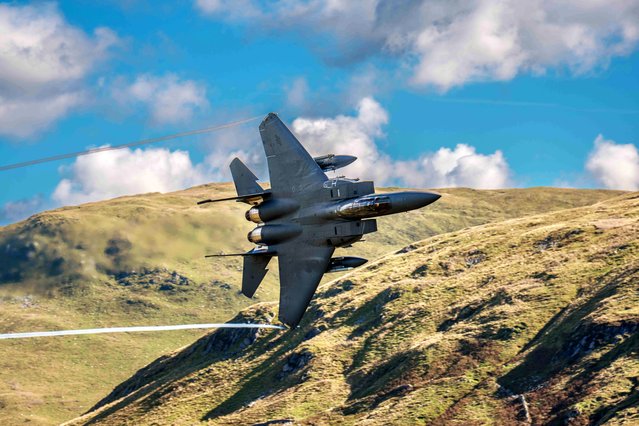
A military aircraft flies low through the Mach Loop in west-central Wales on September 25, 2025 during Cobra Warrior 25-2, one of Nato’s largest multinational air exercises. The operation, running across the UK until October 3, brings together air forces from the UK, US, Canada, Italy and Germany for three weeks of high-intensity training in challenging low-level environments. (Photo by Tony Marsh)
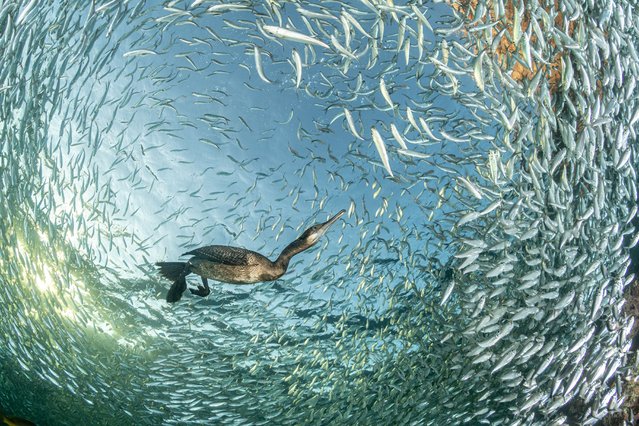
Entitled Feasting at Sunset, this photo of a Brandt’s cormorant among pilchards was the winner of the Birds in the Environment category in the 2025 Bird Photographer of the Year competition. (Photo by Franco Banfi/The Guardian)
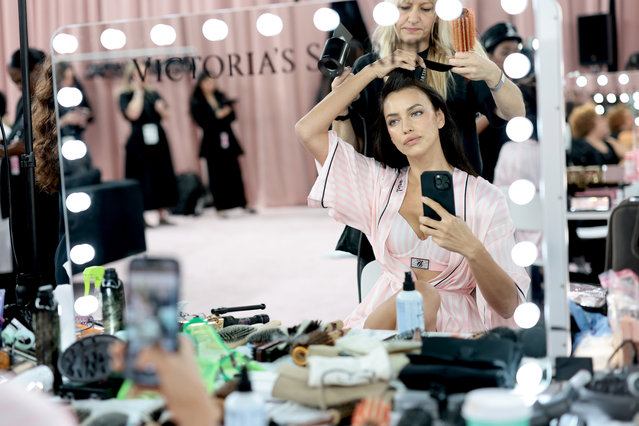
Fashion model Irina Shayk prepares backstage at the Victoria's Secret Fashion Show 2025 on October 15, 2025 in New York City. (Photo by Dimitrios Kambouris/Getty Images for Victoria's Secret)
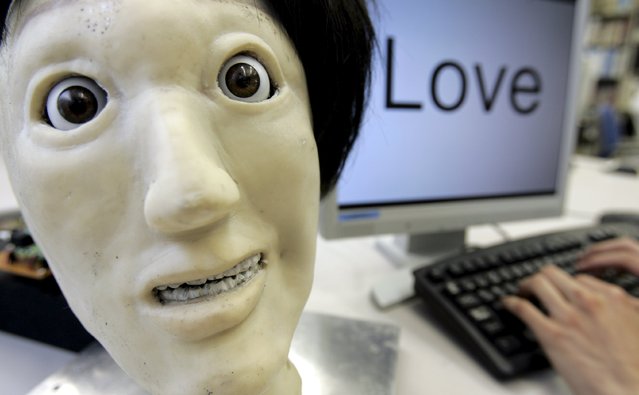
A humanoid robot named Kansei, meaning “sensibility” in Japanese, makes a facial expression depicting “happiness”, next to the word “Love” during a demonstration at a laboratory of Meiji University's Robot and Science Institute in Kawasaki, south of Tokyo in this June 4, 2007 file photo. Three-fourths of robot installations over the next decade are expected to be concentrated in four areas: transportation equipment, including the automotive sector; computer and electronic products; electrical equipment and machinery. Labor costs have climbed in countries such as China that have been popular for outsourcing production, while technological advances for robots allow them to be more flexible and perform more tasks. (Photo by Yuriko Nakao/Reuters)