Loading...
Done
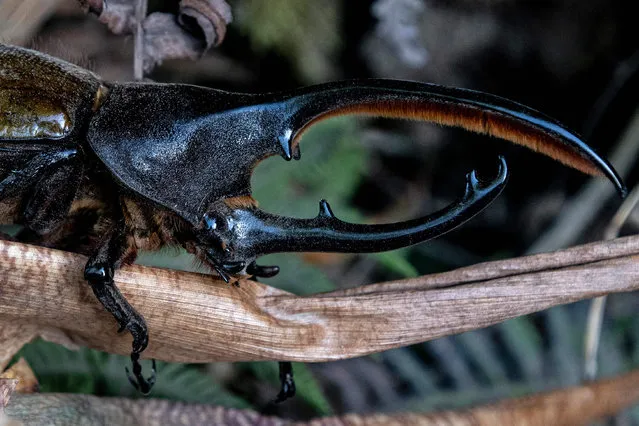
A Hercules beetle, one of the largest species of its kind, in seen at the Monteverde Cloud Forest Biological Reserve, in Puntarenas, Costa Rica, on May 23, 2023. In the Monteverde cloud forest, dense fog among the lush vegetation is increasingly rare and temperatures are increasing each year due to climate change. (Photo by Ezequiel Becerra/AFP Photo)

A Hercules beetle, one of the largest species of its kind, in seen at the Monteverde Cloud Forest Biological Reserve, in Puntarenas, Costa Rica, on May 23, 2023. In the Monteverde cloud forest, dense fog among the lush vegetation is increasingly rare and temperatures are increasing each year due to climate change. (Photo by Ezequiel Becerra/AFP Photo)
Details
21 Sep 2023 03:34:00
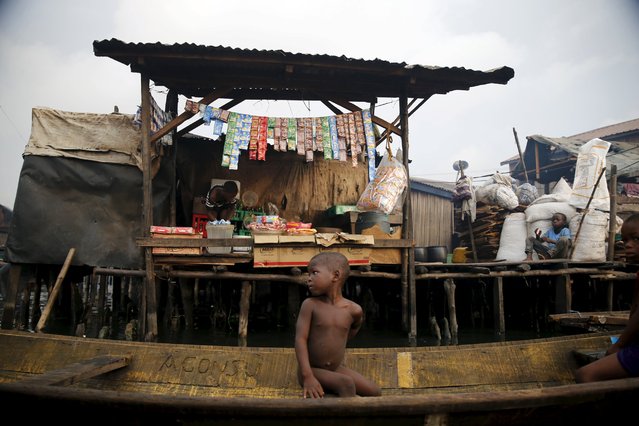
A boy sits in a canoe in front of a shed built on a raft in the Makoko fishing community on the Lagos Lagoon, Nigeria February 29, 2016. Makoko, a vast slum of houses on stilts in a Lagos lagoon, now boasts a new school – pyramid-shaped, floating and capable of withstanding the waterways' extreme weather, it is a beacon of hope for the nearly 100,000 Nigerians who live there.  (Photo by Akintunde Akinleye/Reuters)

A boy sits in a canoe in front of a shed built on a raft in the Makoko fishing community on the Lagos Lagoon, Nigeria February 29, 2016. In Makoko, a sprawling slum of Nigeria's megacity Lagos, a floating school capable of holding up to a hundred pupils has since November brought free education to the waterways known as the Venice of Lagos. It offers the chance of social mobility for youngsters who, like most of the city's 21 million inhabitants, lack a reliable electricity and water supply and whose water-based way of life is threatened by climate change as well as rapid urbanisation. (Photo by Akintunde Akinleye/Reuters)
Details
05 Mar 2016 12:01:00
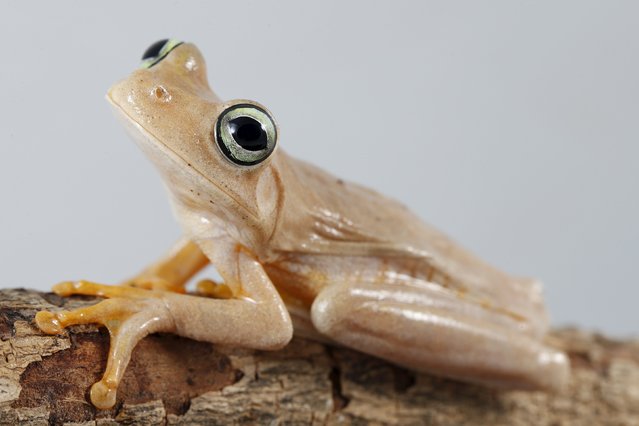
A Hypsiboas crepitans frog is pictured at a terrarium in Caracas November 30, 2015. Venezuelan frogs and toads are in critical danger due to climate change as rising temperatures complicate reproduction and spread a deadly fungus, say scientists, who liken the species to canaries in a coalmine warning of imminent danger. (Photo by Carlos Garcia Rawlins/Reuters)

A Hypsiboas crepitans frog is pictured at a terrarium in Caracas November 30, 2015. Venezuelan frogs and toads are in critical danger due to climate change as rising temperatures complicate reproduction and spread a deadly fungus, say scientists, who liken the species to canaries in a coalmine warning of imminent danger. The survival of a group of nearly 20 frog and toad species, which top Venezuela's list of endangered species, may rest on a small group of academics in a Caracas laboratory attempting to recreate the amphibians' natural reproductive conditions. (Photo by Carlos Garcia Rawlins/Reuters)
Details
17 Dec 2015 08:04:00
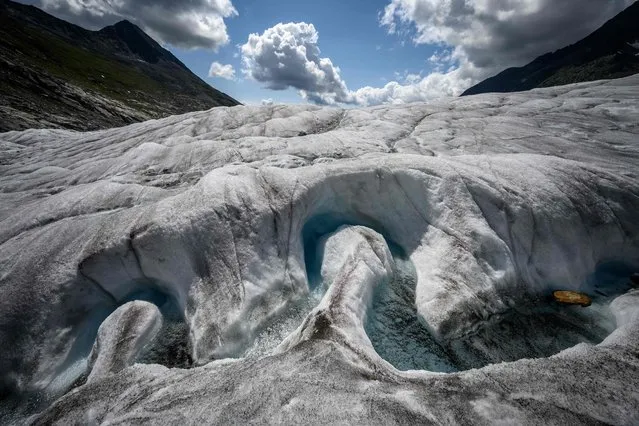
A picture taken on August 25, 2021 shows a view of the Aletsch Glacier. After hiking for hours across the mountain and a vast expanse of white, Swiss glaciologist Matthias Huss crouches down near the middle of the massive glacier and checks the measurements. Analysis of the data gathered from Aletsch, the largest glacier in the Alps, paints a dire picture of the toll that climate change is taking on the behemoth. (Photo by Fabrice Coffrini/AFP Photo)

A picture taken on August 25, 2021 shows a view of the Aletsch Glacier. After hiking for hours across the mountain and a vast expanse of white, Swiss glaciologist Matthias Huss crouches down near the middle of the massive glacier and checks the measurements. Analysis of the data gathered from Aletsch, the largest glacier in the Alps, paints a dire picture of the toll that climate change is taking on the behemoth. (Photo by Fabrice Coffrini/AFP Photo)
Details
21 Oct 2021 08:38:00
Hundreds of people from a range of NGOs and campaign groups protest to demand the immediate restoration of nature at DEFRA – Department for Environment Food & Rural Affairs on September 28, 2023 in London, England. The 2023 State of Nature Report revealed that approximately one in six species in Great Britain, including turtle doves and hazel dormice, are at risk of extinction, citing climate change, intensive farming, and pollution as major threats, with a 19% average decline in monitored plant and animal populations since 1970. (Photo by Guy Smallman/Getty Images)

Hundreds of people from a range of NGOs and campaign groups protest to demand the immediate restoration of nature at DEFRA – Department for Environment Food & Rural Affairs on September 28, 2023 in London, England. The 2023 State of Nature Report revealed that approximately one in six species in Great Britain, including turtle doves and hazel dormice, are at risk of extinction, citing climate change, intensive farming, and pollution as major threats, with a 19% average decline in monitored plant and animal populations since 1970. (Photo by Guy Smallman/Getty Images)
Details
09 Dec 2024 04:11:00
Naked activists take part in a protest against fur trade, called by international non profit animal rights organisation AnimaNaturalis, in Barcelona, on December 1, 2019, on the eve of the opening of the UN Climate Change Conference COP25. (Photo by Pau Barrena/AFP Photo)

Naked activists take part in a protest against fur trade, called by international non profit animal rights organisation AnimaNaturalis, in Barcelona, on December 1, 2019, on the eve of the opening of the UN Climate Change Conference COP25. (Photo by Pau Barrena/AFP Photo)
Details
04 Dec 2019 00:05:00
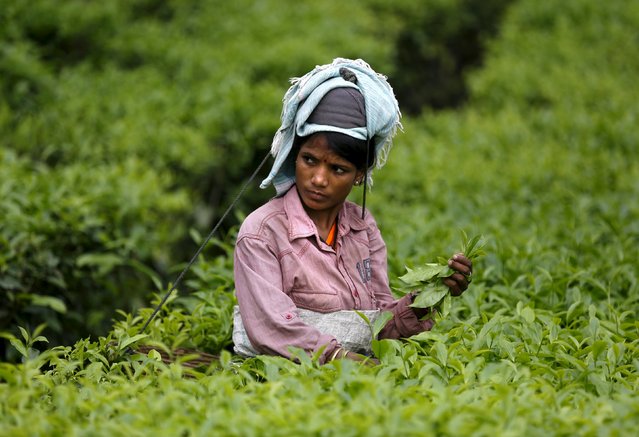
A tea garden worker plucks tea leaves inside Aideobarie Tea Estate in Jorhat in Assam, India, April 21, 2015. (Photo by Ahmad Masood/Reuters)

A tea garden worker plucks tea leaves inside Aideobarie Tea Estate in Jorhat in Assam, India, April 21, 2015. Unrest is brewing among Assam's so-called Tea Tribes as changing weather patterns upset the economics of the industry. Scientists say climate change is to blame for uneven rainfall that is cutting yields and lifting costs for tea firms. (Photo by Ahmad Masood/Reuters)
Details
05 May 2015 11:21:00
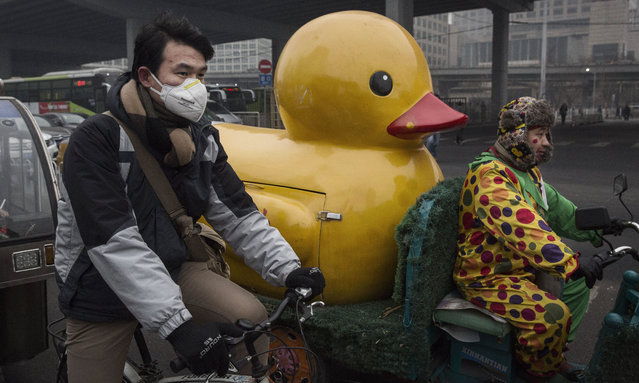
A Chinese man wears a mask to protect against pollution as he waits at a red light while commuting to work in heavy smog on December 8, 2015 in Beijing, China. The Beijing government issued a 'red alert' for the first time since new standards were introduced earlier this year as the city and many parts of northern China were shrouded in heavy pollution. (Photo by Kevin Frayer/Getty Images)

A Chinese man wears a mask to protect against pollution as he waits at a red light while commuting to work in heavy smog on December 8, 2015 in Beijing, China. The Beijing government issued a 'red alert' for the first time since new standards were introduced earlier this year as the city and many parts of northern China were shrouded in heavy pollution. Levels of PM 2.5, considered the most hazardous, crossed 400 units in Beijing, lower than last week, but still nearly 20 times the acceptable standard set by the World Health Organization. The governments of more than 190 countries are meeting in Paris to set targets on reducing carbon emissions in an attempt to forge a new global agreement on climate change. (Photo by Kevin Frayer/Getty Images)
Details
11 Dec 2015 08:01:00