Loading...
Done
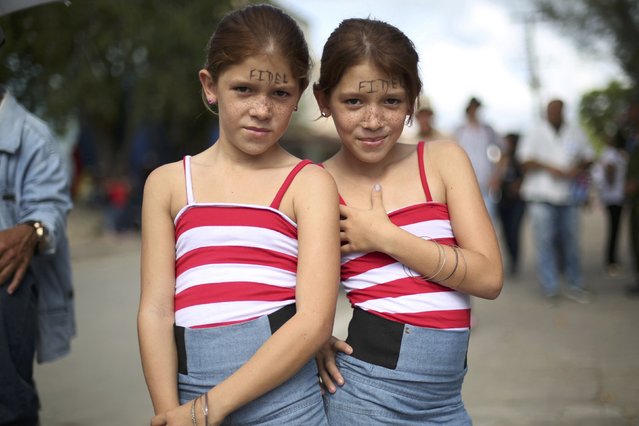
Sisters await the arrival of the caravan carrying the late Cuban President Fidel Castro's ashes in El Maja, Cuba, December 1, 2016. (Photo by Edgard Garrido/Reuters)

Sisters await the arrival of the caravan carrying the late Cuban President Fidel Castro's ashes in El Maja, Cuba, December 1, 2016. (Photo by Edgard Garrido/Reuters)
Details
03 Dec 2016 11:29:00
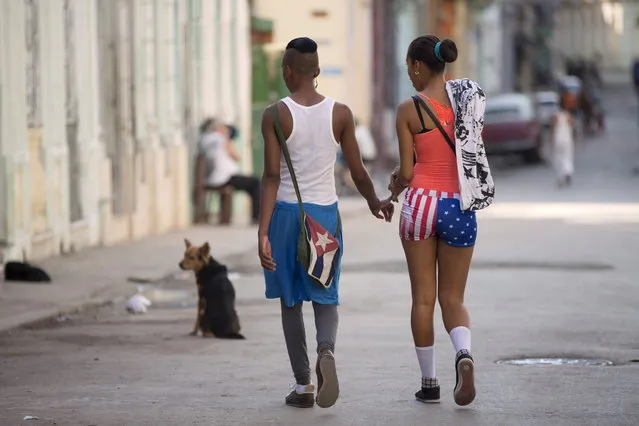
A couple who did not give their names walk in downtown Havana, February 2, 2015. (Photo by Alexandre Meneghini/Reuters)

A couple who did not give their names walk in downtown Havana, February 2, 2015. (Photo by Alexandre Meneghini/Reuters)
Details
14 Jan 2016 08:06:00
On Dale A. Browne’s first trip to Yellowstone, he “got the best shot” he’d ever taken after chasing this weasel for 30 minutes. The trip for the 58-year-old from Manassas, Va., was a gift from his wife and an opportunity to improve his photography skills with the help of guide and professional photographer Tom Murphy. (Murphy did not assist in the taking of this photo). (Photo by Dale A. Browne)

On Dale A. Browne’s first trip to Yellowstone, he “got the best shot” he’d ever taken after chasing this weasel for 30 minutes. The trip for the 58-year-old from Manassas, Va., was a gift from his wife and an opportunity to improve his photography skills with the help of guide and professional photographer Tom Murphy. (Murphy did not assist in the taking of this photo). (Photo by Dale A. Browne)
Details
26 Jul 2016 10:31:00
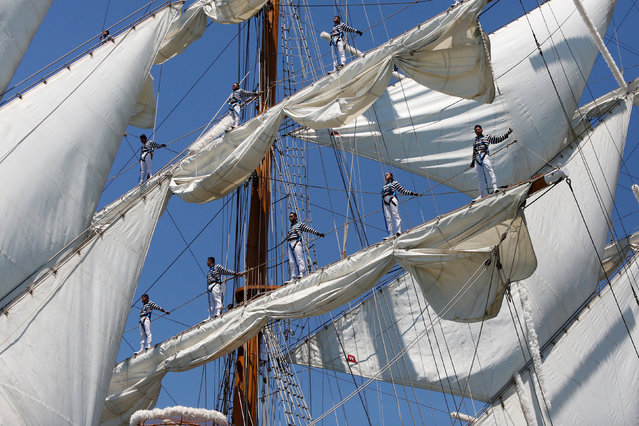
The Mexican ship Cuauhtemoc is pictured during the Tall Ships Races 2016 parade, in Lisbon, Portugal, July 25, 2016. (Photo by Pedro Nunes/Reuters)

The Mexican ship Cuauhtemoc is pictured during the Tall Ships Races 2016 parade, in Lisbon, Portugal, July 25, 2016. The Tall Ships' Races are races for sail training “tall ships” (sailing ships). The races are designed to encourage international friendship and training for young people in the art of sailing. The races are held annually in European waters and consists of two racing legs of several hundred nautical miles, and a “cruise in company” between the legs. Over one half (fifty-percent) of the crew of each ship participating in the races must consist of young people. (Photo by Pedro Nunes/Reuters)
Details
26 Jul 2016 10:49:00
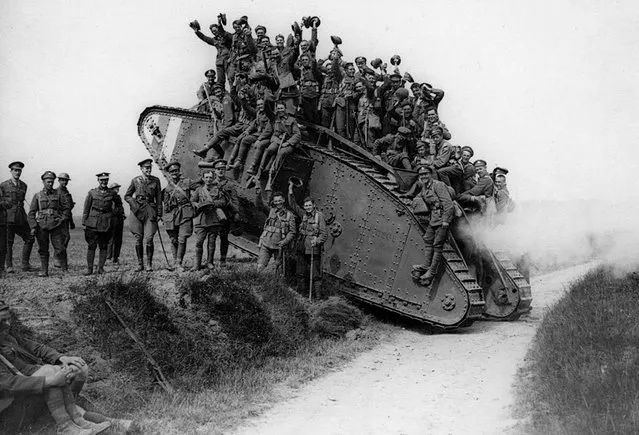
These black-and-white photos are taken from the new book “Armoured Warfare in the First World War 1916 – 1918” by Anthony Tucker-Jones and published by Pen & Sword Military. “Interestingly the British, French and Germans took completely different approaches with varying results”. The British military produced “Little Willie” in Autumn 1915 weighing 18 tonnes, which had a crew of two plus four gunners. “Inspired by a tracked artillery tractor “Little Willie” was referred to as a water tank – hence the name tank – to ensure secrecy”, said Anthony. “This led to the strange looking Mark I with its peculiar rhomboid shape, designed to cross trenches with guns in sponsons on either side. The Germans saw the tank as unchivalrous and were slow to grasp its utility. They favoured the Stormtrooper (specialist soldiers used to infiltrate enemy trenches) and artillery, not the tank”, said Anthony. “However, they didn’t hesitate to make use of captured British tanks. Although the tank helped secure victory and German soldiers dubbed it “Germany’s Downfall” the country was ultimately brought to its knees by the Allies blockade”. Here: British troops hitch a ride on a Mark IV after the massed tank fleet spearheading attack at Cambrai on November 20, 1917. (Photo by Anthony Tucker-Jones/Mediadrumworld.com)

These black-and-white photos are taken from the new book “Armoured Warfare in the First World War 1916 – 1918” by Anthony Tucker-Jones and published by Pen & Sword Military. Here: British troops hitch a ride on a Mark IV after the massed tank fleet spearheading attack at Cambrai on November 20, 1917. (Photo by Anthony Tucker-Jones/Mediadrumworld.com)
Details
23 Feb 2017 00:02:00
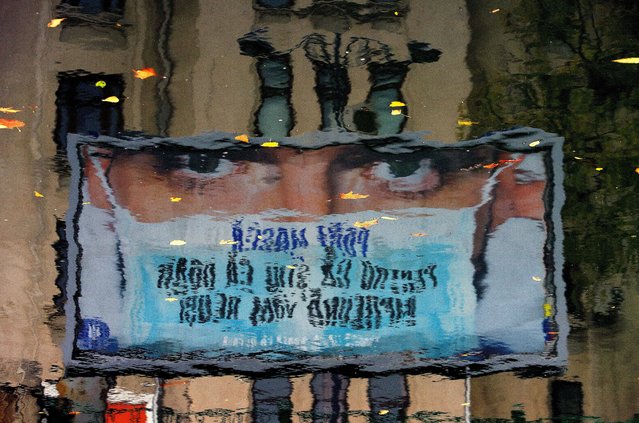
A government awareness poster for wearing surgical masks is seen reflected and upside-down in the Dambovita river in Bucharest, Romania, 19 November 2020. The poster, depicting a man wearing a surgical mask, reads: “I WEAR A MASK BECAUSE I KNOW THAT ONLY TOGETHER WE WILL SUCCEED!”. As the number of COVID-19 infections increased, authorities decided that wearing a protective mask should become mandatory at all times in all public places. (Photo by Robert Ghement/EPA/EFE)

A government awareness poster for wearing surgical masks is seen reflected and upside-down in the Dambovita river in Bucharest, Romania, 19 November 2020. The poster, depicting a man wearing a surgical mask, reads: “I WEAR A MASK BECAUSE I KNOW THAT ONLY TOGETHER WE WILL SUCCEED!”. As the number of COVID-19 infections increased, authorities decided that wearing a protective mask should become mandatory at all times in all public places. (Photo by Robert Ghement/EPA/EFE)
Details
12 Dec 2020 00:01:00
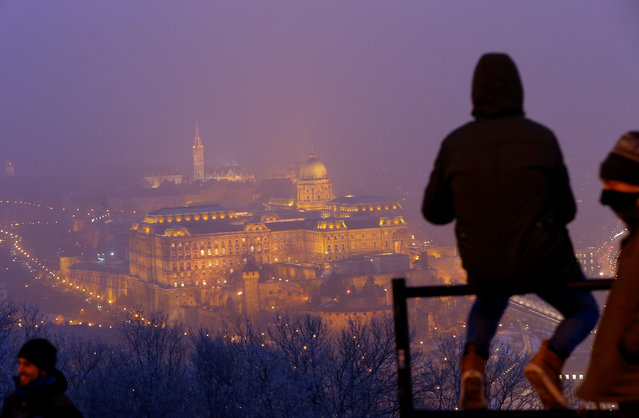
The Royal Castle is seen a veil of heavy winter smog in Budapest, Hungary January 30, 2017. (Photo by Laszlo Balogh/Reuters)

The Royal Castle is seen a veil of heavy winter smog in Budapest, Hungary on January 30, 2017. (Photo by Laszlo Balogh/Reuters)
Details
20 Dec 2019 00:03:00
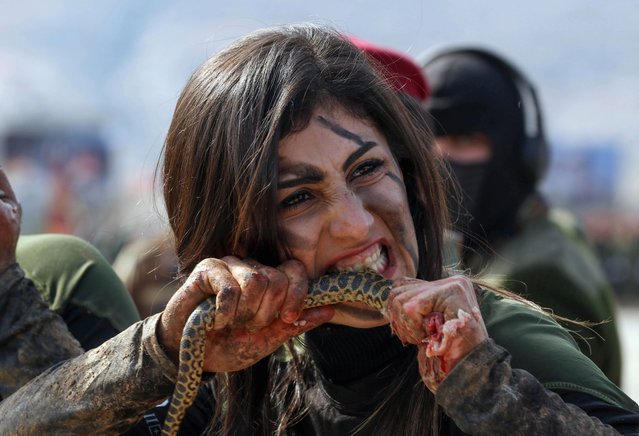
An Iraqi Kurdish Peshmerga female officer bites a snake while demonstrating skills during a graduation ceremony in the Kurdish town of Soran, about 100 kilometres northeast of the capital of Iraq's autonomous Kurdish region Arbil, on February 12, 2020. (Photo by Safin Hamed/AFP Photo)

An Iraqi Kurdish Peshmerga female officer bites a snake while demonstrating skills during a graduation ceremony in the Kurdish town of Soran, about 100 kilometres northeast of the capital of Iraq's autonomous Kurdish region Arbil, on February 12, 2020. (Photo by Safin Hamed/AFP Photo)
Details
14 Feb 2020 00:07:00