Loading...
Done
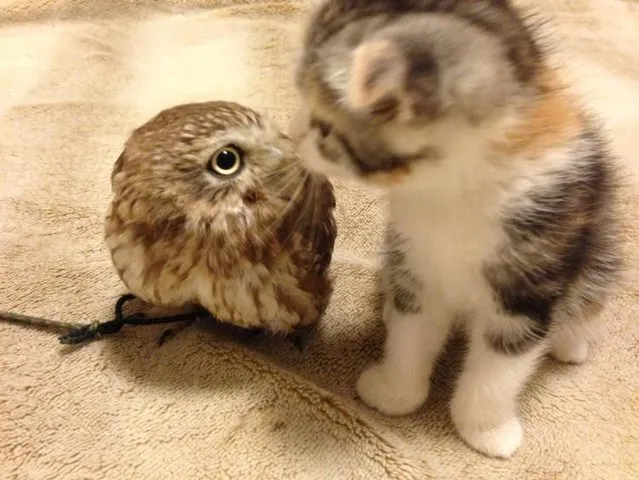
Kitten And Owl Are Best Friends

A tiny calico Scottish Fold kitten named Marimo snuggles and plays with an equally tiny baby owl named Fuku at the Hukulou Coffee House in Osaka, Japan. While the cafe is primarily focused on all things owl, the kitten is certainly getting a great deal of attention, particularly from Fuku.
Details
24 Nov 2016 08:02:00
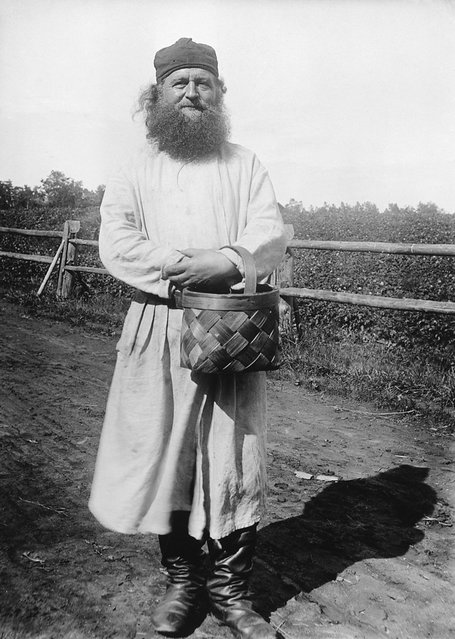
Priest, Valamo Monastery, Karelia, Russia (then Finland), 1930s. Father Venerius with a birchbark basket. (Photo by Einar Erici)

“Einar Erici (1885–1965) was a physician by profession, working at a tuberculosis hospital in Stockholm, even running a private medical practice. He was by then the most renowned Swedish expert of church organs and organ builders, and his archival collection is today held by the Swedish National Heritage Board. This archive includes mostly writings, such as letters and manuscripts for published articles and essays, but also more than 2 000 black and white photos – original prints, glass plates and film negatives”. – Swedish National Heritage Board

Photo: Priest, Valamo Monastery, Karelia, Russia (then Finland), 1930s. Father Venerius with a birchbark basket. (Photo by Einar Erici)
Details
09 Dec 2012 11:41:00
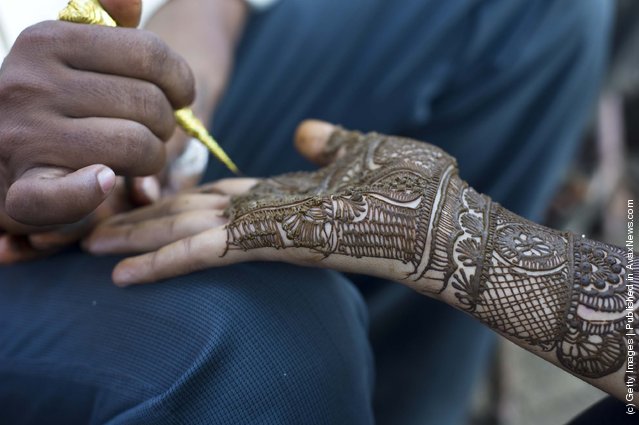
Application of henna or “Mehndi”  to a girls hand in a market in Jaipur, India

“Mehndi or menhdi is the application of henna as a temporary form of skin decoration in India, as well as by expatriate communities from the country. The word mehndi is derived from the Sanskrit word mendhikā. The use of mehndi and turmeric is described in the earliest Vedic ritual books. Haldi (Staining oneself with turmeric paste) as well as mehndi are important Vedic customs as a symbolic representation of the Outer and the Inner Sun. Vedic customs are meant to awaken the “inner light” and so the gold of the inner Sun has an important symbolic function”. – Wikipedia

Photo: Application of henna or “Mehndi” to a girls hand in a market on October 18, 2010 in Jaipur, India. (Photo by Simon de Trey-White/Getty Images)
Details
23 Nov 2011 13:33:00
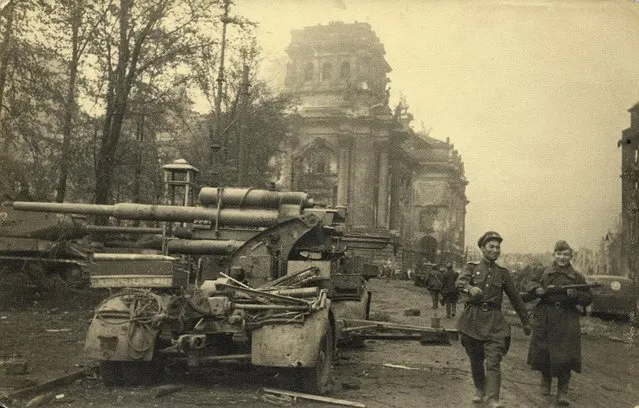
Russian soldiers are pictured next to the Reichstag building in this undated photo taken May 1945 in Berlin. Some 70 years on from the Battle for Berlin, instrumental in the end of World War II, Reuters photographer Fabrizio Bensch unearthed pictures by Red Army photographer Georgiy Samsonov, showing his portrayal of a city laid siege. (Photo by Georgiy Samsonov/Reuters/MHM)

Russian soldiers are pictured next to the Reichstag building in this undated photo taken May 1945 in Berlin. Some 70 years on from the Battle for Berlin, instrumental in the end of World War II, Reuters photographer Fabrizio Bensch unearthed pictures by Red Army photographer Georgiy Samsonov, showing his portrayal of a city laid siege. Bensch bought an exactly equivalent FED camera, a Soviet copy of the German-made Leica II, choosing to use black and white film to capture images of the self-same locations he detected his way to in modern-day Berlin. (Photo by Georgiy Samsonov/Reuters/MHM)
Details
07 May 2015 12:01:00
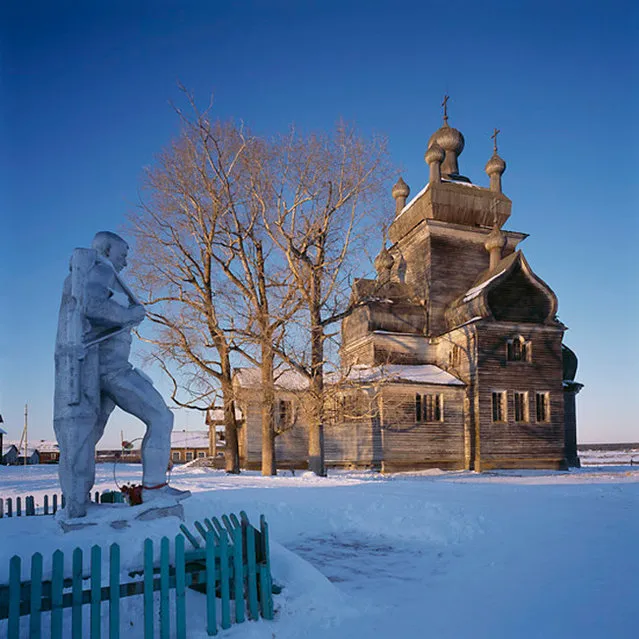
Wooden Churches - Travelling In The Russian North By Richard Davies Part 2

While communism, collectivism, worms, dry rot and casual looting failed to destroy the majestic wooden churches of Russia, it may be ordinary neglect that finally does them in. Dwindled now to several hundred remaining examples, these glories of vernacular architecture lie scattered amid the vastness of the world’s largest country. Just over a decade ago, Richard Davies, a British architectural photographer, struck out on a mission to record the fragile and poetic structures. Austerely beautiful and haunting, “Wooden Churches: Traveling in the Russian North” (White Sea Publishing; $132) is the result. Covering thousands of miles, Mr. Davies described how he and the writer Matilda Moreton tracked down the survivors from among the thousands of onion-domed structures built after Prince Vladimir converted to Christianity in 988.

See also: Wooden Churches Part1

Details
28 Nov 2013 12:13:00
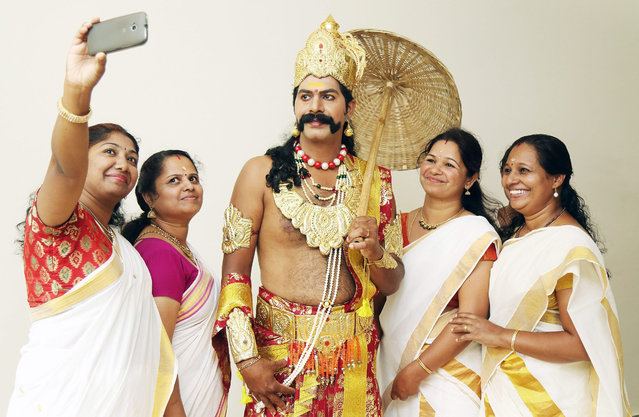
Indian women wearing traditional attire take a “selfie” with an Indian man dressed as King 'Mahabali' during the Hindu harvesting festival Onam celebrations in Bangalore, India, 28 August 2015. Local people put flower mats in front of their houses, to welcome the King Mahabali, a past ruler of Kerala southern India, during the ten-day festival. (Photo by Jagadeesh N. V./EPA)

Indian women wearing traditional attire take a “selfie” with an Indian man dressed as King 'Mahabali' during the Hindu harvesting festival Onam celebrations in Bangalore, India, 28 August 2015. Local people put flower mats in front of their houses, to welcome the King Mahabali, a past ruler of Kerala southern India, during the ten-day festival. (Photo by Jagadeesh N. V./EPA)
Details
02 Oct 2015 08:05:00
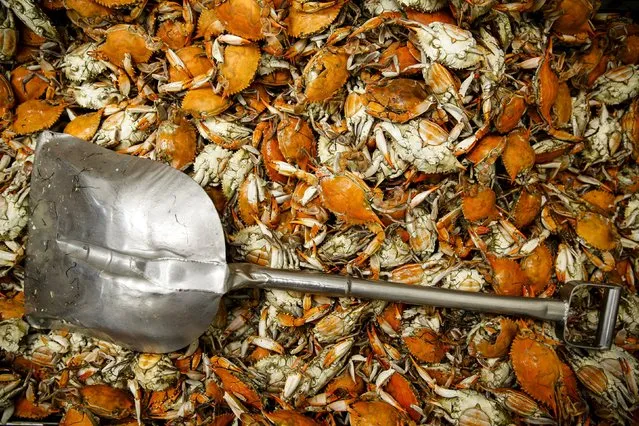
A large stainless steel shovel lies on top of steamed crabs at the A.E. Phillips & Son Inc. crab picking house on Hooper's Island in Fishing Creek, Maryland August 26, 2015. Workers speed through the lump and back fin meat inside the crabs while leaving the more tedious task of picking the claws to others. (Photo by Jonathan Ernst/Reuters)

A large stainless steel shovel lies on top of steamed crabs at the A.E. Phillips & Son Inc. crab picking house on Hooper's Island in Fishing Creek, Maryland August 26, 2015. Workers speed through the lump and back fin meat inside the crabs while leaving the more tedious task of picking the claws to others. (Photo by Jonathan Ernst/Reuters)
Details
16 Oct 2015 08:03:00
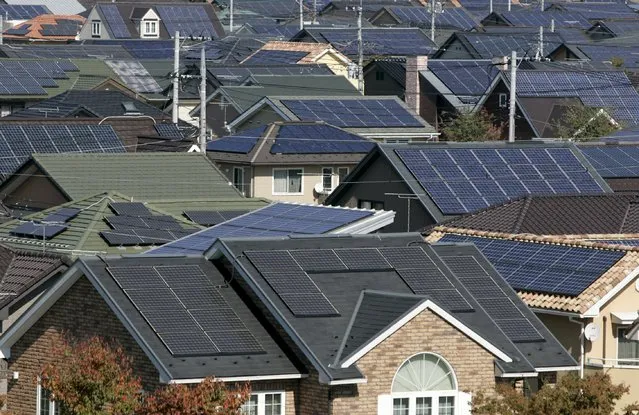
Rooftops of solar powered houses are pictured in Ota, 80 km northwest of Tokyo in this October 28, 2008 file photo. One by one, Japan is turning off the lights at the giant oil-fired power plants that propelled it to the ranks of the world's top industrialised nations. With nuclear power in the doldrums after the Fukushima disaster, it's solar energy that is becoming the alternative. (Photo by Yuriko Nakao/Reuters)

Rooftops of solar powered houses are pictured in Ota, 80 km northwest of Tokyo in this October 28, 2008 file photo. One by one, Japan is turning off the lights at the giant oil-fired power plants that propelled it to the ranks of the world's top industrialised nations. With nuclear power in the doldrums after the Fukushima disaster, it's solar energy that is becoming the alternative. Solar power is set to become profitable in Japan as early as this quarter, according to the Japan Renewable Energy Foundation (JREF), freeing it from the need for government subsidies and making it the last of the G7 economies where the technology has become economically viable. (Photo by Yuriko Nakao/Reuters)
Details
24 Nov 2015 08:04:00