Loading...
Done
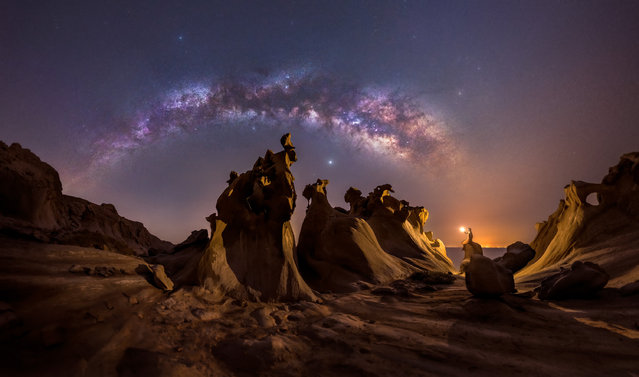
Night lovers; Hormozgan province, Iran. “In this picture, you can see the Milky Way rising on a fascinating spring night on the Persian Gulf coast. The stunning cliffs of this area make every viewer imagine and even talk to them! The light pollution from a faraway city was quite strong, so it was a challenging post-processing process. I’m a nightscaper who tries to achieve an artistic look in my images, and in this image, I tried to convey and capture the magic of this location”. (Photo by Mohammad Hayati/Milky Way Photographer of the Year)

Night lovers; Hormozgan province, Iran. “In this picture, you can see the Milky Way rising on a fascinating spring night on the Persian Gulf coast. The stunning cliffs of this area make every viewer imagine and even talk to them! The light pollution from a faraway city was quite strong, so it was a challenging post-processing process. I’m a nightscaper who tries to achieve an artistic look in my images, and in this image, I tried to convey and capture the magic of this location”. (Photo by Mohammad Hayati/Milky Way Photographer of the Year)
Details
01 Jun 2021 09:42:00
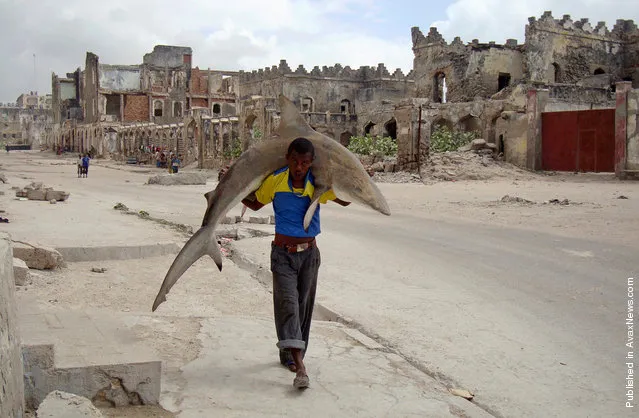
In this photo provided by World Press Photo, the 1st Prize Daily Life Single of the 2011 World Press Photo Contest by Omar Feisal, Somalia, Reuters, shows a man carrying a shark through the streets of Mogadishu, Somalia, Sept. 23, 2010

In this photo provided by World Press Photo, the 1st Prize Daily Life Single of the 2011 World Press Photo Contest by Omar Feisal, Somalia, Reuters, shows a man carrying a shark through the streets of Mogadishu, Somalia, September 23, 2010. (AP Photo/Omar Feisal/Reuters)
Details
08 Apr 2012 14:15:00
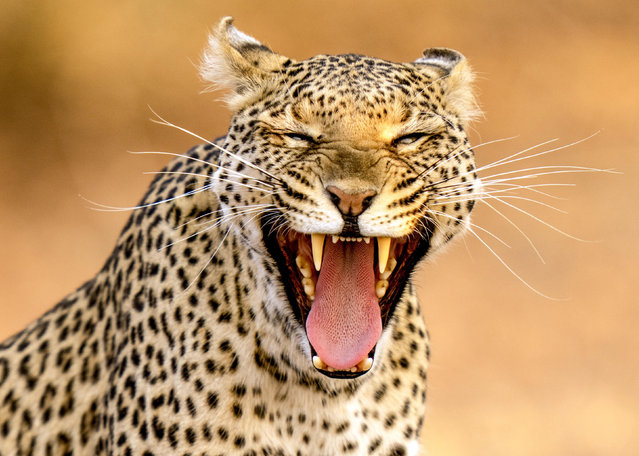
A yawning leopard appears to be laughing instead at Chobe National Park in Botswana in January 2023. (Photo by Nick Dale/Solent News & Photo Agency)

A yawning leopard appears to be laughing instead at Chobe National Park in Botswana in January 2023. (Photo by Nick Dale/Solent News & Photo Agency)
Details
06 Sep 2024 04:09:00
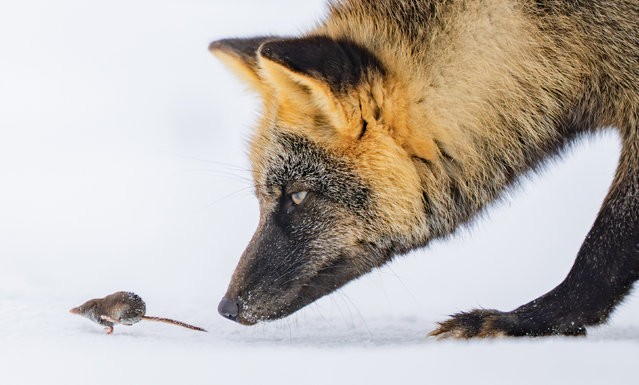
Fast food got a whole new meaning in Hokkaido, Japan, where a vole was captured fleeing from a fox in the first decade of January 2025. (Photo by Hiroki Inoue/Solent News)

Fast food got a whole new meaning in Hokkaido, Japan, where a vole was captured fleeing from a fox in the first decade of January 2025. (Photo by Hiroki Inoue/Solent News)
Details
19 Jan 2025 05:19:00
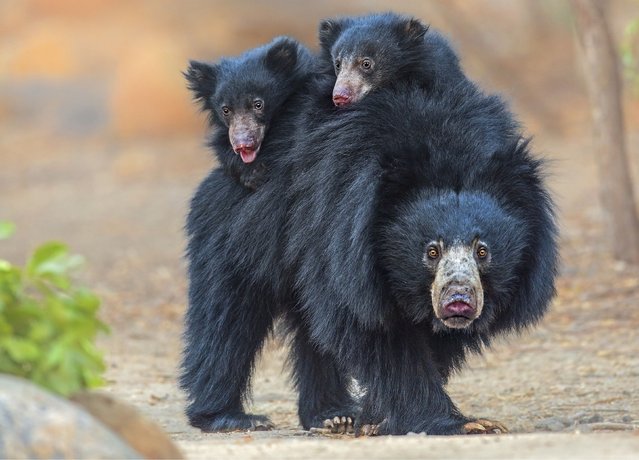
Two sloth bear cubs save their paws from the hot ground during a search for food in the Daroji Bear Sanctuary in Karnataka, India in the second decade of January 2025. (Photo by Baiju Patil/Solent News)

Two sloth bear cubs save their paws from the hot ground during a search for food in the Daroji Bear Sanctuary in Karnataka, India in the second decade of January 2025. (Photo by Baiju Patil/Solent News)
Details
26 Jan 2025 03:56:00
Maja, a 40-year-old elephant, extends her trunk into a bakery as a customer buys a newspaper while Maja took a stroll through the neighborhood with her minders from a nearby circus on July 1, 2016 in Berlin, Germany. (Photo by Sean Gallup/Getty Images)

Maja, a 40-year-old elephant, extends her trunk into a bakery as a customer buys a newspaper while Maja took a stroll through the neighborhood with her minders from a nearby circus on July 1, 2016 in Berlin, Germany. (Photo by Sean Gallup/Getty Images)
Details
29 Dec 2016 07:42:00
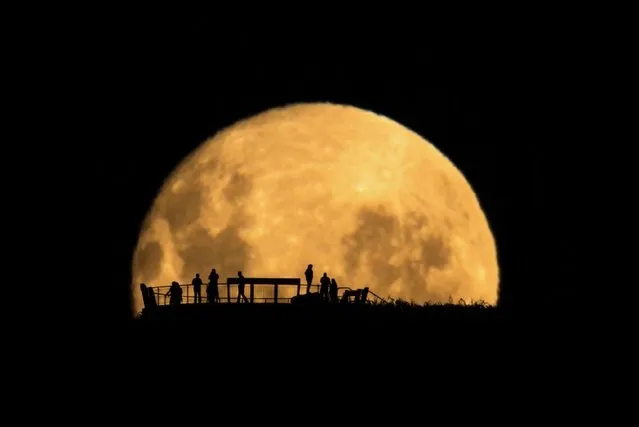
Astronomy Photographer Of The Year 2013 Part1

The Royal Observatory just announced its Astronomy Photographer Of The Year 2013 winners. Australian photographer Mark Gee was chosen among a thousand amateur and professional photographers around the globe to win the top title. His work is part of an exhibition of the winning photographers, which opened on Sept. 19 at the Royal Observatory Greenwich. The Royal Observatory shared with us the winners and notable mentions of the competition. Their descriptions of the prizewinners can be found below the images.
Details
04 Oct 2013 11:45:00
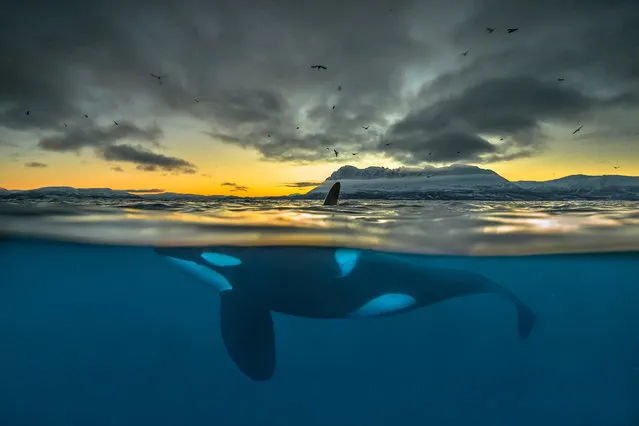
Split-view of a killer whale at sunrise off the coast of Northern Norway. At least half of the world’s killer whale populations are doomed to extinction due to pollution of the oceans, a new study says. (Photo by Audun Rikardsen/Science)

Split-view of a killer whale at sunrise off the coast of Northern Norway. At least half of the world’s killer whale populations are doomed to extinction due to pollution of the oceans, a new study says. (Photo by Audun Rikardsen/Science)
Details
16 Dec 2018 00:03:00