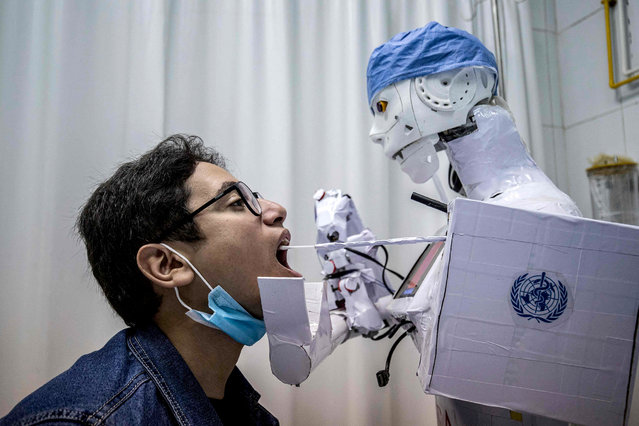
A prong extending from a remote-controlled robot prototype approaches the mouth of a volunteer to extract a throat swab sample, as part of a self-funded project to assist physicians in running tests on suspected COVID-19 coronavirus patients in a bid to limit human exposure to disease-carriers, at a private hospital in Egypt's Nile delta city of Tanta, on March 20, 2021. (Photo by Khaled Desouki/AFP Photo)
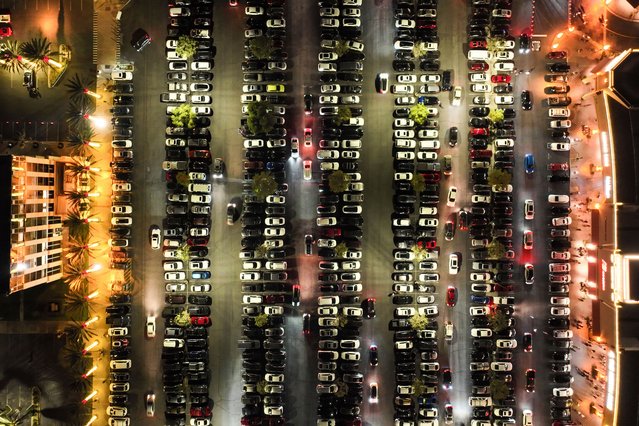
An aerial view shows a packed parking lot at Citadel Outlets in Commerce, Calif., Thursday, November 28, 2024, as early Black Friday shoppers arrive at the mall. (Photo by Jae C. Hong/AP Photo)
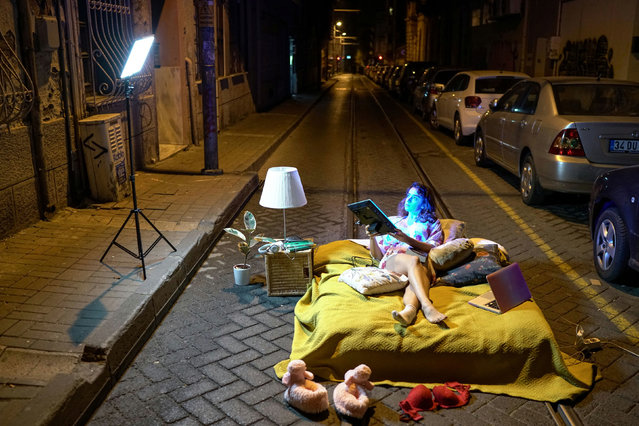
Artist Sayna Soleimanpour performs a photoshoot in protest against the mistreatment and alienation of Turkish women based on their clothing, during a two-day curfew amid the spread of the coronavirus disease (COVID-19), on a deserted street in Istanbul, Turkey, early December 6, 2020. (Photo by Umit Bektas/Reuters)
Brazilian model and actress Alessandra Ambrosio seen wearing a Gucci fanny pack and boots from Dior on April 15, 2018 in Indio, California. (Photo by Timur Emek/GC Images)
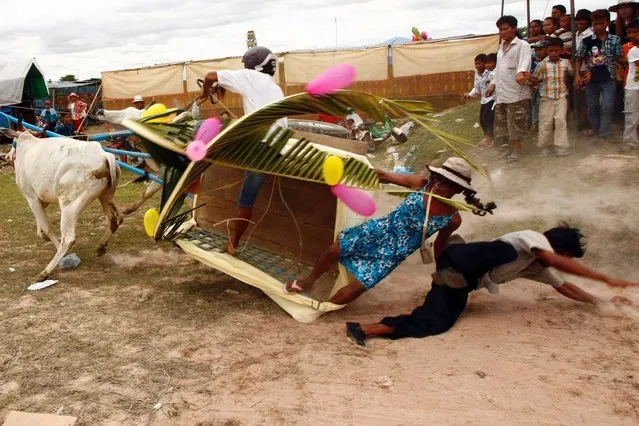
Local villagers fall onto the ground from an ox-cart as they ride to rid evil spirits from their village at Pring Ka-ek village, Cambodi. (Photo by Heng Sinith/AP Photo)
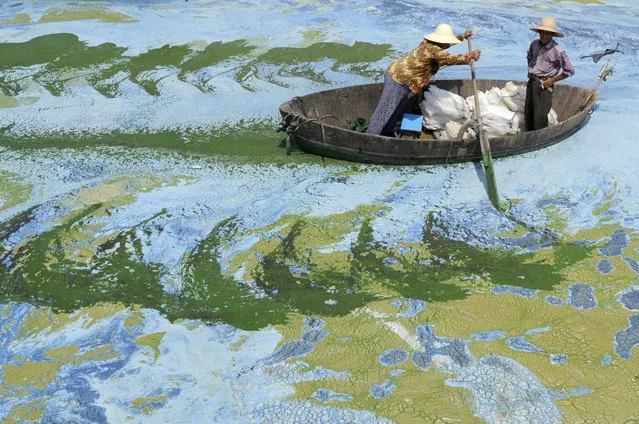
Growing cities, overuse of fertilizers and factory wastewater have degraded China's water supplies to the extent that half the nation's rivers and lakes are severely polluted. China aims to spend $850 billion to improve filthy water supplies over the next decade, but even such huge outlays may do little to reverse damage caused by decades of pollution and overuse in Beijing's push for rapid economic growth. Photo: Fishermen row a boat in the algae-filled Chaohu Lake in Hefei, Anhui province, June 19, 2009. (Photo by Jianan Yu/Reuters)
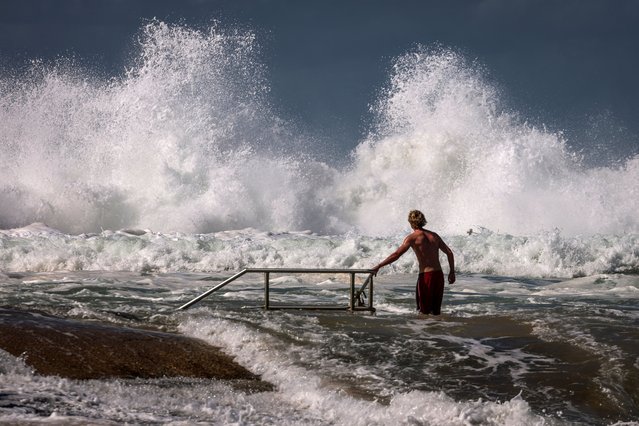
A man walks towards a wave breaking on a rock pool at North Narrabeen Beach in Sydney on April 18, 2025, as large swells hit the east coast of Australia. (Photo by David Gray/AFP Photo)