Loading...
Done
A Mercedes-Benz 300 SL “Gullwing” Coupe is displayed during an exhibition of vintage and classic cars  by Bonhams auction house at the Grand Palais during the Retromobile week in Paris, France, February 8, 2017. (Photo by Benoit Tessier/Reuters)

A Mercedes-Benz 300 SL “Gullwing” Coupe is displayed during an exhibition of vintage and classic cars by Bonhams auction house at the Grand Palais during the Retromobile week in Paris, France, February 8, 2017. (Photo by Benoit Tessier/Reuters)
Details
11 Feb 2017 00:02:00
South Korea's Lee Dae-ho is hit by a pitch off Taiwan's pitcher Pan Wei-lun during the second inning of their first round game of the World Baseball Classic at Gocheok Sky Dome in Seoul, South Korea, Thursday, March 9, 2017. (Photo by Ahn Young-joon/AP Photo)

South Korea's Lee Dae-ho is hit by a pitch off Taiwan's pitcher Pan Wei-lun during the second inning of their first round game of the World Baseball Classic at Gocheok Sky Dome in Seoul, South Korea, Thursday, March 9, 2017. (Photo by Ahn Young-joon/AP Photo)
Details
10 Mar 2017 12:04:00
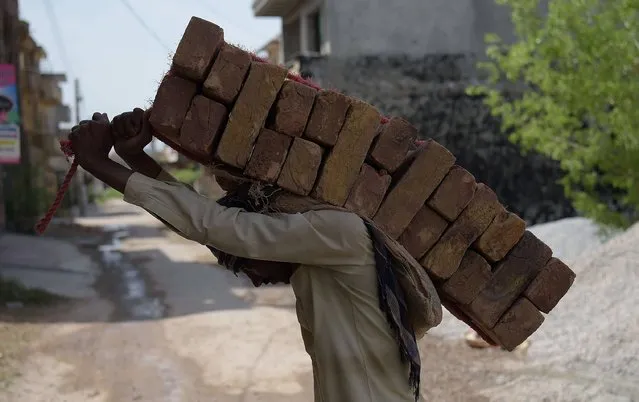
A Pakistani labourer carries bricks on his back at a construction site at a residential area in Islamabad on March 29, 2017. (Photo by Aamir Qureshi/AFP Photo)

A Pakistani labourer carries bricks on his back at a construction site at a residential area in Islamabad on March 29, 2017. (Photo by Aamir Qureshi/AFP Photo)
Details
30 Mar 2017 10:57:00
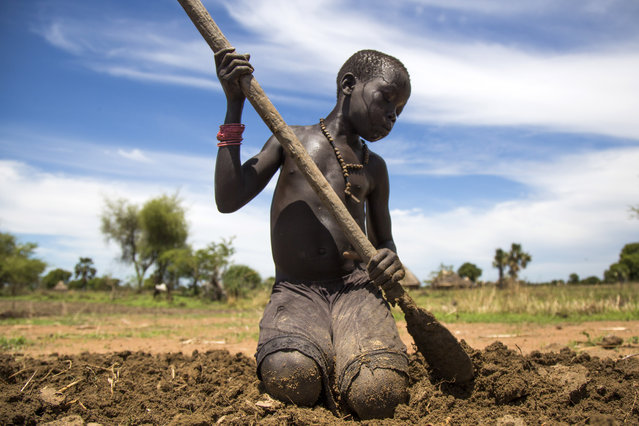
Nyibol Lual, 13 years old, helps her family to prepare the land for cultivation on May 31, 2017, in Panthau, Northern Bahr al Ghazal, South Sudan. The family has a small land where they cultivate sorghum. An estimated 63 per cent of the population in Northern Bahr al Ghazal is experiencing severe food insecurity, according to the latest Integrated Food Security Phase Classification (IPC) report. The situation is particularly bad in Aweil West and Aweil South counties, where the exhaustion of household food stocks and growing dependence on financially inaccessible markets have left the population facing Emergency levels of food insecurity. (Photo by Albert Gonzalez Farran/AFP Photo)

Nyibol Lual, 13 years old, helps her family to prepare the land for cultivation on May 31, 2017, in Panthau, Northern Bahr al Ghazal, South Sudan. The family has a small land where they cultivate sorghum. An estimated 63 per cent of the population in Northern Bahr al Ghazal is experiencing severe food insecurity, according to the latest Integrated Food Security Phase Classification (IPC) report. The situation is particularly bad in Aweil West and Aweil South counties, where the exhaustion of household food stocks and growing dependence on financially inaccessible markets have left the population facing Emergency levels of food insecurity. (Photo by Albert Gonzalez Farran/AFP Photo)
Details
01 Jun 2017 10:10:00
Staff of a boat restaurant on the Taedong River line up at the entrance as they wait to greet customers Sunday, June 18, 2017, in Pyongyang, North Korea. The boat is berthed along the river, which is the fifth longest river on the Korean Peninsula and runs through the country's capital, Pyongyang. (Photo by Wong Maye-E/AP Photo)

Staff of a boat restaurant on the Taedong River line up at the entrance as they wait to greet customers Sunday, June 18, 2017, in Pyongyang, North Korea. The boat is berthed along the river, which is the fifth longest river on the Korean Peninsula and runs through the country's capital, Pyongyang. (Photo by Wong Maye-E/AP Photo)
Details
29 Jun 2017 07:59:00
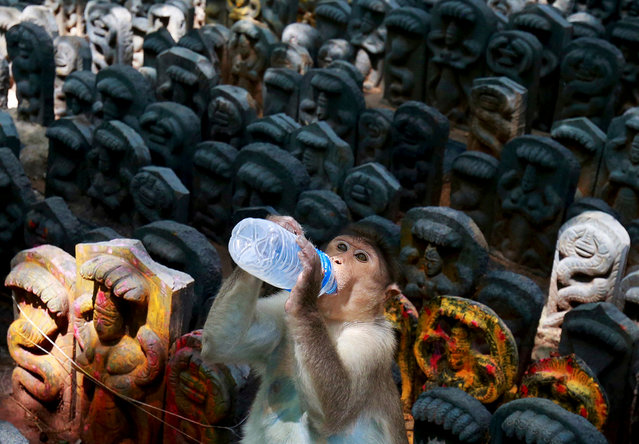
A bonnet macaque sits on consecrated idols of snakes as it drinks milk offered by a devotee during the Hindu festival of Nag Panchami, which is celebrated by worshipping snakes to honour the serpent god, inside a temple on the outskirts of Bengaluru, India, July 27, 2017. (Photo by Abhishek N. Chinnappa/Reuters)

A bonnet macaque sits on consecrated idols of snakes as it drinks milk offered by a devotee during the Hindu festival of Nag Panchami, which is celebrated by worshipping snakes to honour the serpent god, inside a temple on the outskirts of Bengaluru, India, July 27, 2017. (Photo by Abhishek N. Chinnappa/Reuters)
Details
28 Jul 2017 10:02:00
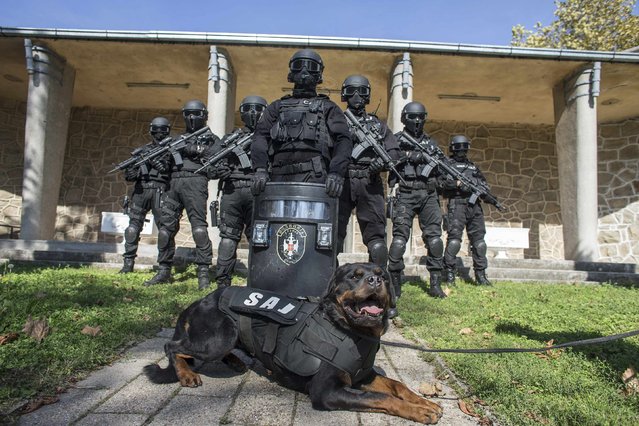
Serbian police officers of the Special Anti-Terrorist Unit pose for a picture in their base outside Belgrade October 8, 2014. (Photo by Marko Djurica/Reuters)

Serbian police officers of the Special Anti-Terrorist Unit pose for a picture in their base outside Belgrade October 8, 2014. When the killing of an unarmed black teenager by a white policeman in Ferguson, Missouri, in August sparked sometimes violent protests, the response of police in camouflage gear and armoured vehicles wielding stun grenades and assault rifles seemed more like a combat operation than a public order measure. Some U.S. police departments have recently acquired U.S. military-surplus hardware from wars abroad, but there are many law enforcers around the world whose rules of engagement also allow the use of lethal force with relatively few restrictions. But for every regulation that gives police wide scope to use firearms, there is another code that sharply limits their use. In Serbia, police may use measures ranging from batons to special vehicles, water cannon and tear gas on groups of people who have gathered illegally and are behaving in a way that is violent or could cause violence, but they may use firearms only when life is endangered. (Photo by Marko Djurica/Reuters)

Details
27 Nov 2014 14:53:00
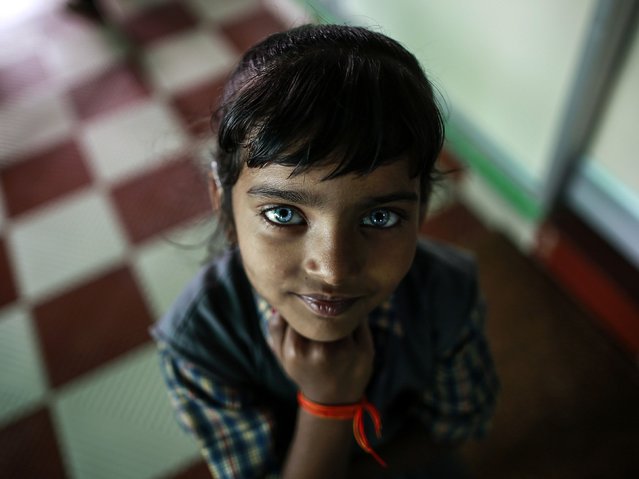
A girl who suffers from hearing and speech disorders reacts to the camera at a rehabilitation centre supported by Bhopal Medical Appeal, for children who were born with mental and physical disabilities, in Bhopal November 11, 2014.(Photo by Danish Siddiqui/Reuters)

A girl who suffers from hearing and speech disorders reacts to the camera at a rehabilitation centre supported by Bhopal Medical Appeal, for children who were born with mental and physical disabilities, in Bhopal November 11, 2014. The rehabilitation centre only treats families they believe have been affected by the Union Carbide gas leak 30 years ago. Human rights groups say that thousands of tonnes of hazardous waste remain buried underground, and the government has conceded it is contaminated. There has, however, been no long-term epidemiological research which conclusively proves that birth defects are directly related to the drinking of the contaminated water. (Photo by Danish Siddiqui/Reuters)
Details
30 Nov 2014 12:00:00