Loading...
Done
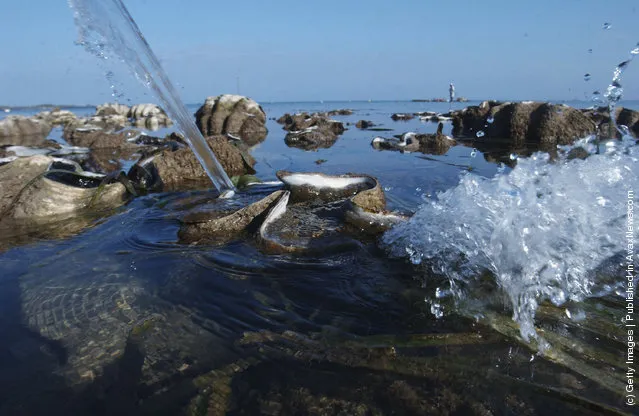
Tridacna Gigas, or Giant Clams

“The giant clam, Tridacna gigas (known as pā’ua in Cook Islands Māori), is the largest living bivalve mollusc. T. gigas is one of the most endangered clam species. It was mentioned as early as 1825 in scientific reports. One of a number of large clam species native to the shallow coral reefs of the South Pacific and Indian oceans, they can weigh more than 200 kilograms (440 lb) measure as much as 120 cm (47 in) across, and have an average lifespan in the wild of 100 years or more”. – Wikipedia

Photo: Tridacna Gigas, or Giant Clams spew water as a traditional fisherman passes by a small sanctuary on January 23, 2004 near Bolinao in the Northern Philippines. The clams, prime builders for coral reefs and providing shelter for spawning fish and other marine life, are exposed by low tides in the sanctuary. Overfishing and pollution throughout the country are not only threatening food security, but are also starting to choke one of the few working clam sanctuaries in the world. (Photo by David Greedy/Getty Images)
Details
01 Oct 2011 13:10:00
Uranjargal, a leader of the Mongolian neo-Nazi group Tsagaan Khass, stands next to a statue of Chingunjav, a Mongolian national hero, in Ulan Bator June 22, 2013. (Photo by Carlos Barria/Reuters)

Uranjargal, a leader of the Mongolian neo-Nazi group Tsagaan Khass, stands next to a statue of Chingunjav, a Mongolian national hero, in Ulan Bator June 22, 2013. The group has rebranded itself as an environmentalist organisation fighting pollution by foreign-owned mines, seeking legitimacy as it sends Swastika-wearing members to check mining permits. Over the past years, ultra-nationalist groups have expanded in the country and among those garnering attention is Tsagaan Khass, which has recently shifted its focus from activities such as attacks on women it accuses of consorting with foreign men to environmental issues, with the stated goal of protecting Mongolia from foreign mining interests. This ultra-nationalist group was founded in the 1990s and currently has 100-plus members. (Photo by Carlos Barria/Reuters)
Details
09 Jul 2013 07:23:00
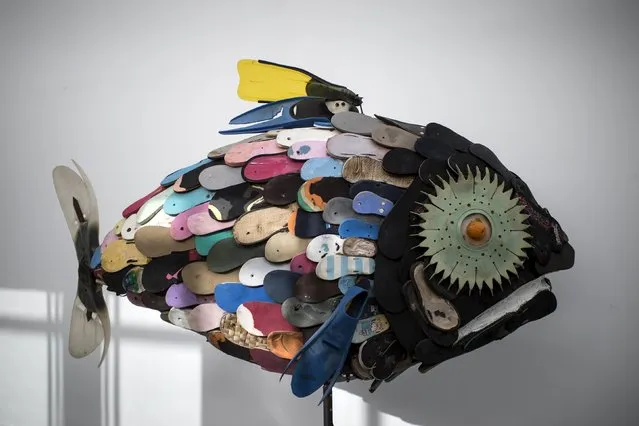
A sculpture of a fish made from waste products collected from the sea is displayed during the exhibition Keep The Oceans Clean by art collective Skeleton Sea, at the Torre Madariaga Biodiversity Centre in Busturia, Spain, May 17, 2015. (Photo by Vincent West/Reuters)

A sculpture of a fish made from waste products collected from the sea is displayed during the exhibition Keep The Oceans Clean by art collective Skeleton Sea, at the Torre Madariaga Biodiversity Centre in Busturia, Spain, May 17, 2015. Skeleton Sea, a group of surfers and artists, recycle waste collected from the world's oceans to create artworks and draw attention to the dangers faced from overfishing, pollution and oil spills. (Photo by Vincent West/Reuters)
Details
19 May 2015 11:16:00
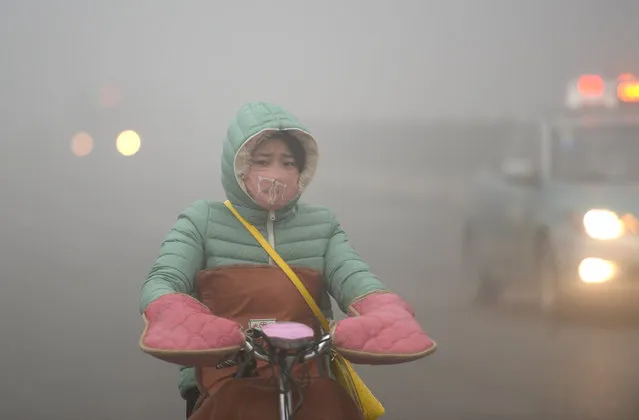
A citizen rides in smog on December 20, 2016 in Jinan, Shandong Province of China. Air quality index (AQI) readings exceeded 400 and some schools have suspended classes in Jinan. (Photo by VCG/VCG via Getty Images)

A citizen rides in smog on December 20, 2016 in Jinan, Shandong Province of China. Air quality index (AQI) readings exceeded 400 and some schools have suspended classes in Jinan. (Photo by VCG/VCG via Getty Images)
Details
21 Dec 2016 10:07:00
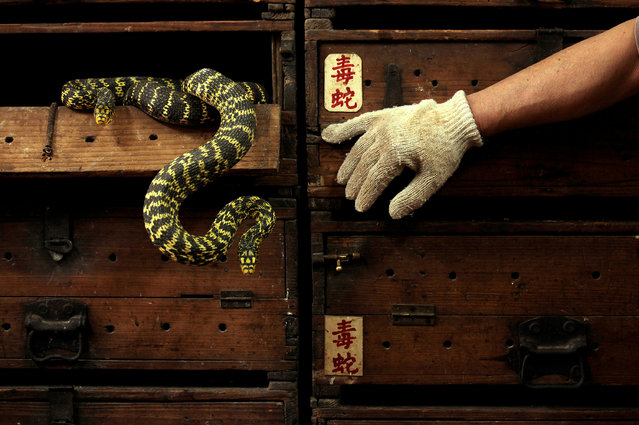
Snakes hang from a wooden cabinet marked with the Chinese characters “poisonous snake”, at a snake soup shop ahead of the Spring Festival in Hong Kong January 29, 2013. (Photo by Bobby Yip/Reuters)

Snakes hang from a wooden cabinet marked with the Chinese characters “poisonous snake”, at a snake soup shop ahead of the Spring Festival in Hong Kong January 29, 2013. (Photo by Bobby Yip/Reuters)
Details
23 Dec 2016 07:51:00
Participants wearing masks during a hazy day at the Beijing International Marathon in front of Tiananmen Square, in Beijing, October 19, 2014. (Photo by Reuters/Stringer)

Participants wearing masks during a hazy day at the Beijing International Marathon in front of Tiananmen Square, in Beijing, October 19, 2014. (Photo by Reuters/Stringer)
Details
19 Oct 2014 12:12:00
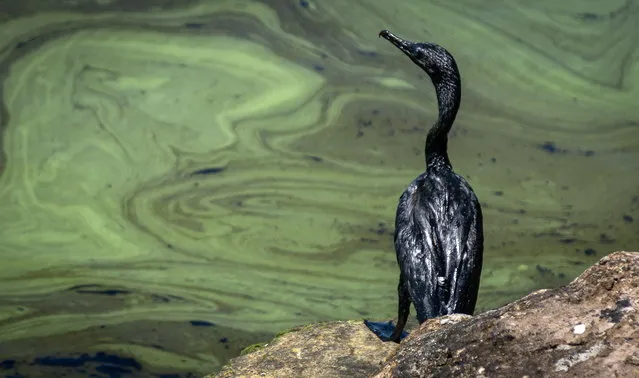
View of an oil-stained bird on the shore of a contaminated lake in Maracaibo, Venezuela on June 22, 2023. The Azul Ambientalistas foundation denounced on 22 June the “state of emergency” in which the Maracaibo Lake, the largest in Venezuela, finds itself, due to oil spills that, it assured, are affecting the lake economy and the health of the people. (Photo by Henry Chirinos/EPA)

View of an oil-stained bird on the shore of a contaminated lake in Maracaibo, Venezuela on June 22, 2023. The Azul Ambientalistas foundation denounced on 22 June the “state of emergency” in which the Maracaibo Lake, the largest in Venezuela, finds itself, due to oil spills that, it assured, are affecting the lake economy and the health of the people. (Photo by Henry Chirinos/EPA)
Details
24 Dec 2023 23:00:00
A woman walks up the steps decorated ahead of the Chinese New Year festival in Beijing, China, Thursday, January 12, 2017. The Chinese Lunar New Year is the most important holiday for Chinese and hundreds of millions are expected to return to their hometown to spend the new year with their family and relatives. (Photo by Ng Han Guan/AP Photo)

A woman walks up the steps decorated ahead of the Chinese New Year festival in Beijing, China, Thursday, January 12, 2017. The Chinese Lunar New Year is the most important holiday for Chinese and hundreds of millions are expected to return to their hometown to spend the new year with their family and relatives. (Photo by Ng Han Guan/AP Photo)
Details
14 Jan 2017 12:16:00