Loading...
Done
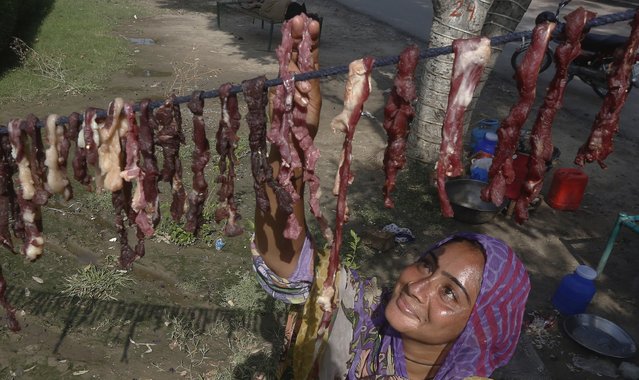
A woman hangs strips of salted meat she collected from different places during the Muslim's Eid al-Adha or Festival of Sacrifice, in Lahore, Pakistan, Sunday, August 2, 2020. Pakistanis are celebrating the Eid al-Adha, or the Feast of the Sacrifice, to mark the willingness of the Prophet Ibrahim – Abraham to Christians and Jews – to sacrifice his son. During the holiday Muslims slaughter sheep and cattle, distribute part of the meat to the poor. (Photo by K.M. Chaudary/AP Photo)

A woman hangs strips of salted meat she collected from different places during the Muslim's Eid al-Adha or Festival of Sacrifice, in Lahore, Pakistan, Sunday, August 2, 2020. Pakistanis are celebrating the Eid al-Adha, or the Feast of the Sacrifice, to mark the willingness of the Prophet Ibrahim – Abraham to Christians and Jews – to sacrifice his son. During the holiday Muslims slaughter sheep and cattle, distribute part of the meat to the poor. (Photo by K.M. Chaudary/AP Photo)
Details
28 Aug 2020 00:05:00
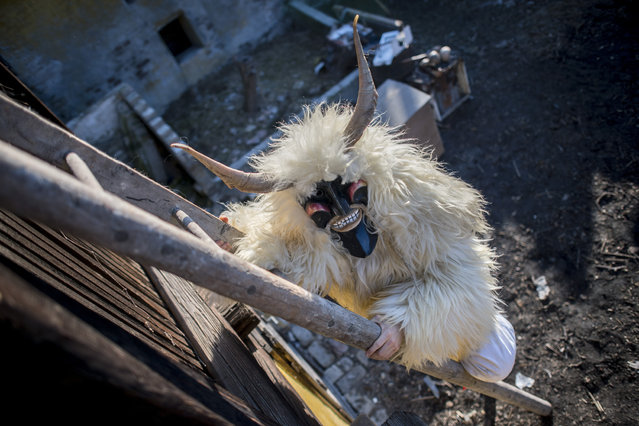
A man wears a busho mask and a costume made of sheep pelt while climbing up a ladder outside a barn in Mohacs, Hungary, 20 February 2020, on the first day of carnival. The traditional Busho carnival, which marks the end of winter, dates back to the 16th century. According to local legend, members of an ethnic South Slavic group living in Mohacs at the time dressed up in similar costumes and wore wooden masks to scare away Ottoman invaders, who mistook them for demons. (Photo by Tamas Soki/EPA/EFE)

A man wears a busho mask and a costume made of sheep pelt while climbing up a ladder outside a barn in Mohacs, Hungary, 20 February 2020, on the first day of carnival. The traditional Busho carnival, which marks the end of winter, dates back to the 16th century. According to local legend, members of an ethnic South Slavic group living in Mohacs at the time dressed up in similar costumes and wore wooden masks to scare away Ottoman invaders, who mistook them for demons. (Photo by Tamas Soki/EPA/EFE)
Details
23 Feb 2020 00:07:00
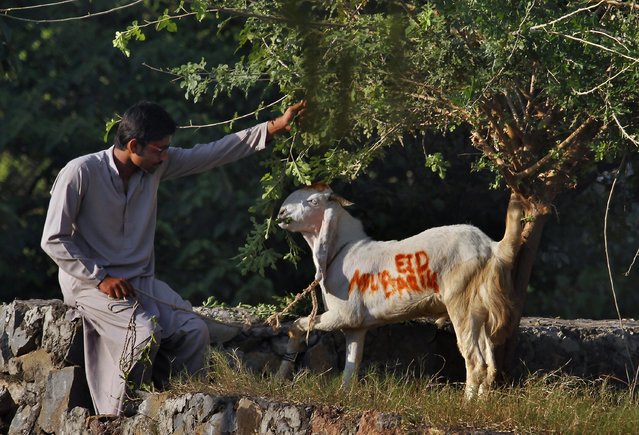
A Pakistani feeds his goat wearing the words “Eid Mubarak” or “Eid Greeting”, to be slaughtered on the Muslim holiday of Eid al-Adha, or “Feast of Sacrifice”, in Islamabad, Pakistan on Tuesday, October 15, 2013. Muslims all over the world are celebrating Eid al-Adha by sacrificing sheep, goats, cows and camels, to commemorate the Prophet Abraham's readiness to sacrifice his son, Ismail, on God's command. (Photo by Anjum Naveed/AP Photo)

A Pakistani feeds his goat wearing the words “Eid Mubarak” or “Eid Greeting”, to be slaughtered on the Muslim holiday of Eid al-Adha, or “Feast of Sacrifice”, in Islamabad, Pakistan on Tuesday, October 15, 2013. Muslims all over the world are celebrating Eid al-Adha by sacrificing sheep, goats, cows and camels, to commemorate the Prophet Abraham's readiness to sacrifice his son, Ismail, on God's command. (Photo by Anjum Naveed/AP Photo)
Details
17 Oct 2013 07:56:00
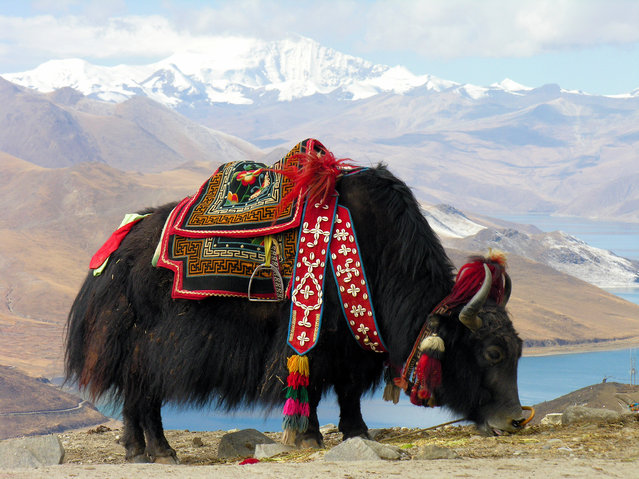
Yak near Yamdrok lake, Tibet. It is a long-haired bovinae found throughout the Himalayan region of south Central Asia, the Tibetan Plateau and as far north as Mongolia and Russia. The Tibetan economy is dominated by subsistence agriculture. Due to limited arable land, the primary occupation of the Tibetan Plateau is raising livestock, such as sheep, cattle, goats, camels, yaks, dzo, and horses. The Tibetan yak is an integral part of Tibetan life. (Photo by Dennis Jarvis)

Yak near Yamdrok lake, Tibet. It is a long-haired bovinae found throughout the Himalayan region of south Central Asia, the Tibetan Plateau and as far north as Mongolia and Russia. The Tibetan economy is dominated by subsistence agriculture. Due to limited arable land, the primary occupation of the Tibetan Plateau is raising livestock, such as sheep, cattle, goats, camels, yaks, dzo, and horses. The Tibetan yak is an integral part of Tibetan life. (Photo by Dennis Jarvis)
Details
10 Jun 2015 10:48:00
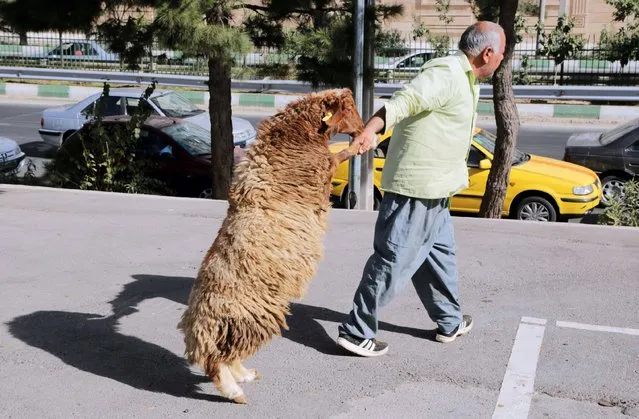
A Iranian man walks with a sheep he bought at a market in the capital Tehran on September 12, 2016, as Muslims mark the first day of the Eid al-Adha (Feast of the Sacrifice) holiday. Muslims across the world celebrate the annual festival of Eid al-Adha, or the festival of sacrifice, which marks the end of the Hajj pilgrimage to Mecca and commemorates prophet Abraham's readiness to sacrifice his son to show obedience to God. (Photo by AFP Photo/Stringer)

A Iranian man walks with a sheep he bought at a market in the capital Tehran on September 12, 2016, as Muslims mark the first day of the Eid al-Adha (Feast of the Sacrifice) holiday. Muslims across the world celebrate the annual festival of Eid al-Adha, or the festival of sacrifice, which marks the end of the Hajj pilgrimage to Mecca and commemorates prophet Abraham's readiness to sacrifice his son to show obedience to God. (Photo by AFP Photo/Stringer)
Details
13 Sep 2016 09:31:00
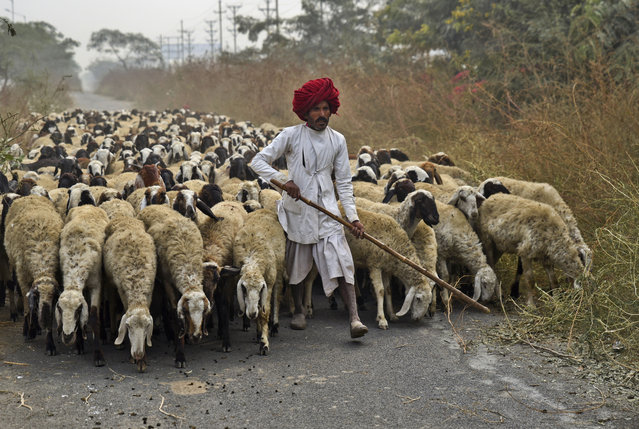
An Indian nomadic shepherd from the western Rajasthan state guides his flock of sheep through an access road in Greater Noida, outskirts of New Delhi, India, Tuesday, December 5, 2017. Looking for suitable pasture lands for grazing, shepherds migrate their flocks over extensive areas in the same state or to neighboring states in India. (Photo by R.S. Iyer/AP Photo)

An Indian nomadic shepherd from the western Rajasthan state guides his flock of sheep through an access road in Greater Noida, outskirts of New Delhi, India, Tuesday, December 5, 2017. Looking for suitable pasture lands for grazing, shepherds migrate their flocks over extensive areas in the same state or to neighboring states in India. (Photo by R.S. Iyer/AP Photo)
Details
11 Dec 2017 08:11:00
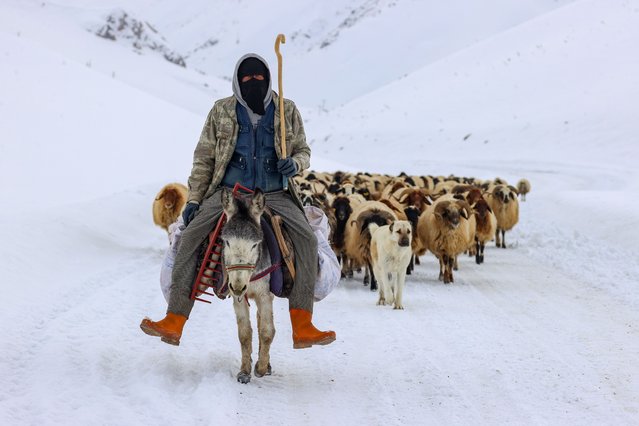
A shepherd rides a donkey as he leads sheep during winter in Van, Turkiye on February 19, 2022. Despite the terrible winter weather and the hard geology of the region, breeders in Van's Gurpnar district, where livestock is the most important source of revenue, do not disregard the care of their animals. Livestock farmers in the Cepkenli and Topcudegirmeni neighborhoods have the similar difficulties as those in rural areas, where the snow depth reaches one meter. (Photo by Ozkan Bilgin/Anadolu Agency via Getty Images)

A shepherd rides a donkey as he leads sheep during winter in Van, Turkiye on February 19, 2022. Despite the terrible winter weather and the hard geology of the region, breeders in Van's Gurpnar district, where livestock is the most important source of revenue, do not disregard the care of their animals. Livestock farmers in the Cepkenli and Topcudegirmeni neighborhoods have the similar difficulties as those in rural areas, where the snow depth reaches one meter. (Photo by Ozkan Bilgin/Anadolu Agency via Getty Images)
Details
04 Mar 2022 06:01:00
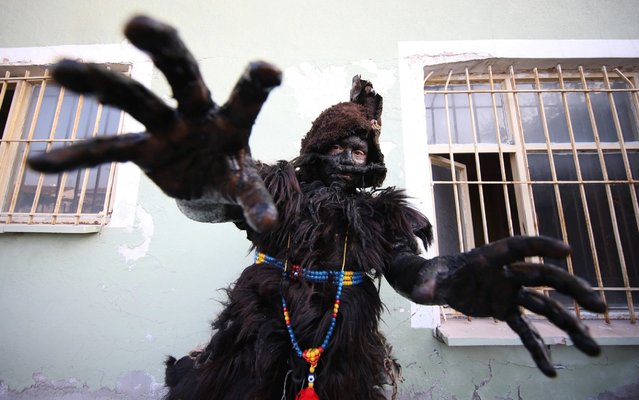
A leather worker with his frightening types of clothes prepares after painted themselves using chimney soot as they participate in a programme within the September 6 celebrations, in Balikesir, Turkey on September 06, 2019. According to the story, “Tulutabaklar” were painting themselves with ash and wearing goatskin or sheep skin to frighten the Greek soldiers occupying Balikesir during the National Struggle period. Every year on September 6, Tulutabaklar perform this ritual as part of the celebration of liberation of the city for 96 years. (Photo by Ali Atmaca/Anadolu Agency via Getty Images)

A leather worker with his frightening types of clothes prepares after painted themselves using chimney soot as they participate in a programme within the September 6 celebrations, in Balikesir, Turkey on September 06, 2019. According to the story, “Tulutabaklar” were painting themselves with ash and wearing goatskin or sheep skin to frighten the Greek soldiers occupying Balikesir during the National Struggle period. Every year on September 6, Tulutabaklar perform this ritual as part of the celebration of liberation of the city for 96 years. (Photo by Ali Atmaca/Anadolu Agency via Getty Images)
Details
09 Sep 2019 00:05:00