Loading...
Done
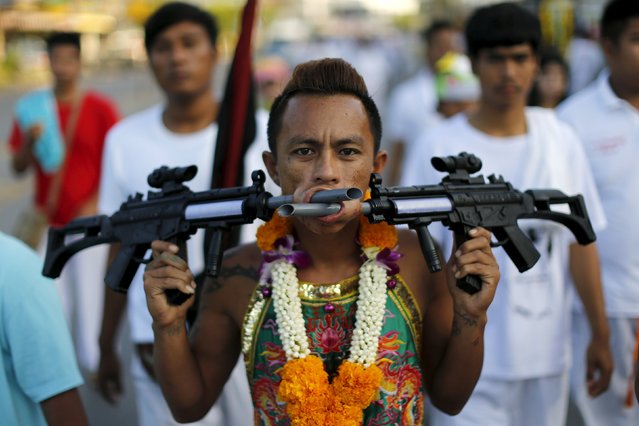
A devotee of the Chinese Ban Tha Rue shrine walks with guns pierced through his cheeks during a procession celebrating the annual vegetarian festival in Phuket, Thailand, October 17, 2015.

A devotee of the Chinese Ban Tha Rue shrine walks with guns pierced through his cheeks during a procession celebrating the annual vegetarian festival in Phuket, Thailand, October 17, 2015. The festival, featuring face-piercing, spirit mediums and strict vegetarianism celebrates the local Chinese community's belief that abstinence from meat and various stimulants during the ninth lunar month of the Chinese calendar will help them obtain good health and peace of mind. (Photo by Jorge Silva/Reuters)
Details
20 Oct 2015 08:01:00
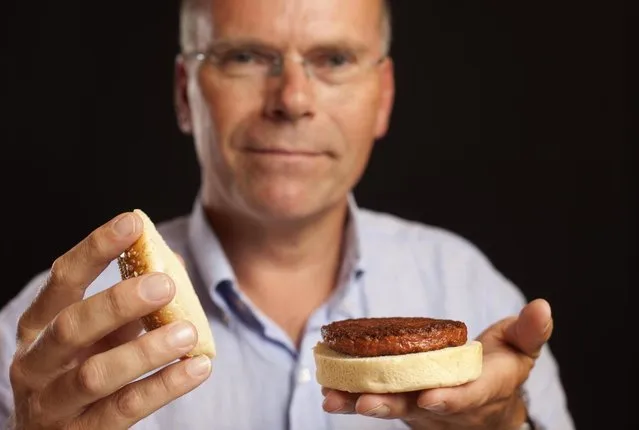
In this handout image provided by Ogilvy, a burger made from cultured beef, which has been developed by Professor Mark Post of Maastricht University in the Netherlands (pictured) is shown to the media during a press conference on August 5, 2013 in London, England. Cultured Beef could help solve the coming food crisis and combat climate change with commercial production of Cultured Beef beginning within ten to twenty years. (Photo by David Parry via Getty Images)

In this handout image provided by Ogilvy, a burger made from cultured beef, which has been developed by Professor Mark Post of Maastricht University in the Netherlands (pictured) is shown to the media during a press conference on August 5, 2013 in London, England. The in-vitro burger, cultured from cattle stem cells, the first example of what its creator says could provide an answer to global food shortages and help combat climate change, was fried in a pan and tasted by two volunteers. The burger is the result of years of research by Dutch scientist Mark Post, a vascular biologist at the University of Maastricht, who is working to show how meat grown in petri dishes might one day be a true alternative to meat from livestock.The meat in the burger has been made by knitting together around 20,000 strands of protein that has been cultured from cattle stem cells in Post's lab. (Photo by David Parry)
Details
06 Aug 2013 08:48:00
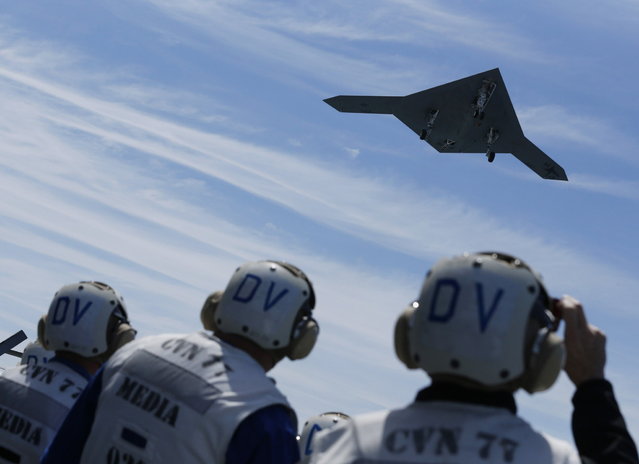
An X-47B pilot-less drone combat aircraft is launched for the first time off an aircraft carrier, the USS George H. W. Bush, in the Atlantic Ocean off the coast of Virginia, May 14, 2013. The U.S. Navy made aviation history on Tuesday by catapulting an unmanned jet off an aircraft carrier for the first time, testing a long-range, stealthy, bat-winged plane that represents a jump forward in drone technology. (Photo by Jason Reed/Reuters)

The X-47B prototype on Tuesday flew off an aircraft carrier and into the history books. Today's achievement, the first-ever catapult launch of an unmanned aircraft from the flight deck of a carrier, promises to open up a new chapter in the annals of naval aviation. Photo: An X-47B pilot-less drone combat aircraft is launched for the first time off an aircraft carrier, the USS George H. W. Bush, in the Atlantic Ocean off the coast of Virginia, May 14, 2013. The U.S. Navy made aviation history on Tuesday by catapulting an unmanned jet off an aircraft carrier for the first time, testing a long-range, stealthy, bat-winged plane that represents a jump forward in drone technology. (Photo by Jason Reed/Reuters)
Details
16 May 2013 12:39:00
Kreuzberg Vegetable Battle

A female participant armed with a bottle of ketchup attacks in the annual Vegetable Battle in Kreuzberg district near Oberbaumbruecke Bridge on August 28, 2011 in Berlin, Germany. The event pits Kreuzberg district residents againts Friedrichshain district residents for control of the Oberbaumbruecke, and the two sides pelt each other with rotten vegetables, other foods, ketchup, water guns and styrofoam bats until one side has pushed the other from the bridge. The event had originally been cancelled for today, but so many participants showed up anyway and began battling on the Kreuzberg side, where the situation escalated and began to threaten traffic, that police relented and let them later battle it out on the bridge. Kreuzberg claimed victory. (Photo by Sean Gallup/Getty Images)
Details
29 Aug 2011 15:02:00
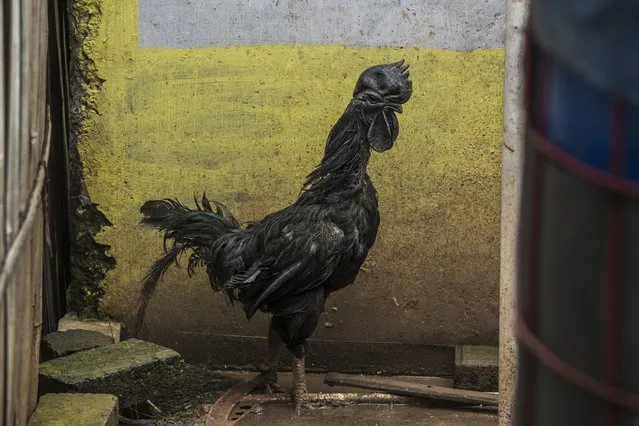
A rooster bred for its all black appearance walks through the yard of a small backyard farm on February 3, 2017 on the outskirts of Jakarta, Indonesia. (Photo by Ed Wray/Getty Images)

A rooster bred for its all black appearance walks through the yard of a small backyard farm on February 3, 2017 on the outskirts of Jakarta, Indonesia. The roosters, called Ayam Cemani, are completely black including their bones and meat and are often sold for use in rituals. (Photo by Ed Wray/Getty Images)
Details
06 Feb 2017 01:06:00
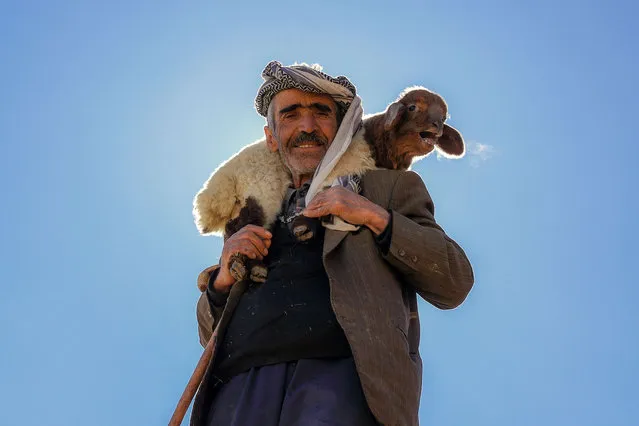
A shepherd, holding a lamb, is seen in Gurpinar district of Van, Turkiye on March 30, 2022. Norduz sheep, which are among the significant germplasm of Turkiye and therefore the number of which is aimed to be increased with the state-funded projects. Directorate of Agriculture and Forestry of Van has started work to protect the breed and increase the number of Norduz sheep, which have one more rib than regular sheep and have higher meat and milk yield. Projects are impelling to rise the number of small cattle and to protect local breeds due to the fact that Van ranks first in Turkiye in terms of small cattle. (Photo by Ozkan Bilgin/Anadolu Agency via Getty Images)

A shepherd, holding a lamb, is seen in Gurpinar district of Van, Turkiye on March 30, 2022. Norduz sheep, which are among the significant germplasm of Turkiye and therefore the number of which is aimed to be increased with the state-funded projects. Directorate of Agriculture and Forestry of Van has started work to protect the breed and increase the number of Norduz sheep, which have one more rib than regular sheep and have higher meat and milk yield. Projects are impelling to rise the number of small cattle and to protect local breeds due to the fact that Van ranks first in Turkiye in terms of small cattle. (Photo by Ozkan Bilgin/Anadolu Agency via Getty Images)
Details
09 Apr 2022 05:29:00
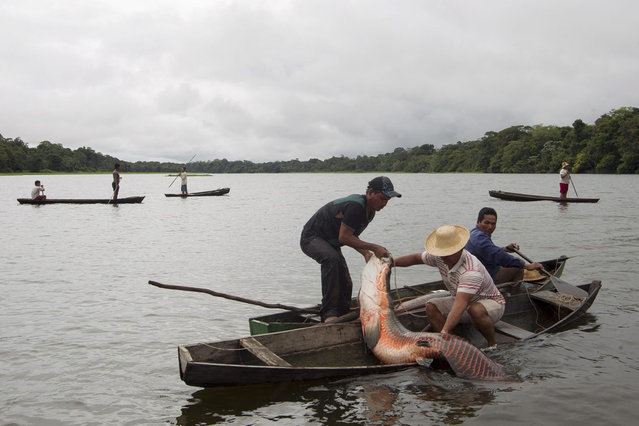
Villagers from the Porto Novo community load into their canoes arapaima or pirarucu, the largest freshwater fish species in South America and one of the largest in the world, while fishing in Poco Fundo lake along a branch of the Solimoes river, one of the main tributaries of the Amazon, in the Mamiraua nature reserve near Fonte Boa about 600 km (373 miles) west of Manaus, November 26, 2013. (Photo by Bruno Kelly/Reuters)

Villagers from the Porto Novo community load into their canoes arapaima or pirarucu, the largest freshwater fish species in South America and one of the largest in the world, while fishing in Poco Fundo lake along a branch of the Solimoes river, one of the main tributaries of the Amazon, in the Mamiraua nature reserve near Fonte Boa about 600 km (373 miles) west of Manaus, November 26, 2013. Catching the arapaima, a fish that is sought after for its meat and is considered by biologists to be a living fossil, is only allowed once a year by Brazil's environmental protection agency. The minimum size allowed for a fisherman to keep an arapaima is 1.5 meters (4.9 feet). (Photo by Bruno Kelly/Reuters)
Details
17 Dec 2013 08:03:00
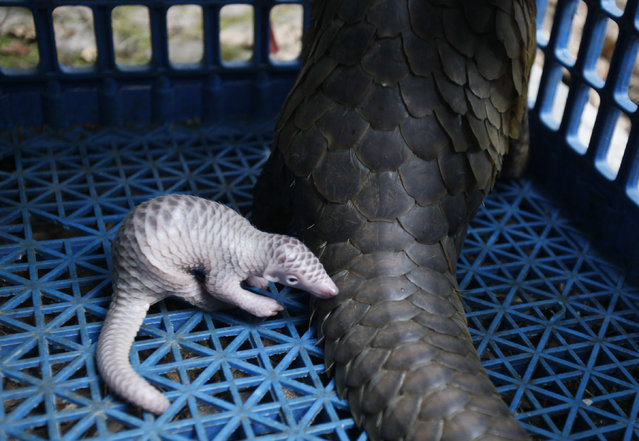
A baby pangolin sits with its mother inside a cage prior to their release into the wild in Sibolangit, North Sumatra, Indonesia, Monday, April 27, 2015. (Photo by Binsar Bakkara/AP Photo)

A baby pangolin sits with its mother inside a cage prior to their release into the wild in Sibolangit, North Sumatra, Indonesia, Monday, April 27, 2015. The anteaters are part of dozens of live pangolins and around five tons (11,000 lbs) of pangolin meat ready to be shipped abroad confiscated in a police a raid last week. (Photo by Binsar Bakkara/AP Photo)
Details
29 Apr 2015 06:16:00