Loading...
Done
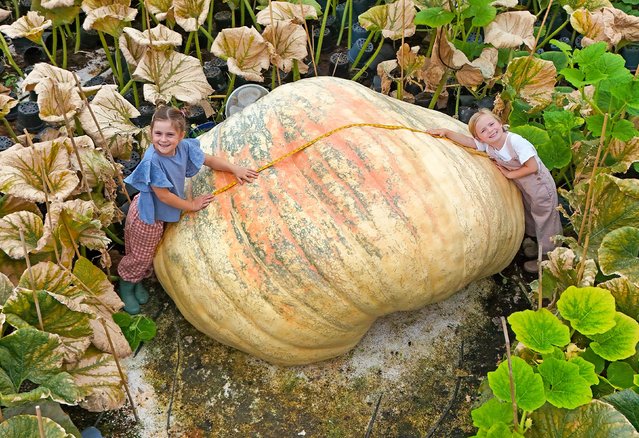
Sisters Martha Syrett, 6, left, and Etta Syrett, 4, right, measure one of Ian Paton's huge pumpkins at Pinetops Nurseries, Lymington, Hants, UK on October 5, 2025. An enormous pumpkin grown by a pair of green-fingered twins has smashed two world records – it is the heaviest and the longest pumpkin on the planet. Ian and Stuart Paton grew the pumpkin which weighed in at 2,819.8 pounds (1,278.8 kg) – the equivalent of about two bulls. (Photo by Ollie Thompson/Solent News & Photo Agency)

Sisters Martha Syrett, 6, left, and Etta Syrett, 4, right, measure one of Ian Paton's huge pumpkins at Pinetops Nurseries, Lymington, Hants, UK on October 5, 2025. An enormous pumpkin grown by a pair of green-fingered twins has smashed two world records – it is the heaviest and the longest pumpkin on the planet. Ian and Stuart Paton grew the pumpkin which weighed in at 2,819.8 pounds (1,278.8 kg) – the equivalent of about two bulls. (Photo by Ollie Thompson/Solent News & Photo Agency)
Details
04 Nov 2025 04:56:00
Maeklong Railway Market. (Photo by Trent Strohm)

“Maeklong Railway Market, located in Samut Songkhram, Thailand, around 37 miles west of Bangkok, looks like any other open-air market in Asia. HOWEVER...”. – Kaushik via Amusing Planet. Photo: Maeklong Railway Market (Photo by Trent Strohm)
Details
04 Jan 2013 16:16:00
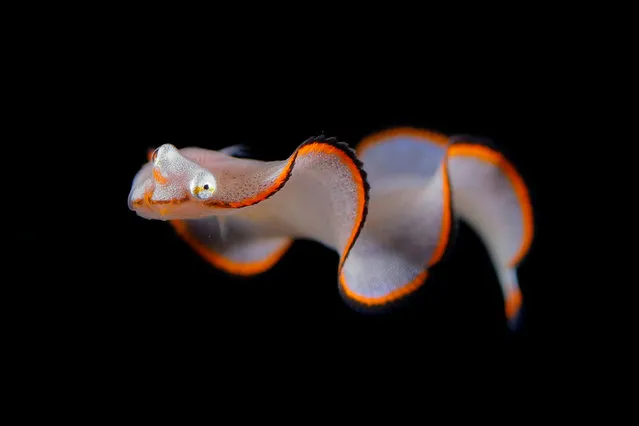
Batesian mimicry by a Soleichthys fish larva. (Photo by Ryo Minemizu/The Guardian)

Ryo Minemizu, one of Japan’s emerging stars in the field of marine life photography and the 2017 winner of the Nikkei National Geographic photography prize, captures the beauty and complexity of plankton that drift in our planet’s oceans and other bodies of water in meticulous detail. Here: Batesian mimicry by a Soleichthys fish larva. (Photo by Ryo Minemizu/The Guardian)
Details
21 Aug 2018 00:05:00
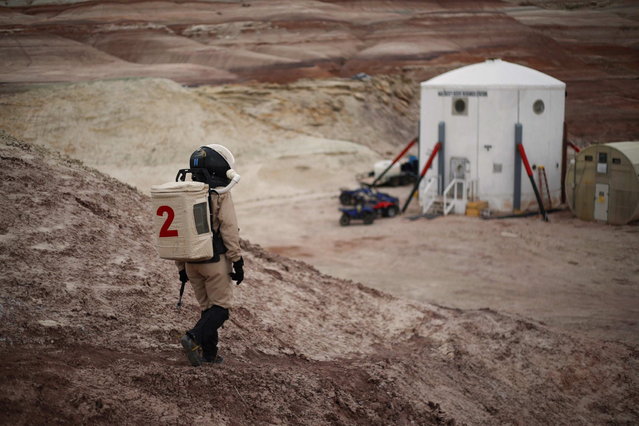
Csilla Orgel, a geologist of Crew 125 EuroMoonMars B mission, makes her way back to the Mars Desert Research Station (MDRS) in the Utah desert March 3, 2013. (Photo by Jim Urquhart/Reuters)

NASA says it could be another 20 years before humans touch down on Mars, but in a sense, the Mars Society has been exploring the red planet for more than a decade – in Utah. Photo: Csilla Orgel, a geologist of Crew 125 EuroMoonMars B mission, makes her way back to the Mars Desert Research Station (MDRS) in the Utah desert March 3, 2013. The MDRS aims to investigate the feasibility of a human exploration of Mars and uses the Utah desert's Mars-like terrain to simulate working conditions on the red planet. Scientists, students and enthusiasts work together developing field tactics and studying the terrain. All outdoor exploration is done wearing simulated spacesuits and carrying air supply packs and crews live together in a small communication base with limited amounts of electricity, food, oxygen and water. Everything needed to survive must be produced, fixed and replaced on site. (Photo by Jim Urquhart/Reuters)
Details
14 Mar 2013 12:11:00
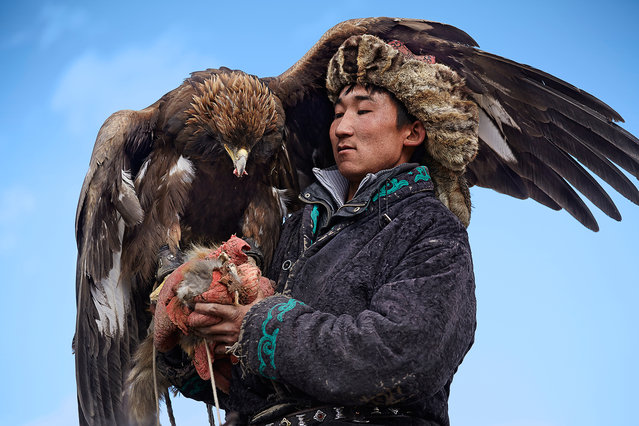
In one of the planet’s most desolate and harsh terrains, the Altai Mountains which run from Siberia in Russia down to Mongolia’s Gobi Desert, hunting with eagles is currently only practiced by a handful of Kyrgyz and Kazakhs. This form of falconry, the practice of hunting with the aid of birds of prey, can be traced back as far as 4,000 years in Central Asia. (Photo by Tariq Zaidi/The Washington Post)

In one of the planet’s most desolate and harsh terrains, the Altai Mountains which run from Siberia in Russia down to Mongolia’s Gobi Desert, hunting with eagles is currently only practiced by a handful of Kyrgyz and Kazakhs. This form of falconry, the practice of hunting with the aid of birds of prey, can be traced back as far as 4,000 years in Central Asia. Here: after a successful hunt, a proud hunter rewards his eagle by feeding it the lungs of the prey, which is considered the most highly prized part of the animal. (Photo by Tariq Zaidi/The Washington Post)
Details
22 Aug 2015 12:46:00
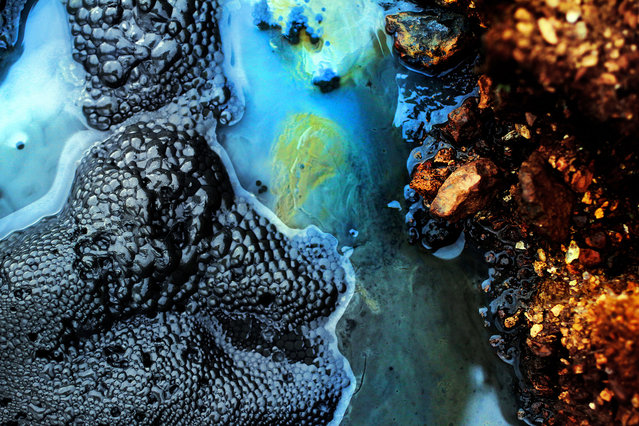
These incredible pictures look like a bird's-eye view of a faraway alien planet – but they're actually hot springs. The amazing snaps are up-close shots of Iceland's hot springs, and the point-blank pictures produce a breathtaking array of colors and effects. Here: The amazing snaps are up-close shots of Icelandic hot springs. (Photo by Johann Vilhjalmsson/Caters News)

These incredible pictures look like a bird's-eye view of a faraway alien planet – but they're actually hot springs. The amazing snaps are up-close shots of Iceland's hot springs, and the point-blank pictures produce a breathtaking array of colors and effects. Here: The amazing snaps are up-close shots of Icelandic hot springs. (Photo by Johann Vilhjalmsson/Caters News)
Details
18 Jan 2016 08:04:00
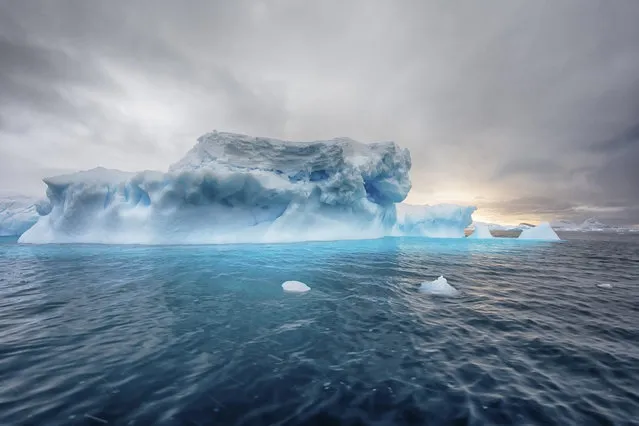
A serene turquoise glow glimmers from underneath these powerful icebergs. Stood in the middle of Antarctica, the giant icebergs appear to be from an unearthly world. These stunning photographs were captured by American photographer Michael Leggero. “My images show pure nature, as that is how I describe Antarctica, simply pure nature”, says the 43 year old, of Carthage, New York. “It is the only place on our planet that humans have not left a presence behind”. (Photo by Michael Leggero/Hotspotmedia/Visual Press Agency)

A serene turquoise glow glimmers from underneath these powerful icebergs. Stood in the middle of Antarctica, the giant icebergs appear to be from an unearthly world. These stunning photographs were captured by American photographer Michael Leggero. “My images show pure nature, as that is how I describe Antarctica, simply pure nature”, says the 43 year old, of Carthage, New York. “It is the only place on our planet that humans have not left a presence behind”. (Photo by Michael Leggero/Hotspotmedia/Visual Press Agency)
Details
07 Aug 2014 10:32:00
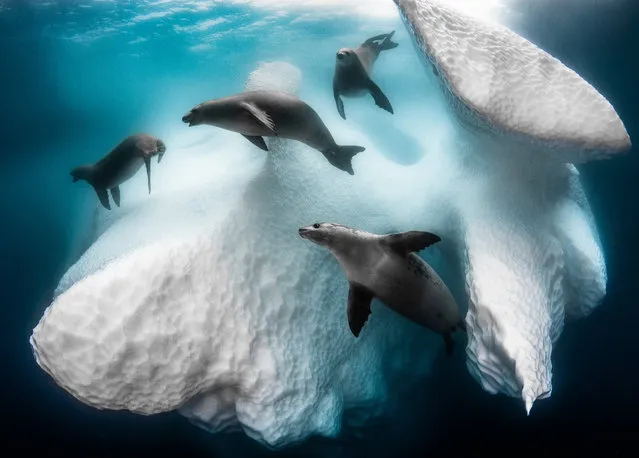
Underwater photographer of the year 2020 and wide angle category winner: Frozen Mobile Home by Greg Lecoeur (France) in the Antarctic peninsula, Antarctica. Crabeater seals swim around an iceberg. These massive and mysterious habitats are dynamic kingdoms that support marine life. As they swing and rotate slowly through polar currents, icebergs fertilise the oceans by carrying nutrients from land that spark blooms of phytoplankton, fundamental to the carbon cycle. (Photo by Greg Lecoeur/Underwater Photographer of the Year 2020)

Underwater photographer of the year 2020 and wide angle category winner: Frozen Mobile Home by Greg Lecoeur (France) in the Antarctic peninsula, Antarctica. Crabeater seals swim around an iceberg. These massive and mysterious habitats are dynamic kingdoms that support marine life. As they swing and rotate slowly through polar currents, icebergs fertilise the oceans by carrying nutrients from land that spark blooms of phytoplankton, fundamental to the carbon cycle. (Photo by Greg Lecoeur/Underwater Photographer of the Year 2020)
Details
28 Feb 2020 00:05:00