Loading...
Done
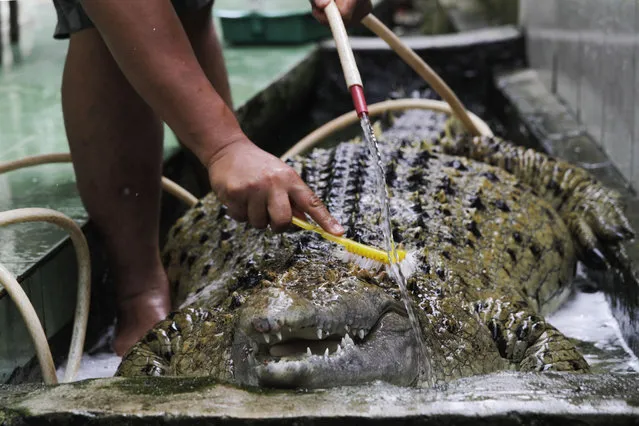
Irwan bathes a domesticated crocodile at his house in Bogor, Indonesia on January 22, 2018. Irwan found it as a baby and now it has been living with Irwans family for 20 years. Indonesia is known as a hotbed of exotic pet domestication and trade. People have been known to keep endangered animals such as slow lorises, eagles and pangolins, angering conservationists and animal rights activists. (Photo by Eko Siswono Toyudho/Anadolu Agency/Getty Images)

Irwan bathes a domesticated crocodile at his house in Bogor, Indonesia on January 22, 2018. Irwan found it as a baby and now it has been living with Irwans family for 20 years. Indonesia is known as a hotbed of exotic pet domestication and trade. People have been known to keep endangered animals such as slow lorises, eagles and pangolins, angering conservationists and animal rights activists. (Photo by Eko Siswono Toyudho/Anadolu Agency/Getty Images)
Details
28 Jan 2018 07:57:00
A model practices her walk ahead of Dakar fashion week on Goree Island in Dakar, Senegal, on December 03, 2022. The 20th anniversary of Dakar fashion week is held in a preserved colonial era fort on Goree island, which was one of Africas biggest slave trading centres during the 15th and 16th century. (Photo by John Wessels/AFP Photo)

A model practices her walk ahead of Dakar fashion week on Goree Island in Dakar, Senegal, on December 03, 2022. The 20th anniversary of Dakar fashion week is held in a preserved colonial era fort on Goree island, which was one of Africas biggest slave trading centres during the 15th and 16th century. (Photo by John Wessels/AFP Photo)
Details
15 Dec 2022 02:02:00
A worker sits as illegally harvested sandalwood confiscated by Kenya's multiagency security teams is set ablaze to curb the trade in their essential oil, which is extracted to manufacture medicines and cosmetics at the Directorate of Criminal Investigations (DCI) offices along Kiambu road in Nairobi, Kenya on February 28, 2023. (Photo by Monicah Mwangi/Reuters)

A worker sits as illegally harvested sandalwood confiscated by Kenya's multiagency security teams is set ablaze to curb the trade in their essential oil, which is extracted to manufacture medicines and cosmetics at the Directorate of Criminal Investigations (DCI) offices along Kiambu road in Nairobi, Kenya on February 28, 2023. (Photo by Monicah Mwangi/Reuters)
Details
23 Mar 2023 04:23:00
How swimming, and lots of love, saved Harper the puppy’s life

On August 31, 2011, a puppy was rescued from a garbage bag in Central Florida. She was afflicted by a condition dubbed “swimmer puppy syndrome”, formally, pectus excavatum. It's rare in puppies, but when it happens it causes them to lie flat on their chests with their legs perpetually splayed out. It's usually a symptom of serious neurological problems that most puppies cannot survive. Veterinarians recommended putting her to sleep... (Photo by Flyin Fur Pet Photography)
Details
23 Jun 2012 09:10:00
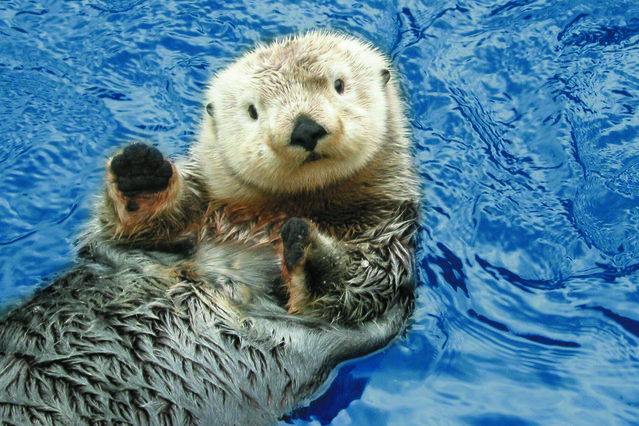
The Sea Otter

The sea otter (Enhydra lutris) is a marine mammal native to the coasts of the northern and eastern North Pacific Ocean. Adult sea otters typically weigh between 14 and 45 kg (31 and 99 lb), making them the heaviest members of the weasel family, but among the smallest marine mammals. Unlike most marine mammals, the sea otter's primary form of insulation is an exceptionally thick coat of fur, the densest in the animal kingdom. Although it can walk on land, the sea otter lives mostly in the ocean.
Details
26 Jan 2014 12:20:00
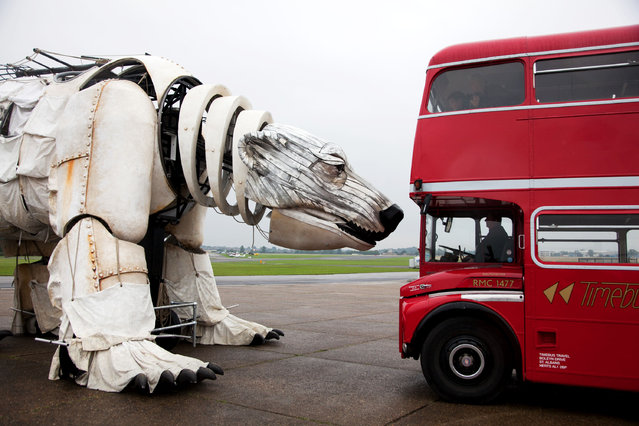
Giant Polar Bear Of London

Her name is Aurora, and she is the star of “Aurora's Parade”, the London chapter of ceride – Greenpeace’s global day of action to protest against Arctic destruction. According to DesignBoom, this giant people-powered super-puppet weighs about 3 tons and needs 15 puppeteers and 30 volunteers to operate. Aurora, described as “part protest, part performance”, has fur that includes the names of each supporter in the movement. Greenpeace hopes she will bring the voice and spirit of the Arctic to the public.
Details
13 Mar 2014 13:41:00
Arctic Hare

The arctic hare, or polar rabbit, is a species of hare which is adapted largely to polar and mountainous habitats. The arctic hare survives with a thick coat of fur and usually digs holes in the ground or under snow to keep warm and sleep. Arctic hares look like rabbits but have shorter ears, are taller when standing, and, unlike rabbits, can thrive in cold climates. They can travel together with many other hares, sometimes huddling with dozens or more, but are usually found alone, taking, in some cases, more than one partner. The arctic hare can run up to 60 kilometres per hour (40 mph). Its predators include the arctic wolf, arctic fox, and ermine.
Details
17 Mar 2014 13:56:00


Paint splattered police officers look on during clashes outside Top Shop on Oxford Street, during marches in protest at government cuts on March 26, 2011 in London, England. Thousands are taking part in the Trades Union Congress (TUC) organised march to Hyde Park where a rally will take place. Police say they are deploying 4500 officers. (Photo by Dan Kitwood/Getty Images)
Details
28 Mar 2011 08:52:00