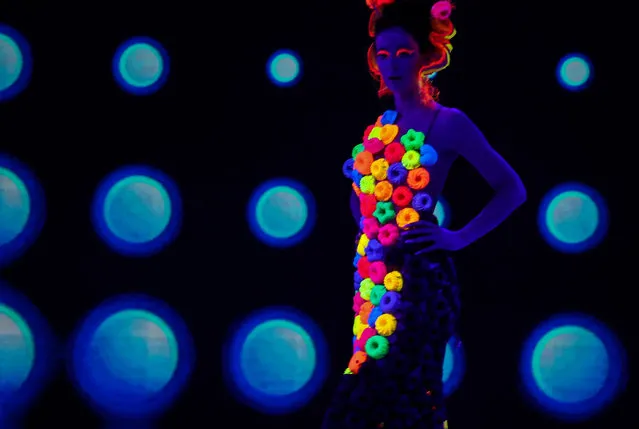
A model performs on the catwalk of the Lambertz Monday Night event at Alter Wartesaal in Cologne, Germany, 03 February 2020. (Photo by Friedemann Vogel/EPA/EFE)
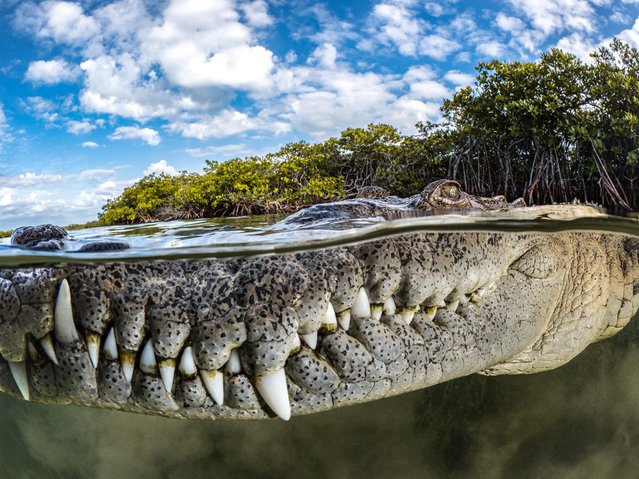
Guardian of the Mangroves – Overall Winner. Tanya Houppermans, Cuba. A curious American crocodile (Crocodylus acutus) swims right up to Tanya, at Gardens of the Queen (Jardines De La Reina), an archipelago off the coast of Cuba. It has been strictly protected since 1996, and is one of the most untouched marine ecosystems in the world. “The healthy population of American crocodiles is down to the pristine condition of the mangroves and I wanted to capture close ups of this gentle giant in its natural habitat. I hope this image can illustrate that protecting areas like this is so critical”. (Photo by Tanya Griffin Houppermans/Mangrove Photographer of the Year)
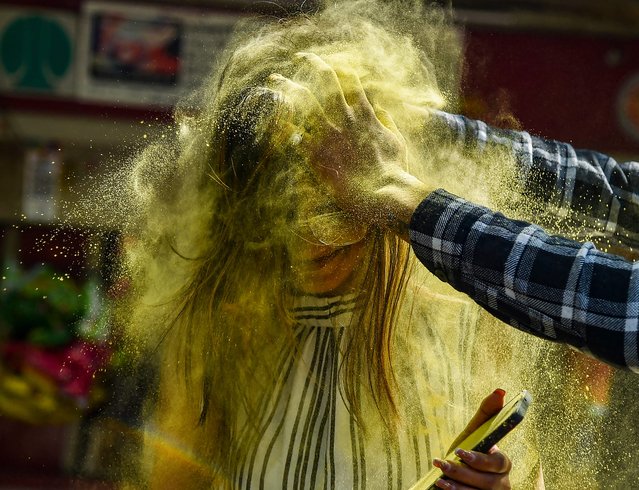
Tourists and locals apply colour dust to each other as they celebrate Holi festival in Kolkata, Eastern India, 28 March 2021. (Photo by Piyal Adhikary/EPA/EFE)
People run for cover following an explosion in Beirut's port area, Lebanon on August 4, 2020. A mega-blast tore through the harbour in the heart of the Lebanese capital with the force of an earthquake, killing more than 100 people and injuring over 4,000. (Photo by Mohamed Azakir/Reuters)
College students play with coloured powder to celebrate the festival of Holi, near Jantar Mantar in New Delhi on March 7, 2023 (Photo by Press Trust of India)
Paramedics wearing protective suits amid fears of coronavirus outbreak check on a man who collapsed outside a clinic in Jakarta, Indonesia, Thursday, March 26, 2020. It's not immediately clear what caused the man to collapse. The U.S. Embassy in Indonesia has ordered the departure of employees' family members under the age of 21 from its missions in the country where new COVID-19 patients have surged in the past week with high fatality. (Photo by Muchlis Akbar/AP Photo)
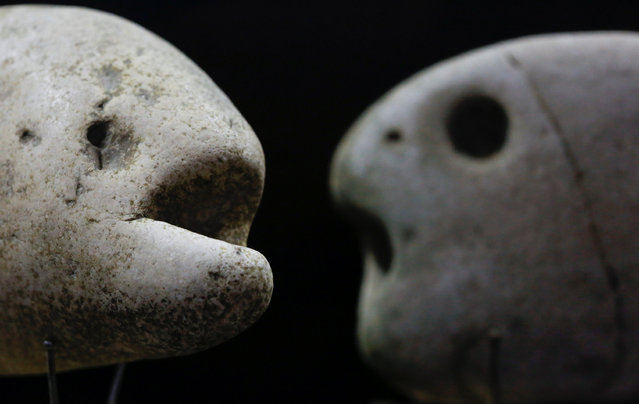
Stones collected and categorised by shape (fish) are seen at the home workshop of Luigi Lineri in Zevio, near Verona, Italy, June 10, 2016. Luigi Lineri's home workshop is covered in stones – tens of thousands of them. They resemble animal heads, human faces and other forms, and the artist and poet believes may have been shaped by prehistoric humans. (Photo by Alessandro Bianchi/Reuters)