Loading...
Done
Ghost City China Ordos

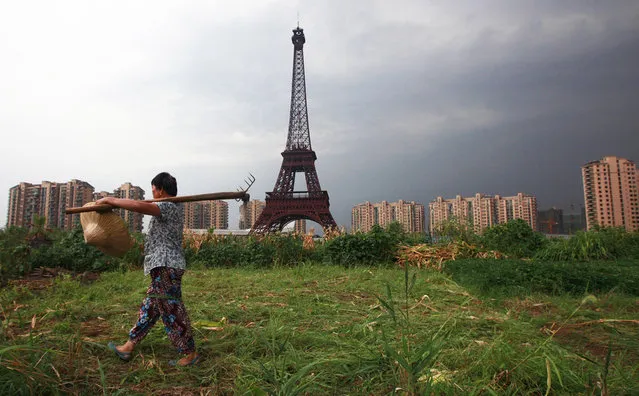
Built for over a million people, the city of Ordos was designed to be the crowning glory of Inner Mongolia. Doomed to incompletion however, this futuristic metropolis now rises empty out of the deserts of northern China. Only 2% of its buildings were ever filled; the rest has largely been left to decay, abandoned mid-construction, earning Ordos the title of China's Ghost City.
Details
06 Dec 2015 12:57:00
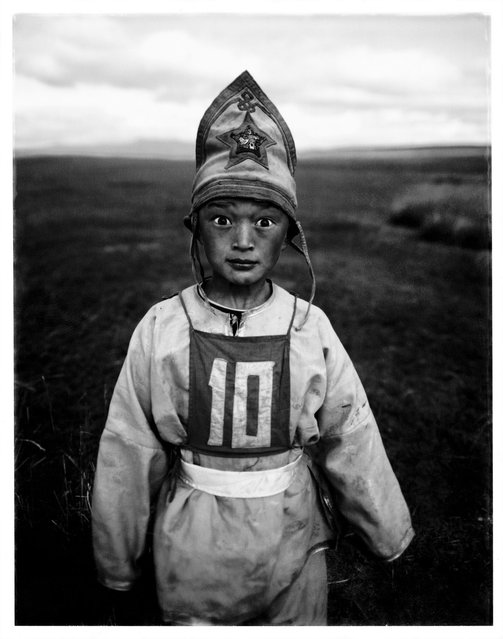
Mongolian Child Jockeys

Horse racing is part of Naadam, a festival organized every July in Mongolia to celebrate the People’s Revolution. Using children as jockeys in such races has a centuries-long tradition. Boys and girls as young as 5 (although the law imposes a minimum age limit of 7) ride in races that can be dangerous, with hundreds of horses running across the steppe at distances of 12 to 28 kilometres at great speeds. (Photo by Tomasz Gudzowaty)
Details
30 Apr 2012 11:02:00
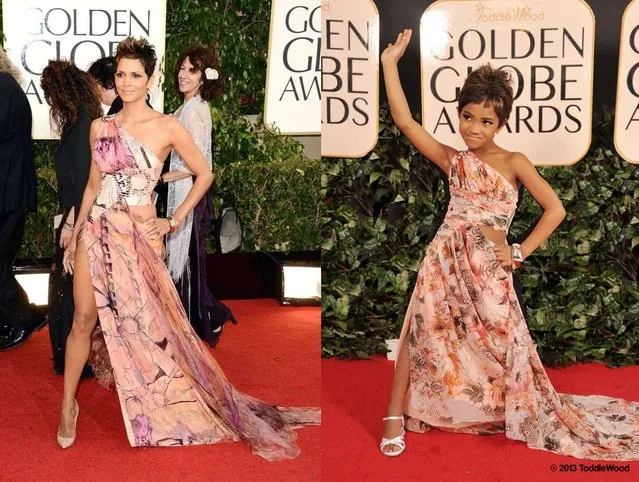
Celebrity Mini-Me’s From The Golden Globes

New York photographer Tricia Messeroux has painstakingly recreated the stars' iconic looks from this week's Golden Globes — using kids.
Details
27 Jan 2013 13:28:00


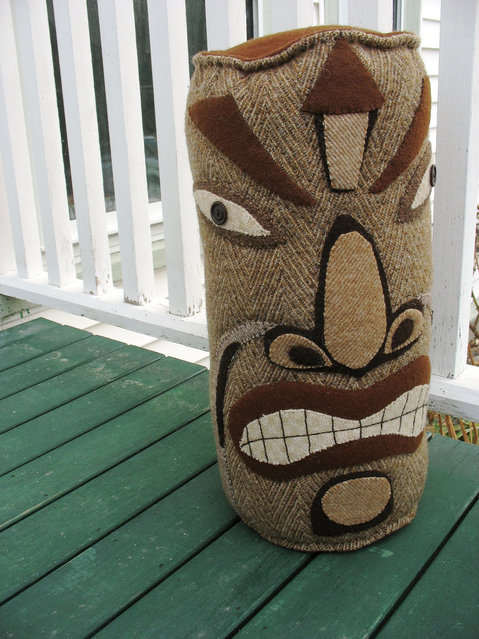
Mimi Kirchner is a Boston-based fiber artist. She live with husband in a Victorian era (1892) 2-family house. Have 3 kids who are mostly grown up and doing their own things. She graduated from Carnegie-Mellon University in 1976 with a BFA.
Details
09 May 2012 01:59:00
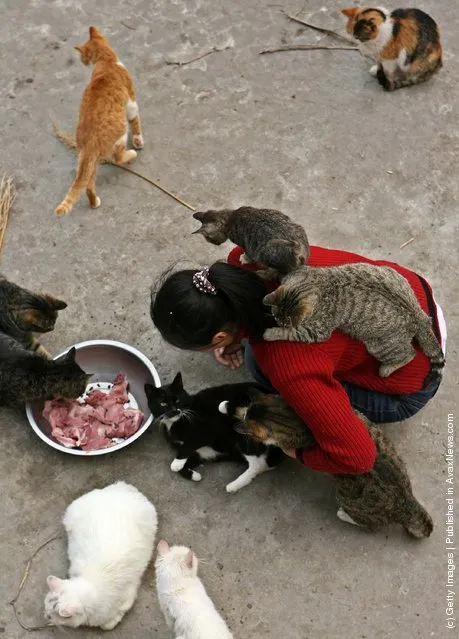
Animal Lover Duo Zirong's Family And Their Adopted Cats

Chinese woman Duo Zirong feeds stray cats at her home February 14, 2006 in Shanghai, China. Duo Zirong, a Daur ethnic minority group woman from Inner Mongolia and reported as the “Cat Woman”, has housed about 300 cats with her Shanghainese husband Liu Junluo and mother-in-law. (Photo by China Photos/Getty Images)
Details
09 Oct 2011 08:57:00
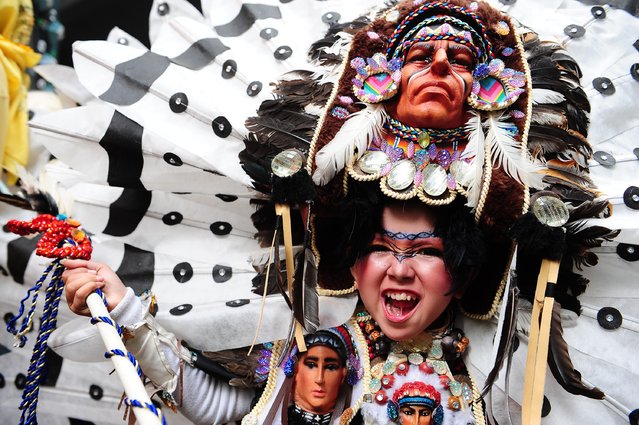
A model wears an Apache costume in the kids carnival during The 13th Jember Fashion Carnival 2014 on August 21, 2014 in Jember, Indonesia. (Photo by Robertus Pudyanto/Getty Images)

A model wears an Apache costume in the kids carnival during The 13th Jember Fashion Carnival 2014 on August 21, 2014 in Jember, Indonesia. The 13th Jember Fashion Carnival (JFC) 2014 theme is “Triangle, Dynamic in Harmony” and consists of ten parades which include Mahabharata, Tambora, Phoenix, Pine Forest, Apache, Borobudur, Flying Kite, Wild Deers, Stalagmite, and Chemistry. This street carnival is claimed to be one of the biggest in the world and comprises more than 850 performers parading along 3.6 km road used as the catwalk. (Photo by Robertus Pudyanto/Getty Images)
Details
24 Aug 2014 09:09:00
Origami By Ross Symons

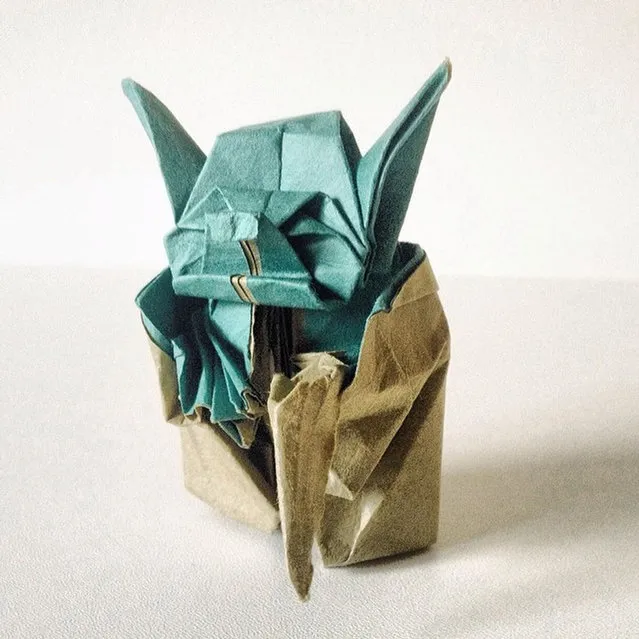
As kids we have the natural desire to explore and to create. Whenever our parents would make for us a paper plane, we would become overjoyed seeing it fly across the room. However, planes are not the only thing that can be made from paper, and not only kids are fascinated by it. Some people master the art of origami and are able to create pretty much anything. You never know what’s going to come out when the artist twists and turns a piece of paper in meticulous ways. Finally, the figurine is complete, and you immediately see the striking resemblance of this piece of paper with an animal or some other creature. Ross Symons is one of those artists. He creates his figurines simply for the joy it brings him. Maybe, he uses this as a medium to enter his childhood, or maybe he has other motifs – we will never know. (Photo by Ross Symons)
Details
31 Oct 2014 12:12:00
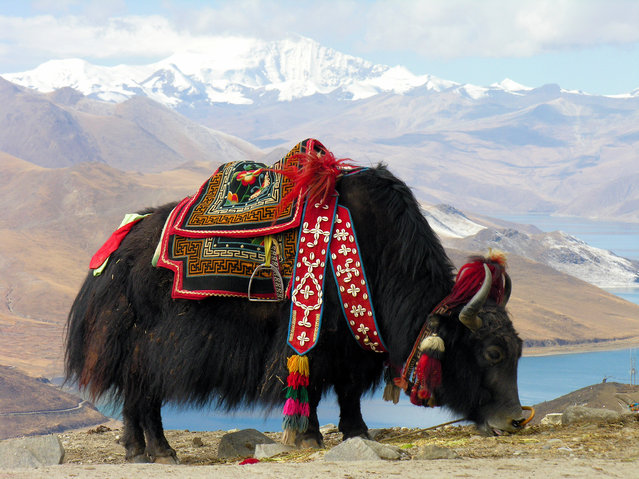
Yak near Yamdrok lake, Tibet. It is a long-haired bovinae found throughout the Himalayan region of south Central Asia, the Tibetan Plateau and as far north as Mongolia and Russia. The Tibetan economy is dominated by subsistence agriculture. Due to limited arable land, the primary occupation of the Tibetan Plateau is raising livestock, such as sheep, cattle, goats, camels, yaks, dzo, and horses. The Tibetan yak is an integral part of Tibetan life. (Photo by Dennis Jarvis)

Yak near Yamdrok lake, Tibet. It is a long-haired bovinae found throughout the Himalayan region of south Central Asia, the Tibetan Plateau and as far north as Mongolia and Russia. The Tibetan economy is dominated by subsistence agriculture. Due to limited arable land, the primary occupation of the Tibetan Plateau is raising livestock, such as sheep, cattle, goats, camels, yaks, dzo, and horses. The Tibetan yak is an integral part of Tibetan life. (Photo by Dennis Jarvis)
Details
10 Jun 2015 10:48:00