Loading...
Done
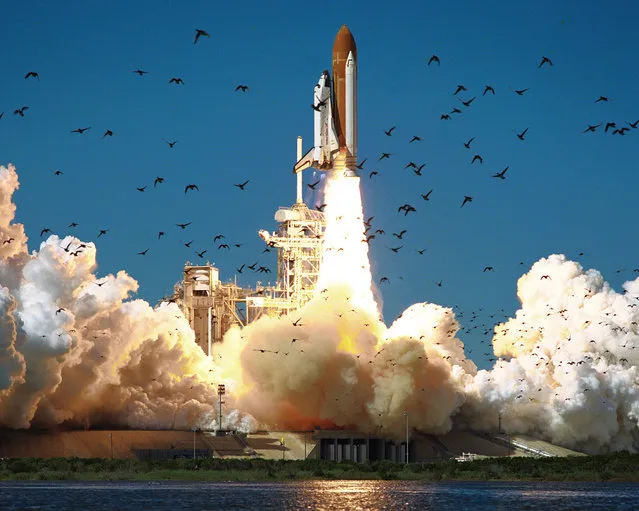
A wide-angle view shows the ascent of the shuttle Challenger on January 28, 1986. In the seconds after ignition, the rocket engines' hot blast began the process of destruction. (Photo by NASA)

A wide-angle view shows the ascent of the shuttle Challenger on January 28, 1986. In the seconds after ignition, the rocket engines' hot blast began the process of destruction. (Photo by NASA)
Details
28 Jan 2016 12:28:00
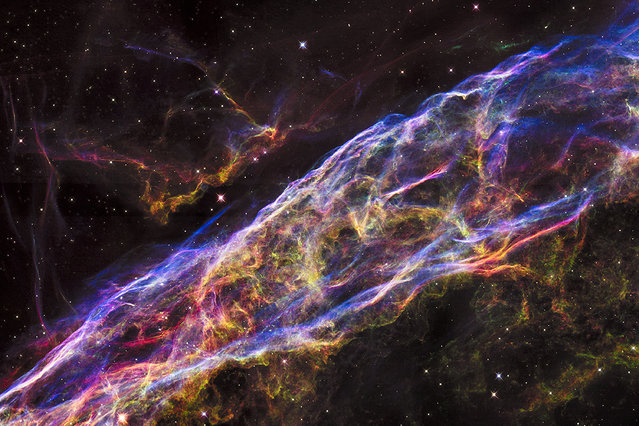
A small section of the expanding remains of the Veil Nebula, a massive star that exploded about 8,000 years ago. The entire nebula is 110 light-years across, covering six full moons on the sky as seen from Earth, and resides about 2,100 light-years away in the constellation Cygnus, the Swan. Image taken by NASA's Hubble Space Telescope. Released September 24, 2015. (Photo by Reuters/NASA/ESA/Hubble Heritage Team)

A small section of the expanding remains of the Veil Nebula, a massive star that exploded about 8,000 years ago. The entire nebula is 110 light-years across, covering six full moons on the sky as seen from Earth, and resides about 2,100 light-years away in the constellation Cygnus, the Swan. Image taken by NASA's Hubble Space Telescope. Released September 24, 2015. (Photo by Reuters/NASA/ESA/Hubble Heritage Team)
Details
10 Dec 2015 08:01:00
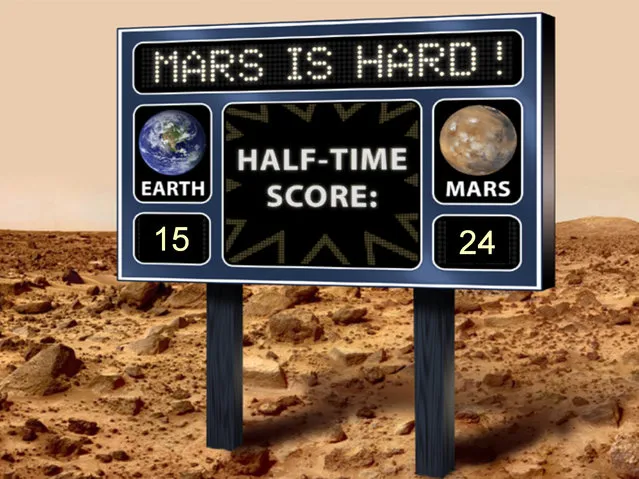
This artist's scoreboard displays a fictional game between Mars and Earth, with Mars in the lead. (Image by NASA/JPL-Caltech)

This artist's scoreboard displays a fictional game between Mars and Earth, with Mars in the lead. It refers to the success rate of sending missions to Mars, both as orbiters and landers. Of the previous 39 missions targeted for Mars from around the world, 15 have been successes and 24 failures. For baseball fans, that's a batting average of .385. The United States has had 13 successes out of 18 attempts, or a “batting average” of .722. NASA's Curiosity rover, set to land on the Red Planet the evening of Aug. 5, 2012 PDT (morning of Aug. 6 EDT), will mark the United States' 19th attempt to tackle the challenge of Mars, and the world's 40th attempt. (Image by NASA/JPL-Caltech)
Details
06 Aug 2012 09:47:00


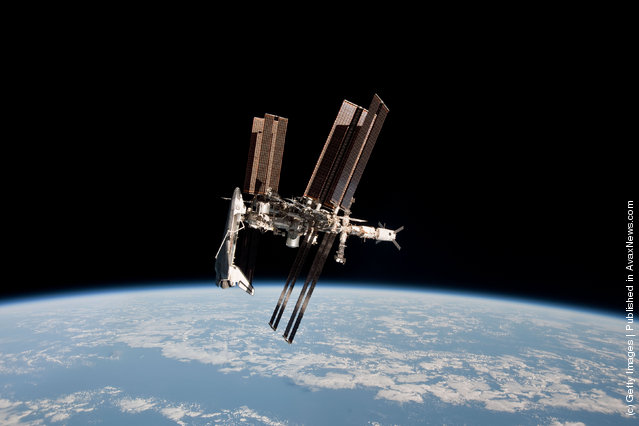
In this handout image provided by the European Space Agency (ESA) and NASA, the International Space Station and the docked space shuttle Endeavour orbit Earth during Endeavour's final sortie on May 23, 2011 in Space. Italian astronaut Paolo Nespoli captured the first-ever images of an orbiter docked to the International Space Station from the viewpoint of a departing vessel as he returned to Earth in a Soyuz capsule. (Photo by Paolo Nespoli - ESA/NASA via Getty Images)
Details
09 Jun 2011 11:28:00
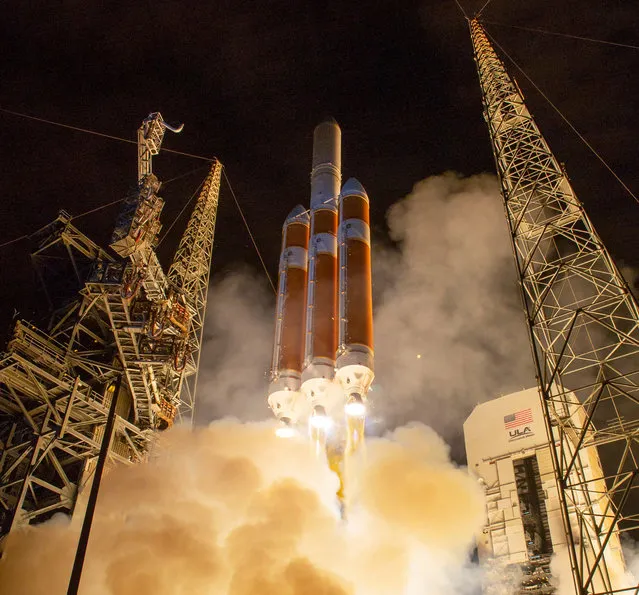
A handout photo made available by the NASA shows the United Launch Alliance Delta IV Heavy rocket launches NASA's Parker Solar Probe to touch the Sun, from Launch Complex 37 at Cape Canaveral Air Force Station, Florida, USA, 12 August 2018. Parker Solar Probe is humanity’s first-ever mission into a part of the Sun’s atmosphere called the corona. Here it will directly explore solar processes that are key to understanding and forecasting space weather events that can impact life on Earth. (Photo by Bill Ingalls/EPA-EFE/NASA)

A handout photo made available by the NASA shows the United Launch Alliance Delta IV Heavy rocket launches NASA's Parker Solar Probe to touch the Sun, from Launch Complex 37 at Cape Canaveral Air Force Station, Florida, USA, 12 August 2018. Parker Solar Probe is humanity’s first-ever mission into a part of the Sun’s atmosphere called the corona. Here it will directly explore solar processes that are key to understanding and forecasting space weather events that can impact life on Earth. (Photo by Bill Ingalls/EPA-EFE/NASA)
Details
13 Aug 2018 07:26:00
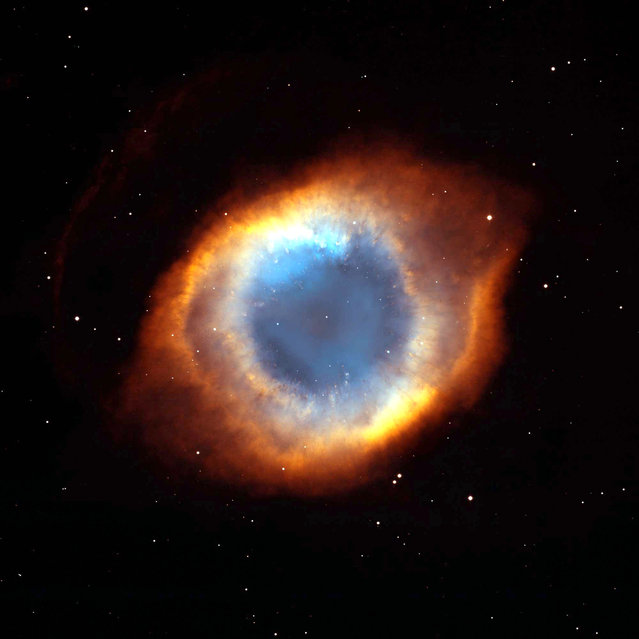
A coil-shaped Helix Nebula showing a fine web of filamentary “bicycle-spoke” features embedded in the colorful red and blue ring of gas. At 650 light-years away, the Helix is one of the nearest planetary nebulae to Earth. A planetary nebula is the glowing gas around a dying, Sun-like star. (Photo by Reuters/NASA)

A coil-shaped Helix Nebula showing a fine web of filamentary “bicycle-spoke” features embedded in the colorful red and blue ring of gas. At 650 light-years away, the Helix is one of the nearest planetary nebulae to Earth. A planetary nebula is the glowing gas around a dying, Sun-like star. (Photo by Reuters/NASA)
Details
22 Oct 2014 14:01:00
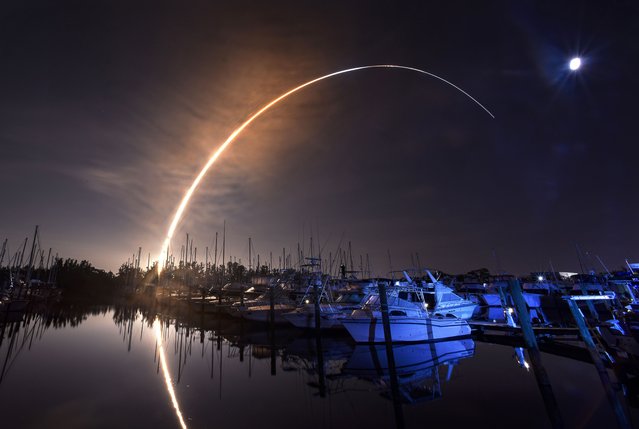
NASA's new moon rocket lifts off from the Kennedy Space Center in Cape Canaveral, Wednesday morning, November 16, 2022, as seen from Harbor town Marina on Merritt Island, Fla. The moon is visible in the sky. (Photo by Malcolm Denemark/Florida Today via AP Photo)

NASA's new moon rocket lifts off from the Kennedy Space Center in Cape Canaveral, Wednesday morning, November 16, 2022, as seen from Harbor town Marina on Merritt Island, Fla. The moon is visible in the sky. (Photo by Malcolm Denemark/Florida Today via AP Photo)
Details
23 Nov 2022 04:21:00

The most intrepid mountaineers haven't seen Mt. Everest quite like this. To showcase the majestic mountain, David Breashears of GlacierWorks has created a massive, zoomable image called a "gigapan," consisting of over one billion pixels
Details
26 Dec 2012 13:38:00