Loading...
Done
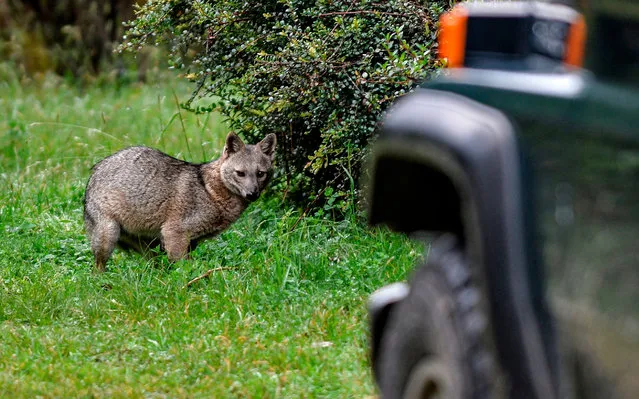
A crab-eating fox (Cerdocyon thous), also known as the forest fox, wood fox, or maikong, is seen in the wild in the municipality of Guasca, some 50 km from Bogota, on May 16, 2020. (Photo by Diana Sánchez/AFP Photo)

A crab-eating fox (Cerdocyon thous), also known as the forest fox, wood fox, or maikong, is seen in the wild in the municipality of Guasca, some 50 km from Bogota, on May 16, 2020. (Photo by Diana Sánchez/AFP Photo)
Details
03 Jun 2020 00:03:00


Retired 90 year old Frank Foss of St. Petersburg, Florida, with his home made banjo, made from a frying pan, a length of wood and some strings. (Photo by Fox Photos/Getty Images). 2nd July 1972
Details
10 Jul 2011 09:45:00
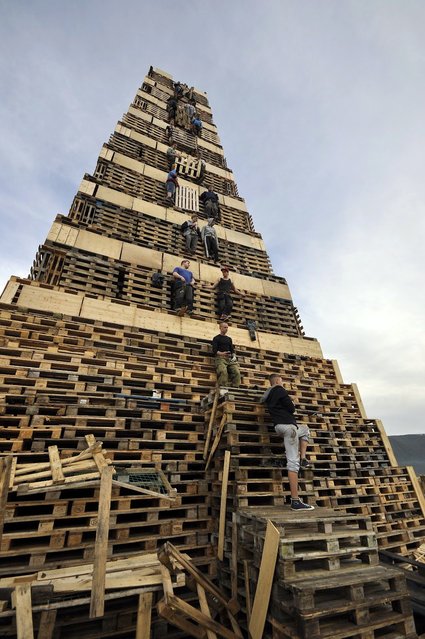
The Biggest Bonfire in the World: Slinningsbålet. Alesund, Norway. (Photo by Trond Folkestad Fredriksen)

“To see the world’s biggest bonfire you’ll have to visit Alesund, Norway, where wood pallets are stacked over 40 meters (131 ft) high on an artificial island”. (Photo by Trond Folkestad Fredriksen)
Details
11 Jan 2013 11:42:00
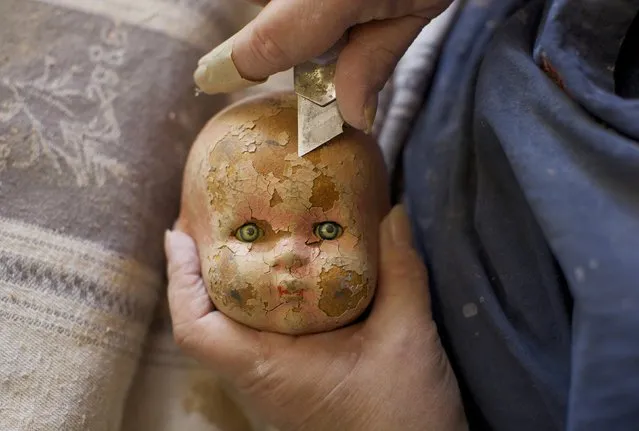
A badly-weathered composition doll, made from compressed wood chip, has its flakey paint cut off before being repaired and repainted by Gail Grainger, a 14-year veteran doll repairer at Sydney's Doll Hospital, August 19, 2014. (Photo by Jason Reed/Reuters)

A badly-weathered composition doll, made from compressed wood chip, has its flakey paint cut off before being repaired and repainted by Gail Grainger, a 14-year veteran doll repairer at Sydney's Doll Hospital, August 19, 2014. Opened in 1913, Sydney's Doll Hospital has worked on millions of dolls, teddy bears and other toys. Behind a toy shop on a busy suburban street in Sydney's south, “doll surgeons” transplant fingers, toes and heads, and repair broken eye sockets in dolls who were the victim of a childhood tantrum or sibling rivalry, sometimes decades ago. (Photo by Jason Reed/Reuters)

Details
26 Aug 2014 10:45:00
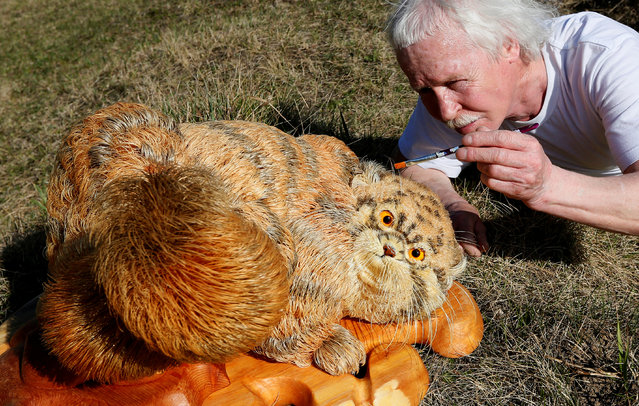
Sergei Bobkov, 59, paints Siberian cedar nut oil onto a life-size sculpture of Pallas's Cat, also known in Russia as Manul Cat, which he made from Siberian cedar wood shavings using more than 700 thousand pieces over four years, in the village of Kozhany, southwest of the Siberian city of Krasnoyarsk, Russia, April 28, 2017. (Photo by Ilya Naymushin/Reuters)

Sergei Bobkov, 59, paints Siberian cedar nut oil onto a life-size sculpture of Pallas's Cat, also known in Russia as Manul Cat, which he made from Siberian cedar wood shavings using more than 700 thousand pieces over four years, in the village of Kozhany, southwest of the Siberian city of Krasnoyarsk, Russia, April 28, 2017. (Photo by Ilya Naymushin/Reuters)
Details
29 Apr 2017 09:20:00
Sunrise over a moor viewed from Littaford Tor, Dartmoor, UK, 2016. Autumn visits the windswept moors and granite tors of Dartmoor earlier than the rest of the south-west. While there aren’t many trees here, autumn shades appear in golden ferns and tan heather. Littaford Tors, near Two Bridges and a mile from Princetown, is a short walk and can be combined with a visit to the adjacent Wistman’s Wood. (Photo by Stuart Holmes)

Sunrise over a moor viewed from Littaford Tor, Dartmoor, UK, 2016. Autumn visits the windswept moors and granite tors of Dartmoor earlier than the rest of the south-west. While there aren’t many trees here, autumn shades appear in golden ferns and tan heather. Littaford Tors, near Two Bridges and a mile from Princetown, is a short walk and can be combined with a visit to the adjacent Wistman’s Wood. (Photo by Stuart Holmes)
Details
03 Nov 2016 13:02:00
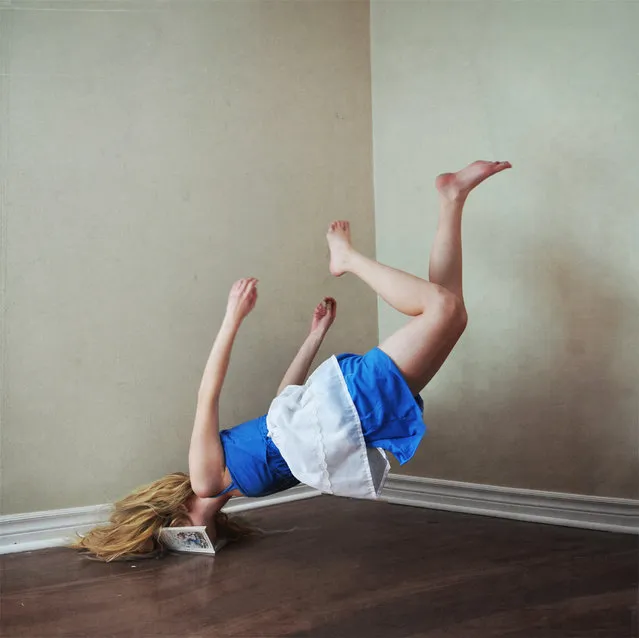
Get Back in Your Book By Lissy Elle

Lissy Elle is a Canadian photographer who creates mysterious and dreamy images through the use of props and photo manipulation. Full of woods, classic tales references, giant teacups and girls defying gravity, her work is both engaging and disturbing, it transports us to an oniric world, or is it a nightmare?
Details
19 Apr 2014 15:44:00
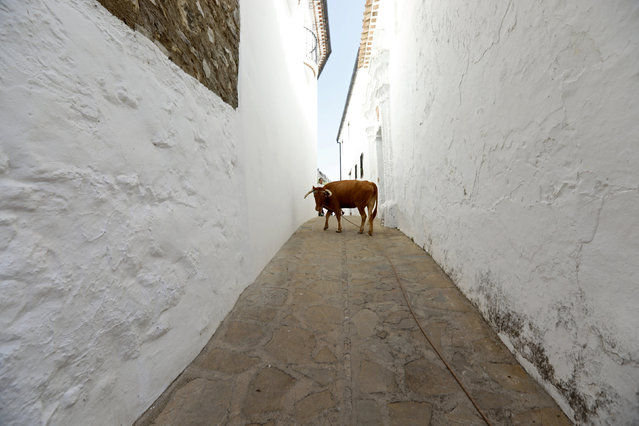
A heifer, tied with a rope, turns during “Toro de Cuerda” in the white village of Villaluenga del Rosario, southern Spain September 3, 2016. Dazzling clusters of cube-shaped houses perched on top of Andalusia's olive tree-studded mountains, the “Pueblos Blancos”, or white villages, of southern Spain are named for the lime wash the buildings are painted with to keep the interiors cool. The labyrinths of narrow alleyways are a throwback to when this region was known as Al-Andalus and was part of a medieval Muslim territory. While this region is stunningly beautiful and a big draw to tourists visiting the south of Spain, it is also one of the poorest areas in the country and has one of the highest unemployment rates in the European Union. (Photo by Marcelo del Pozo/Reuters)

A heifer, tied with a rope, turns during “Toro de Cuerda” in the white village of Villaluenga del Rosario, southern Spain September 3, 2016. Dazzling clusters of cube-shaped houses perched on top of Andalusia's olive tree-studded mountains, the “Pueblos Blancos”, or white villages, of southern Spain are named for the lime wash the buildings are painted with to keep the interiors cool. The labyrinths of narrow alleyways are a throwback to when this region was known as Al-Andalus and was part of a medieval Muslim territory. While this region is stunningly beautiful and a big draw to tourists visiting the south of Spain, it is also one of the poorest areas in the country and has one of the highest unemployment rates in the European Union. (Photo by Marcelo del Pozo/Reuters)
Details
20 Oct 2016 11:09:00