Loading...
Done
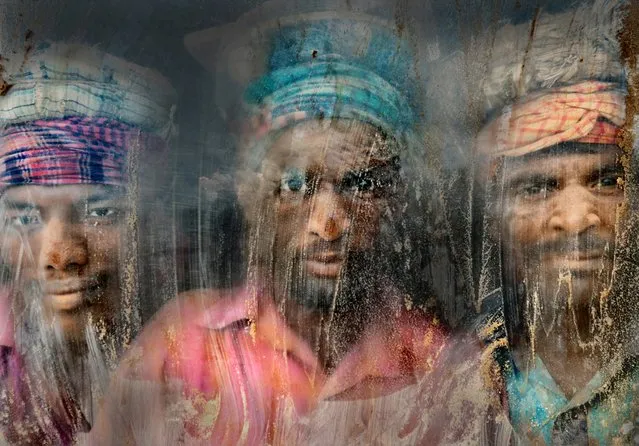
Gravel Workmen of Chittagong, Bangladesh, by Faisal Azim. Gravel workmen look through a glass window at a gravel-crushing yard in Chittagong. Full of dust and sand, it is an extremely unhealthy environment for working, but still hundreds of people work here for their livelihoods. (Photo by Faisal Azim/2016 Atkins CIWEM Environmental Photographer of the Year)

From Tibetan monks playing basket ball with ice thawing high up in the Himalayas, to the pollution that hides behind the Taj Mahal, here’s pick from 60 exceptional environmental photographs, by photographers and filmmakers from 70 countries, that will go on show at the Royal Geographical Society in London from 29 June to 21 August. The winners will be announced on 28 June. Here: Gravel Workmen of Chittagong, Bangladesh, by Faisal Azim. Gravel workmen look through a glass window at a gravel-crushing yard in Chittagong. Full of dust and sand, it is an extremely unhealthy environment for working, but still hundreds of people work here for their livelihoods. (Photo by Faisal Azim/2016 Atkins CIWEM Environmental Photographer of the Year)
Details
01 Jun 2016 12:25:00
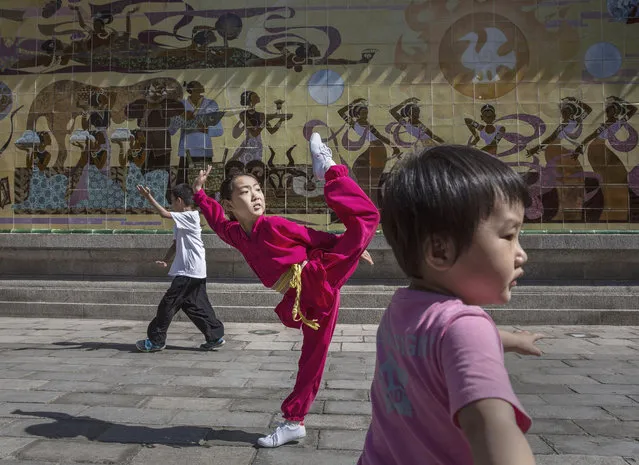
A young Chinese girl kicks during a kung-fu class at Ritan Park on June 11, 2016 in Beijing, China. Ritan, meaning “sun altar”, is among the oldest parks in Beijing, built in the early 1500s during the Ming dynasty for the emperor to make sacrifices to the sun. Less than half a kilometer square, Ritan these days is considered an oasis of green space in a sprawling city of skyscrapers, notorious air pollution, and a population of over 20 million people. Most Chinese live in small apartments with no access to gardens, leaving parks as a welcome haven for people, especially the elderly, to exercise, socialize, or enjoy a degree of privacy. (Photo by Kevin Frayer/Getty Images)

A young Chinese girl kicks during a kung-fu class at Ritan Park on June 11, 2016 in Beijing, China. Ritan, meaning “sun altar”, is among the oldest parks in Beijing, built in the early 1500s during the Ming dynasty for the emperor to make sacrifices to the sun. (Photo by Kevin Frayer/Getty Images)
Details
14 Jun 2016 13:01:00
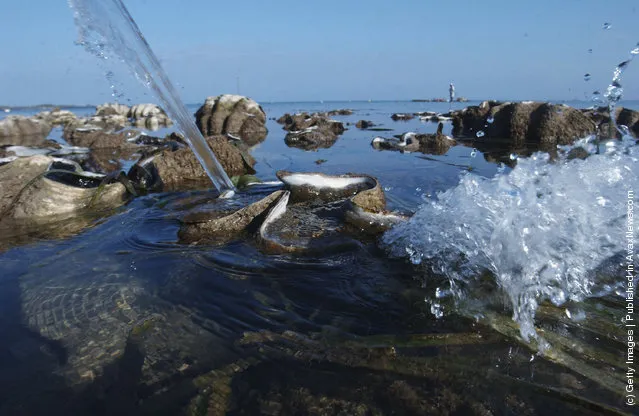
Tridacna Gigas, or Giant Clams

“The giant clam, Tridacna gigas (known as pā’ua in Cook Islands Māori), is the largest living bivalve mollusc. T. gigas is one of the most endangered clam species. It was mentioned as early as 1825 in scientific reports. One of a number of large clam species native to the shallow coral reefs of the South Pacific and Indian oceans, they can weigh more than 200 kilograms (440 lb) measure as much as 120 cm (47 in) across, and have an average lifespan in the wild of 100 years or more”. – Wikipedia

Photo: Tridacna Gigas, or Giant Clams spew water as a traditional fisherman passes by a small sanctuary on January 23, 2004 near Bolinao in the Northern Philippines. The clams, prime builders for coral reefs and providing shelter for spawning fish and other marine life, are exposed by low tides in the sanctuary. Overfishing and pollution throughout the country are not only threatening food security, but are also starting to choke one of the few working clam sanctuaries in the world. (Photo by David Greedy/Getty Images)
Details
01 Oct 2011 13:10:00
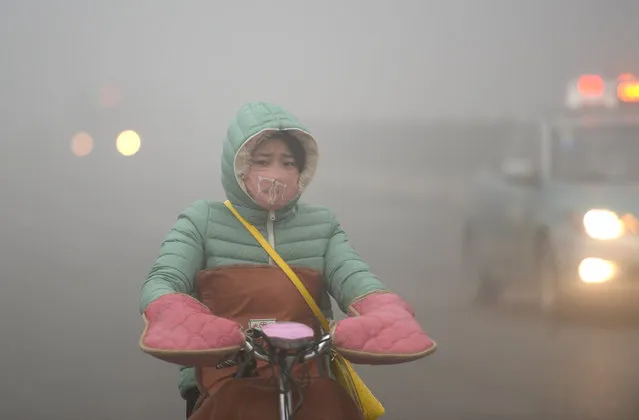
A citizen rides in smog on December 20, 2016 in Jinan, Shandong Province of China. Air quality index (AQI) readings exceeded 400 and some schools have suspended classes in Jinan. (Photo by VCG/VCG via Getty Images)

A citizen rides in smog on December 20, 2016 in Jinan, Shandong Province of China. Air quality index (AQI) readings exceeded 400 and some schools have suspended classes in Jinan. (Photo by VCG/VCG via Getty Images)
Details
21 Dec 2016 10:07:00
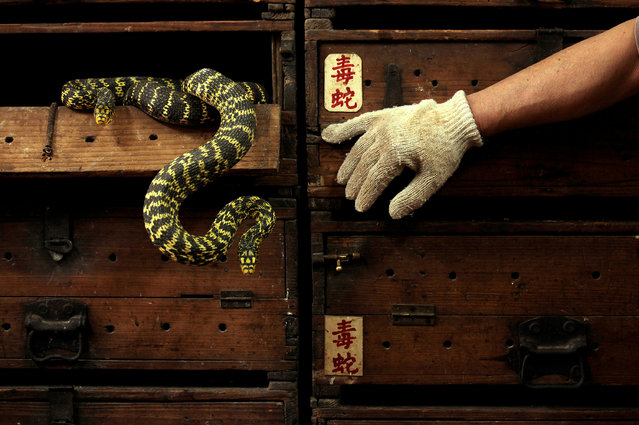
Snakes hang from a wooden cabinet marked with the Chinese characters “poisonous snake”, at a snake soup shop ahead of the Spring Festival in Hong Kong January 29, 2013. (Photo by Bobby Yip/Reuters)

Snakes hang from a wooden cabinet marked with the Chinese characters “poisonous snake”, at a snake soup shop ahead of the Spring Festival in Hong Kong January 29, 2013. (Photo by Bobby Yip/Reuters)
Details
23 Dec 2016 07:51:00
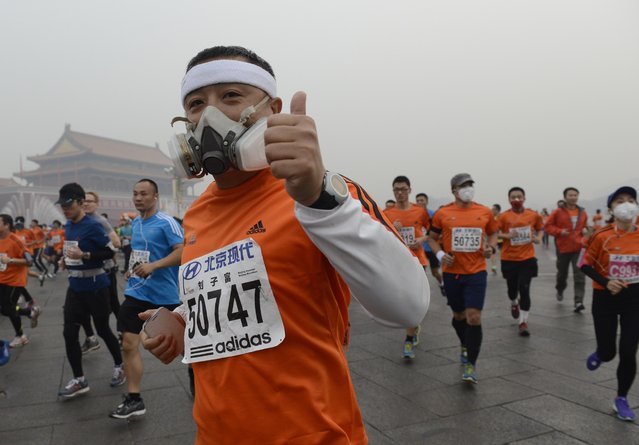
Participants wearing masks during a hazy day at the Beijing International Marathon in front of Tiananmen Square, in Beijing, October 19, 2014. (Photo by Reuters/Stringer)

Participants wearing masks during a hazy day at the Beijing International Marathon in front of Tiananmen Square, in Beijing, October 19, 2014. (Photo by Reuters/Stringer)
Details
19 Oct 2014 12:12:00
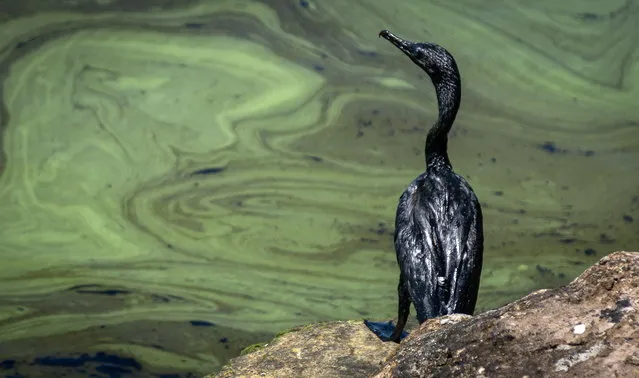
View of an oil-stained bird on the shore of a contaminated lake in Maracaibo, Venezuela on June 22, 2023. The Azul Ambientalistas foundation denounced on 22 June the “state of emergency” in which the Maracaibo Lake, the largest in Venezuela, finds itself, due to oil spills that, it assured, are affecting the lake economy and the health of the people. (Photo by Henry Chirinos/EPA)

View of an oil-stained bird on the shore of a contaminated lake in Maracaibo, Venezuela on June 22, 2023. The Azul Ambientalistas foundation denounced on 22 June the “state of emergency” in which the Maracaibo Lake, the largest in Venezuela, finds itself, due to oil spills that, it assured, are affecting the lake economy and the health of the people. (Photo by Henry Chirinos/EPA)
Details
24 Dec 2023 23:00:00
A woman walks up the steps decorated ahead of the Chinese New Year festival in Beijing, China, Thursday, January 12, 2017. The Chinese Lunar New Year is the most important holiday for Chinese and hundreds of millions are expected to return to their hometown to spend the new year with their family and relatives. (Photo by Ng Han Guan/AP Photo)

A woman walks up the steps decorated ahead of the Chinese New Year festival in Beijing, China, Thursday, January 12, 2017. The Chinese Lunar New Year is the most important holiday for Chinese and hundreds of millions are expected to return to their hometown to spend the new year with their family and relatives. (Photo by Ng Han Guan/AP Photo)
Details
14 Jan 2017 12:16:00