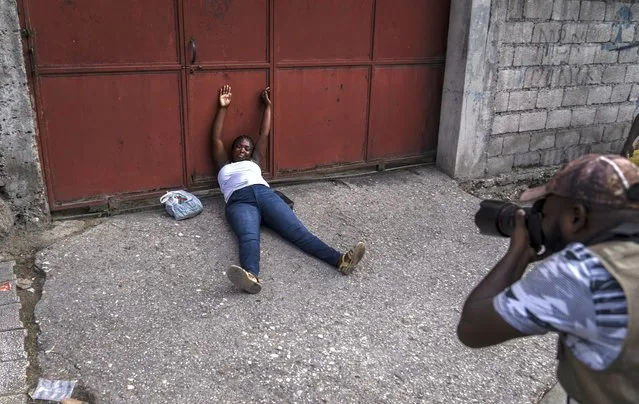
A relative of journalist Romelo Vilsaint grieves after learning that he was fatally shot outside a police station, in Port-au-Prince, Haiti, Sunday, October 30, 2022. (Photo by Ramon Espinosa/AP Photo)
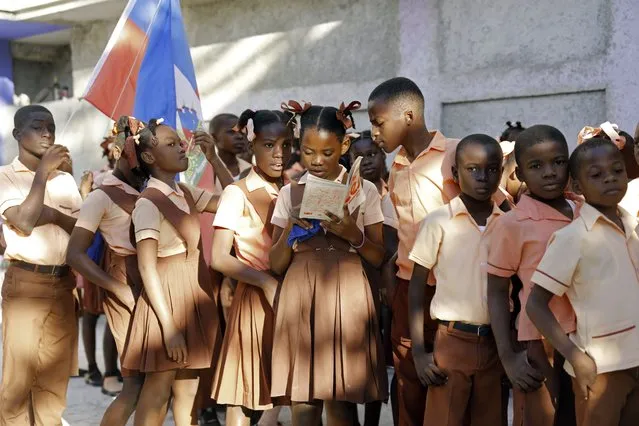
Students from the private school Gabriel stand in line as they prepare to start their school day in Port-au-Prince, Haiti, Tuesday, January 9, 2024. (Photo by Odelyn Joseph/AP Photo)
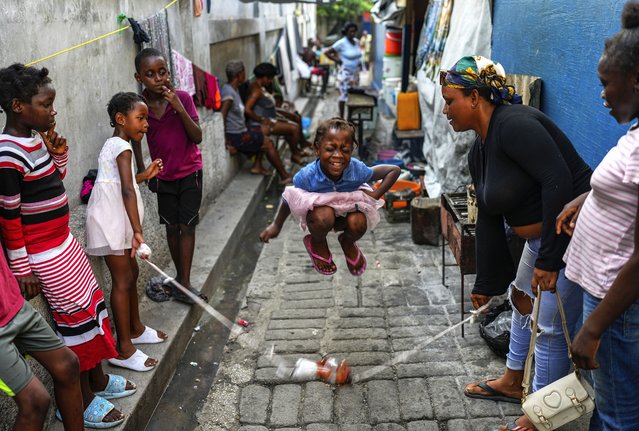
A girl plays a jump rope game at a school housing residents displaced by gang violence in Port-au-Prince, Haiti, Wednesday, May 15, 2024. (Photo by Ramon Espinosa/AP Photo)
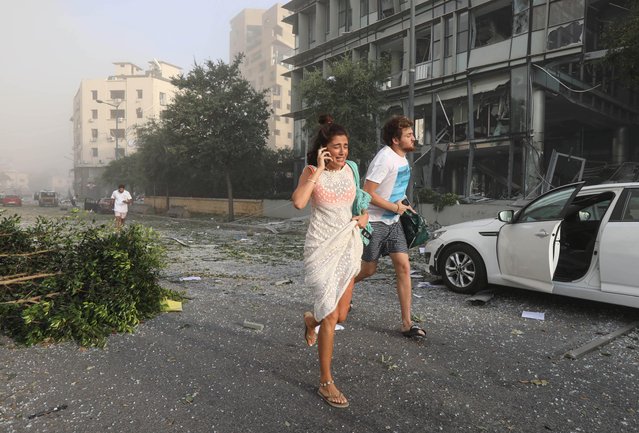
People run for cover following an explosion in Beirut's port area, Lebanon on August 4, 2020. A mega-blast tore through the harbour in the heart of the Lebanese capital with the force of an earthquake, killing more than 100 people and injuring over 4,000. (Photo by Mohamed Azakir/Reuters)
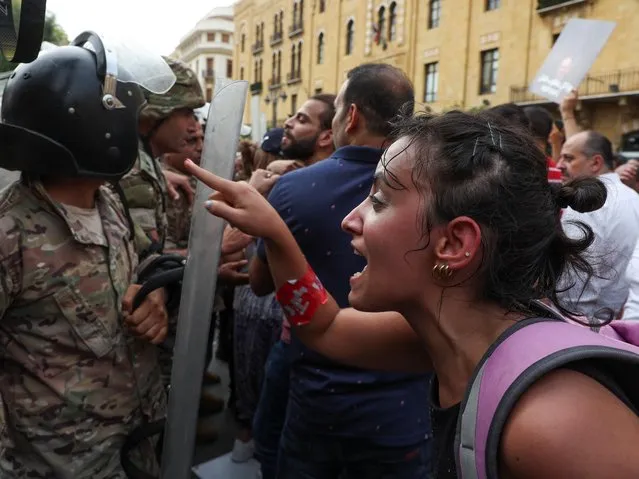
A demonstrator gestures as she talks with a Lebanese army member during a protest as Lebanon marks the two-year anniversary of the August 2020 Beirut port explosion, in Beirut, Lebanon on August 4, 2022. (Photo by Mohamed Azakir/Reuters)
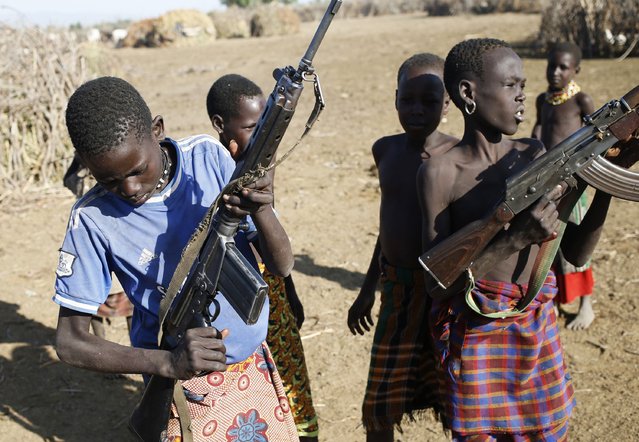
Turkana boys play with rifles in a village inside the Turkana region of the Ilemi Triangle, northwest Kenya December 21, 2014. The Ilemi Triangle is a disputed region in East Africa, claimed by South Sudan and Kenya, bordering also Ethiopia. The dispute arose from unclear wording of a 1914 treaty which tried to allow free movement of the Turkana people, nomadic herders who had traditionally grazed the area. (Photo by Goran Tomasevic/Reuters)
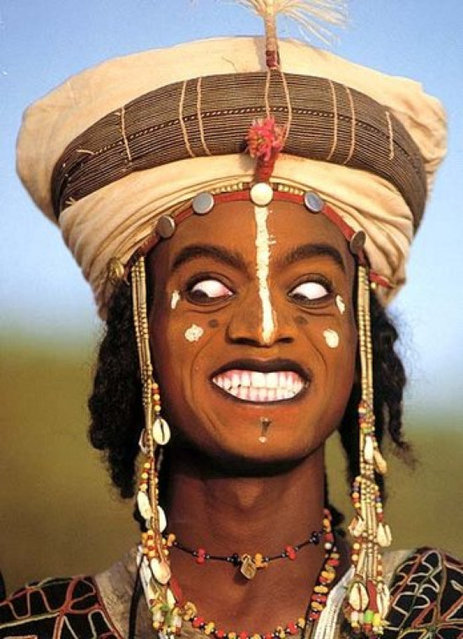
Fula people or Fulani or Fulbe are an ethnic group spread over many countries, predominantly in West Africa, but found also in Central Africa and Sudanese North Africa. African countries where they are present include Mauritania, Ghana, Senegal, Guinea, The Gambia, Mali, Nigeria, Sierra Leone, Benin, Burkina Faso, Guinea Bissau, Cameroon, Côte d'Ivoire, Niger, Chad, Togo, the Central African Republic, Liberia, and as far as Sudan and Egypt in the East. Fula people form a minority in every country they inhabit, but in Guinea they represent a plurality of the population (40%).